


Vegan mustache wax replaces animal‑derived beeswax with plant‑based structural waxes — primarily candelilla and carnauba — supported by conditioning oils and optional tackifiers like pine resin. The result is a clean, high‑performance formula that delivers firm, lasting hold without animal byproducts, petroleum occlusives, or synthetic fragrances. For mustache styling specifically, plant wax chemistry outperforms beeswax on heat stability, water resistance, and all‑day durability.
The Plant Waxes That Create Real Structural Hold
Two plant waxes do the heavy lifting in any serious vegan mustache wax. Knowing what each contributes lets you evaluate formulas instantly.
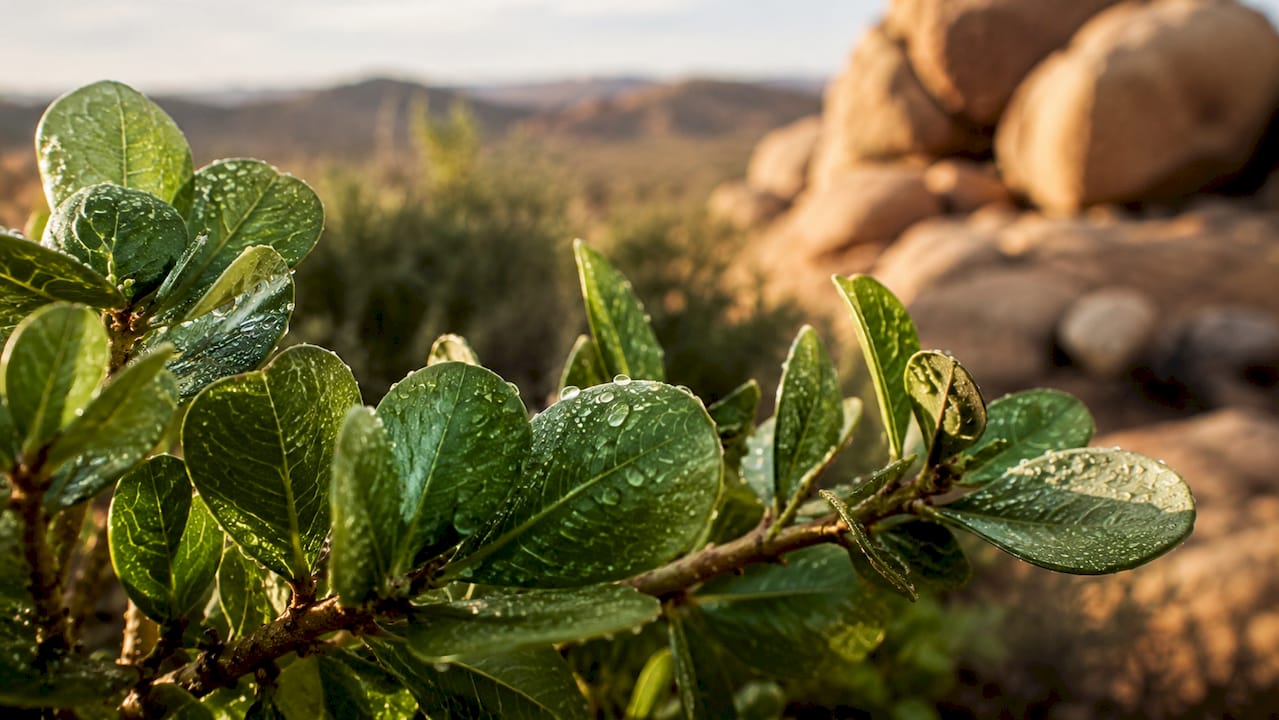
Candelilla wax Derived from the Euphorbia antisyphilitica shrub of northern Mexico, candelilla is the backbone of vegan mustache wax. Its hydrocarbon‑dominant composition (~50%) and melting point of 67–79°C give it better heat stability than beeswax (62–65°C). It softens cleanly when warmed, spreads evenly through mustache hair, and provides firm, all‑day hold without brittleness. For most styles, candelilla is the primary structural wax.
Carnauba wax Sourced from the leaves of the Copernicia prunifera palm in Brazil, carnauba is the hardest natural wax available. Its melting point (82–86°C) and ~80% aliphatic ester composition add rigidity and water resistance — essential for humid climates or outdoor use. Used at 10–20% of the wax fraction, carnauba reinforces hold without making the formula brittle.
Softer plant waxes Soy wax and sunflower wax add spreadability and creaminess. Hard waxes alone feel rigid and difficult to work — softer waxes balance the texture and make the formula fingertip‑friendly.
Pine resin (colophony) Beeswax has natural tack. Plant waxes don’t. Pine resin fills that gap. It increases adhesion between wax and hair, enabling handlebar curls, upward shapes, and complex styles. Use sparingly — too much resin makes the wax sticky.
| Wax | Melting point | Hold | Role |
|---|---|---|---|
| Carnauba | 82–86°C | Very firm | Water resistance, complex styles |
| Candelilla | 67–79°C | Firm | Primary structural hold |
| Soy wax | 50–55°C | Soft | Spreadability |
| Sunflower wax | 75–80°C | Soft–medium | Conditioning |
| Pine resin | Variable | Tackifier | Grip for complex styles |
The Conditioning Layer — Why Oils Matter
Wax provides structure. Oils prevent brittleness, condition the hair, and determine how the wax feels on your skin.
Castor oil The MVP of mustache wax. Ricinoleic acid (~90%) gives castor oil extremely high viscosity (~986 mPa·s), adding natural tack, shine, and film‑forming properties. It enhances grip without relying solely on resin.
Shea butter Softens the wax matrix, adds pliability, and conditions both hair and skin. Prevents the “hard shell” effect that pure structural waxes create.
Jojoba oil A wax ester that integrates seamlessly with skin lipids. Improves spreadability and reduces irritation along the upper lip — a sensitive area that sees daily product contact.
How to Make Your Own Vegan Mustache Wax
DIY wax gives you full control over hold, texture, and scent.
Ingredients:- Candelilla wax
- Carnauba wax (10–20% of wax fraction)
- Shea butter
- Castor oil
- Jojoba oil
- Pine resin (optional)
- Essential oil (1–2 drops max)
- Melt candelilla + carnauba in a double boiler.
- Add shea butter once waxes liquefy.
- Remove from heat; add castor + jojoba.
- Add pine resin if using; stir until dissolved.
- Add essential oil.
- Pour into tins and cool for two hours.
Pro tip: Make a one‑tablespoon test batch first. Adjust softness with jojoba; adjust firmness with candelilla.
How to Choose a High‑Quality Vegan Mustache Wax
- Plant waxes should lead the ingredient list.
- Castor oil should be present. It’s a mustache‑specific performance ingredient.
- Look for jojoba, argan, or grapeseed. These indicate daily‑use conditioning.
- Check for cruelty‑free certification.
- Avoid “fragrance.” Look for individual essential oils listed by INCI name.
- Match hold to your style. Handlebar = carnauba + resin. Natural = candelilla‑dominant.
Brands that publish full ingredient lists are the ones worth trusting.
How to Apply Vegan Mustache Wax Correctly
Technique determines whether your mustache looks sharp or clumpy.
- Warm the wax. Work a pea‑sized amount between your fingers for 30–60 seconds until translucent.
- Start small. You can add more — removing excess is difficult.
- Apply from center outward. Prevents root buildup and uneven hold.
- Shape with a fine‑tooth comb or fingers. Ironwood’s stainless mustache comb gives precision for handlebar styles.
- Let it set. Plant waxes firm up within 60 seconds.
Pro tip: Apply a tiny amount of beard oil or balm first. It softens coarse hair and improves wax distribution.
Wash out at night with a sulfate‑free cleanser. Leaving wax in overnight contributes to follicle congestion.
Key Takeaways
| Point | Science |
|---|---|
| Candelilla = primary hold | Higher melt point → better heat stability than beeswax |
| Carnauba = water resistance | Aliphatic esters repel moisture; adds firmness |
| Castor oil = tack + shine | High viscosity from ricinoleic acid |
| Pine resin = grip | Natural tackifier for complex styles |
| Warm before applying | Plant waxes require full softening to distribute |
Why I Stopped Second‑Guessing Plant Wax
I expected vegan wax to be weaker than beeswax. I was wrong. The first change I noticed wasn’t the hold — it was my skin. The irritation along my upper lip disappeared within a week. That alone made the switch permanent.
The real learning curve was blending. Too much carnauba and the wax felt like concrete. Too little and my mustache collapsed by noon. The sweet spot is candelilla‑dominant with a touch of carnauba, softened by shea and castor oil. That combination holds all day without flaking.
The biggest mistake men make is treating vegan wax like beeswax. It isn’t. You must warm it properly. You must use less. Once you adjust your technique, the results are better — cleaner, healthier, and more controlled.
— Roberto, Ironwood Grooming
Keep Reading
- How to Identify Vegan Beard Products: 2026 Guide
- Vegan Beard Care: Why It's Better for Your Skin and the Planet
- Plant Wax Chemistry: Why Candelilla and Carnauba Outperform Beeswax on Coarse Beard Hair
Part of the Ironwood Regimen Series
New to beard care? Start here.
The Beginner Beard Regimen is the complete start-here guide — cleanse, hydrate, seal — for guys building their first real routine.
See the Beginner Regimen →
