


A sore under your beard is almost always caused by one of five conditions: bacterial folliculitis, seborrheic dermatitis, tinea barbae, contact dermatitis, or ingrown hairs. The good news? Most cases respond to simple triage within a few days. The Cleveland Clinic notes that trapped dead skin, oil, and sweat under dense facial hair create the perfect environment for bacteria and yeast to thrive, producing red, sore, and sometimes pus-filled spots. The American Academy of Dermatology (AAD) and Ironwoodgrooming both emphasize that reaching the skin beneath your beard, not just washing the hair itself, is the single most overlooked step in beard hygiene.
Your first three moves if you have a sore under your beard right now:
- Stop any new product you introduced recently: a new oil, aftershave, cologne, or detergent.
- Wash gently down to the skin twice daily with a mild, fragrance-free cleanser, working your fingers through the hair to reach the surface underneath.
- Apply a warm compress to tender pustules for a short period to draw out inflammation. Do not pick, squeeze, or stroke the area.
Pro Tip: Touching or stroking your beard throughout the day transfers bacteria from your hands directly to the follicles. The Cleveland Clinic identifies this as one of the most common behavioral drivers of recurring folliculitis under facial hair. Keep your hands off the beard while it heals.
Key Takeaways
Soreness under the beard is almost always caused by a treatable inflammatory or infectious condition, and matching the right treatment to the right cause is what determines how fast you recover.
| Point | Details |
|---|---|
| Identify the cause first | Match your symptoms to folliculitis, seborrheic dermatitis, tinea barbae, contact dermatitis, or ingrown hairs before treating. |
| Subtract before you add | Stop new products and avoid heavy oils during active flares; the skin barrier recovers faster without added occlusion. |
| OTC timeline is two weeks | Give ketoconazole, benzoyl peroxide, or clotrimazole a full two weeks; if no improvement, see a clinician. |
| Three red flags need urgent care | Spreading redness, systemic symptoms (fever, swollen lymph nodes), or rapid hair loss require prompt medical evaluation. |
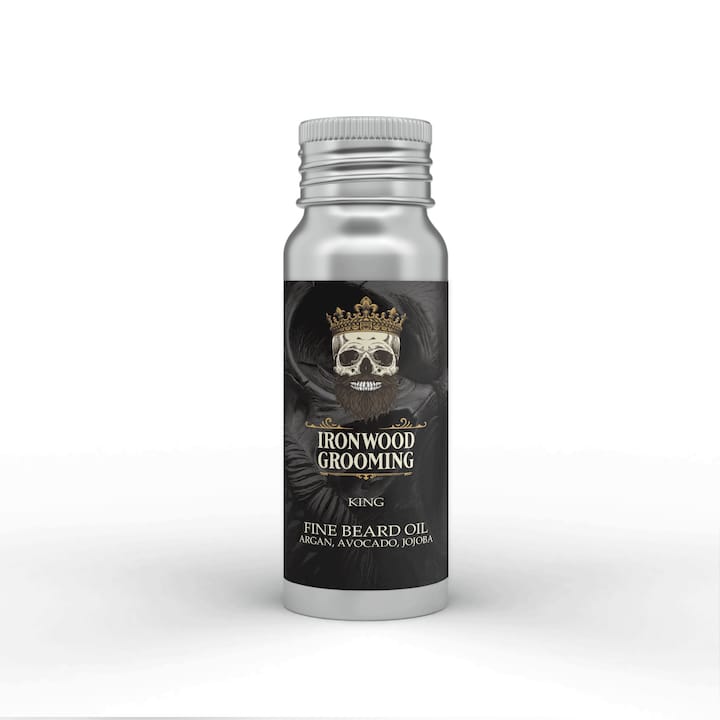
| Ironwoodgrooming for maintenance | Authentic Essential Beard Oil, Eviden Essential Beard Oil, and King Beard Oil are appropriate for post-flare maintenance on clear, healed skin. |
Table of Contents
- What usually causes soreness under a beard?
- How do you tell which condition you actually have?
- What should you do at home right now?
- When OTC care isn’t enough: medical treatments and timelines
- How to prevent soreness and stop it from coming back
- Red flags: when scabs, pus, or spreading mean you need urgent care
- What to look for in beard-care products when your skin is sore
- Ironwoodgrooming products that support healthy beard skin
- Sources
What usually causes soreness under a beard?
Understanding the likely culprit helps you choose the right response fast. These five conditions account for the vast majority of painful skin under facial hair.
- Bacterial folliculitis: Inflammation of the hair follicles, most often driven by Staphylococcus aureus. Presents as red, tender pustules clustered around follicle openings. Longer beards trap more bacteria, and staph can proliferate enough to require oral antibiotics in severe cases.
- Seborrheic dermatitis: An inflammatory, yeast-driven condition producing greasy yellowish flakes and red patches. Tends to itch more than it hurts, but chronic scratching creates raw, sore skin. Heavy beard oils can feed the underlying Malassezia yeast and worsen the flare.
- Tinea barbae (beard ringworm): A fungal infection, often contracted from animal contact, that can form ring-shaped lesions. Deeper infections produce kerions: boggy, inflamed masses that crust and scar. Oral antifungals are usually required.
- Contact dermatitis: An allergic or irritant reaction to a product touching the skin, whether a beard oil, cologne, aftershave, or laundry detergent on a pillowcase. Produces widespread redness and itching in the contact zone rather than isolated pustules.
- Pseudofolliculitis barbae / ingrown hairs: Most common during the stubble phase. Curved hairs re-enter the skin and trigger a foreign-body response, creating tender, inflamed papules and bumps along the jawline and neck.
Each of these conditions has a distinct treatment path, which is why matching symptoms to the right cause matters before you reach for any product.
How do you tell which condition you actually have?
Symptoms overlap, but a few specific clues narrow the field quickly. Use this comparison as a starting point, not a diagnosis.
| Feature | Bacterial folliculitis | Seborrheic dermatitis | Tinea barbae | Contact dermatitis | Ingrown hairs |
|---|---|---|---|---|---|
| Primary sensation | Pain, tenderness | Itch, mild soreness | Pain, deep itch | Itch, burning | Tenderness, itch |
| Scale / flaking | Minimal | Greasy, yellowish | Minimal to crusty | Minimal | Minimal |
| Lesion type | Pustules around follicles | Red patches, flakes | Ring-shaped rash, kerion | Diffuse redness | Papules, embedded hair |
| Common trigger | Sweat, hand contact, dirty tools | Stress, humidity, oily skin | Animal contact, soil | New product, detergent | Shaving, stubble phase |
| Typical course | Days to weeks | Chronic, recurrent | Weeks to months | Clears when trigger removed | Resolves with hair growth |
Diagnostic clues to sharpen your read:
- Bacterial folliculitis vs. tinea barbae: Folliculitis pustules are superficial and uniform; tinea barbae lesions often have a ring-shaped border or a central boggy mass (kerion). Animal contact in the recent history strongly suggests fungal origin.
- Seborrheic dermatitis vs. dry skin: The flakes tell the story. White, powdery flakes point to simple dry skin (xerosis); greasy, yellowish flakes signal seborrheic dermatitis driven by Malassezia yeast. Treating yeast-driven flaking with heavy moisturizers makes it worse, not better.
- Contact dermatitis vs. folliculitis: Contact dermatitis spreads across the entire area that touched the product. Folliculitis clusters tightly around individual follicle openings.
If lesions are spreading, not responding after two weeks of appropriate OTC care, or accompanied by hair loss, a culture swab and dermatology referral are the right next steps. Improperly sanitized barber tools and reused razors are underrecognized reservoirs for both bacterial and fungal infection, so mention recent barbershop visits to your clinician.
What should you do at home right now?
Most mild-to-moderate cases of irritation beneath the beard respond well to a focused at-home protocol. Follow these steps in order.
- Stop suspect products immediately. Remove every new product introduced in the past two to three weeks. One variable at a time makes it easier to identify the trigger.
- Cleanse gently, twice daily. Work a mild cleanser through the beard and down to the skin. The AAD recommends tailoring your cleanser to your skin type: a salicylic acid gel for oily or acne-prone skin, a gentle hydrating cleanser for dry or sensitive skin. Learn the right technique with Ironwoodgrooming’s guide on washing down to the skin.
- Apply warm compresses. For pustules or tender nodules, hold a warm, damp cloth against the area for 10–15 minutes, two to three times daily. This softens the follicle opening and reduces pressure without forcing bacteria deeper.
-
Choose the right OTC product for the suspected cause:
- Folliculitis/acne-prone skin: Benzoyl peroxide wash used once daily. Rinse thoroughly to avoid bleaching beard hair.
- Suspected fungal flare (greasy flakes, ring-shaped lesions): Ketoconazole shampoo left on the skin for a few minutes before rinsing, used regularly. Topical clotrimazole cream for localized patches.
- Short-term itch relief: Hydrocortisone cream used for a short, limited duration. Prolonged use thins the skin and can worsen fungal infections.
- Give it two weeks. If there is no clear improvement after around two weeks of consistent OTC care, stop and see a clinician rather than layering more products.
What to avoid:
- Picking or squeezing pustules, which drives bacteria deeper and risks scarring.
- Heavy, occlusive oils (especially coconut oil) during a suspected fungal flare; they trap heat and feed Malassezia.
- Aggressive scrubbing or exfoliating over open or weeping lesions.
Pro Tip: During a suspected fungal flare, pause all beard oils entirely and switch to a medicated antifungal cleanser as your sole leave-on treatment. Once the flare clears, reintroduce a lightweight, non-comedogenic beard conditioner sparingly, starting with a few drops every other day.
When OTC care isn’t enough: medical treatments and timelines
Some conditions simply outpace what you can manage at home. Here is what a clinician will typically offer and how long each path takes.
Bacterial folliculitis
Mild cases often clear with topical mupirocin ointment applied twice daily for five to ten days. More extensive infections, or those that keep returning, usually call for oral antibiotics. A wound culture helps identify the specific strain and any antibiotic resistance, which is worth requesting if you’ve already tried one antibiotic course without success. According to NCBI clinical guidelines, recurrent folliculitis warrants evaluation for nasal Staph carriage and possible decolonization.
Tinea barbae
Topical antifungals alone rarely clear a deep follicular fungal infection. The Cleveland Clinic confirms that oral antifungals are the standard of care, with clearance typically taking several weeks. Kerions, the boggy, inflamed masses that form in severe cases, may also require a short course of oral corticosteroids to reduce inflammation and lower the risk of permanent scarring and hair loss. Do not delay on kerions; early systemic treatment is the best protection against permanent follicle damage.
Seborrheic dermatitis
This condition is chronic and recurrent by nature. The National Eczema Association supports medicated antifungal approaches: ketoconazole shampoo or cream, selenium sulfide, and zinc pyrithione are the workhorses. Maintenance use (once or twice weekly) after the flare clears is often necessary to prevent rapid return.
Treatment timeline at a glance:
| Condition | OTC trial period | Expected medical response | Referral trigger |
|---|---|---|---|
| Bacterial folliculitis | 1–2 weeks | Days to 2 weeks with antibiotics | Recurrence, spreading, no response |
| Tinea barbae | Not adequate alone | Several weeks with oral antifungals | Kerion, hair loss, scarring |
| Seborrheic dermatitis | 2–4 weeks | Weeks; maintenance ongoing | Nonresponding, widespread |
| Contact dermatitis | Clears when trigger removed | Days to 1 week | Severe reaction, systemic symptoms |
| Ingrown hairs | 1–2 weeks | Days with proper technique | Chronic scarring, deep cysts |
How to prevent soreness and stop it from coming back
A consistent daily routine is your strongest defense. The goal is a clean follicle environment that gives bacteria and yeast nowhere to gain a foothold.
- Wash down to the skin every day. Use your fingertips to work cleanser through the beard to the surface underneath, not just over the top of the hair. The AAD’s dermatologist guidance makes this the single most important hygiene step for beard health.
- Match your cleanser to your skin type. Salicylic acid gels for oily or acne-prone skin; gentle, hydrating cleansers for dry or sensitive skin. Avoid heavily fragranced formulas.
- Exfoliate gently during the stubble phase. Once or twice per week with a soft brush or gentle chemical exfoliant reduces the ingrown hair risk that peaks when hair is short enough to curl back into the skin. Skip aggressive multi-blade razors if pseudofolliculitis barbae is a recurring problem.
- Keep your tools clean. Sanitize combs, trimmers, and razors regularly. Shared or poorly cleaned barber tools are a direct transmission route for both bacterial and fungal infections.
- Apply beard oil sparingly and only when skin is clear. A few drops worked through clean, slightly damp beard hair is enough. During any active flare, skip the oil entirely. For men with coarse beards, Ironwoodgrooming’s coarse beard grooming guide covers product distribution techniques that minimize trapped debris.
- Choose non-comedogenic, fragrance-free products for sensitive or reactive skin. Ceramide-based moisturizers support the skin barrier without feeding yeast. For a full sensitive-skin approach, Ironwoodgrooming’s vegan beard care guide walks through ingredient selection for reactive skin.
Red flags: when scabs, pus, or spreading mean you need urgent care
Most beard soreness is manageable at home. These signs are different. If you notice any of the following, stop home treatments and seek medical evaluation promptly.
- Spreading redness that moves beyond the beard line or grows larger each day.
- Rapidly enlarging scabs, crusting, or pus, particularly with a boggy, swollen texture that suggests a kerion.
- Systemic symptoms: fever, chills, or feeling generally unwell alongside a skin lesion.
- Tender, swollen lymph nodes under the jaw or along the neck.
- Rapid or patchy hair loss in the affected area.
- No improvement, or worsening, after two full weeks of appropriate OTC care.
Crusty, red, or oozing scabs with pus are a signal that the infection has progressed beyond surface-level folliculitis. A clinician can rule out secondary bacterial infection, order a culture, and prescribe oral antibiotics or antifungals before the condition causes permanent follicle damage. Kerions in particular carry a real risk of scarring; early oral antifungal treatment, sometimes paired with oral steroids, is the standard approach to protect the hair follicles.
When you go in, mention any recent animal contact, barbershop visits, or new grooming products. That history narrows the diagnosis fast and gets you to the right treatment sooner.
What to look for in beard-care products when your skin is sore
Product choice matters more when your skin is compromised. The wrong formula can extend a flare by weeks.
Ingredients to avoid during an active breakout:
- Heavy coconut oil and other highly comedogenic oils that block follicles and trap heat.
- Synthetic fragrances and essential oils in high concentrations, which are common contact allergens.
- Alcohol-heavy formulas that strip the barrier and increase susceptibility to secondary infection.
Ingredients that support recovery:
- Ketoconazole or zinc pyrithione in your cleanser if flakes are greasy and yellowish; these target Malassezia directly.
- Ceramides and hyaluronic acid in a lightweight moisturizer for genuine dry skin (white, powdery flakes, tight feeling after washing).
- Benzoyl peroxide in a wash formulation for folliculitis-prone or acne-prone skin.
What to look for on the label:
- Short, readable ingredient lists with no hidden fragrance compounds (watch for “parfum” or “fragrance” as a catch-all).
- Fragrance-free or unscented designation, not just “natural scent.”
- Small-batch or preservative-backed formulations that reduce the risk of microbial contamination in the bottle itself.
Pro Tip: When you reintroduce beard oil after a fungal flare, start with one or two drops on clean, dry skin every other day for the first week. If flaking or redness returns, pull back and extend the antifungal cleanser phase by another week before trying again.
The part most men get wrong about beard soreness
Most men treat a sore under the beard as a grooming problem when it is actually a skin health problem wearing a grooming mask. The instinct is to add something: a new oil, a heavier balm, an extra wash. But the most effective move in the first 48 hours is almost always subtraction. Stop the new product. Stop touching the area. Let the skin’s own barrier begin to recover.
The second mistake is treating all flaking as dry skin. Seborrheic dermatitis is frequently misidentified as simple dryness, and men respond by loading on heavier oils, which feeds the yeast driving the condition. If your flakes are greasy and yellowish, moisturizer is the wrong tool. An antifungal cleanser is the right one.
Recovery also takes longer than most men expect. Tinea barbae can take several weeks to clear even with oral antifungals. Seborrheic dermatitis is a chronic condition that requires ongoing maintenance, not a one-time fix. Building a consistent, minimal routine and sticking with it through the full treatment window is what separates men who clear these conditions from those who cycle through flares indefinitely.
Ironwoodgrooming products that support healthy beard skin
When your skin is clear and you’re ready to build a maintenance routine that actually holds, product quality becomes the deciding factor. Ironwoodgrooming’s small-batch, plant-based beard oils are formulated without fillers or heavy comedogenic ingredients, making them a sound choice for post-flare maintenance and daily conditioning once the skin is healed.
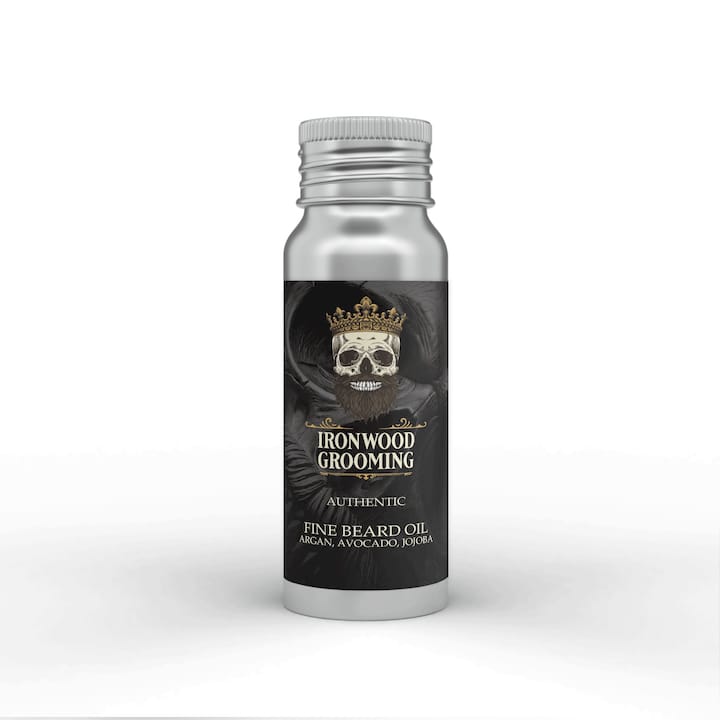
The Authentic Essential Beard Oil is a lightweight, non-comedogenic option for daily dry-skin maintenance after active flares have resolved. Apply two to three drops to clean, slightly damp skin and work through the beard to the skin surface. The Eviden Essential Beard Oil offers a plant-based small-batch formula suited to the nonactive maintenance phase, particularly for men with sensitive skin who want a minimal ingredient profile. For drier skin types recovering from a flare, the King Beard Oil provides deeper conditioning, though reintroduce it gradually after any pustular or fungal episode.
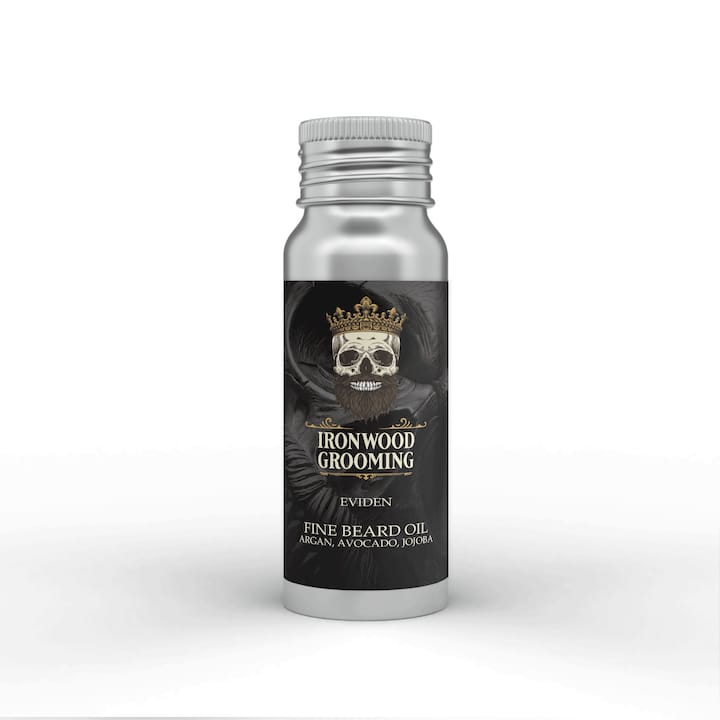
None of these oils are appropriate during an active fungal or pustular flare. Use them after the skin has cleared. For a curated sensitive-skin routine built around these products, visit Ironwoodgrooming’s sensitive skin regimen and find the right starting point for your skin.
Sources
These are the highest-quality clinical and dermatology resources used to build this guide. Each one is worth bookmarking if you want to go deeper or verify a specific recommendation.
- Itchiness, Acne, and Skin Irritation: How to Solve Your Facial Hair Problems | Cleveland Clinic
- Tinea barbae (beard ringworm) | Cleveland Clinic
- A dermatologist’s top tips for a healthy beard | American Academy of Dermatology (AAD)
- Is It Dry Skin Under the Beard or Beardruff? | DCSI
- How to Take Care of Seborrheic Dermatitis Under Beards | National Eczema Association
For persistent, spreading, or scarring lesions, no article replaces a clinician’s evaluation. This guide is general information; consult a dermatologist or primary care provider for diagnosis and treatment of your specific condition.
This article is general information, not a substitute for advice from a qualified doctor. Consult a qualified healthcare professional about your own circumstances before acting on anything here.

