


The fastest way to connect a mustache to a beard is to grow both out together, set your beard baseline first, then trim and blend the mustache corners last. That sequence, backed by barbers and grooming pros alike, is what separates a polished connected look from a patchy, uneven mess. Most men get it wrong by trimming the mustache too early or too aggressively before the beard has a defined shape to anchor against.
Start here today:
- Let both grow untouched for at least 4 weeks before any trimming
- Set your beard length and shape first, every single time
- Trim the mustache second, blending the corners toward the beard
- Train hair direction daily with a comb and a light balm or wax
- Repeat the cycle weekly until the connection zone fills in naturally
Expect 6–12 weeks for a visible connection on most face types, though coarser or slower-growing hair may need 3–4 months before the corners fill in reliably. Patience is the real first tool.
Pro Tip: If you are considering topical treatments like minoxidil to speed up growth in the connection zone, consult a dermatologist before applying anything. Clinical literature on topical pharmacology makes clear that these treatments carry real side effects and require professional guidance.
Key Takeaways
Growing the beard first and blending the mustache corners last is the single most effective routine for a clean, connected mustache and beard.
| Point | Details |
|---|---|
| Grow before you trim | Let both grow untouched for at least 4–6 weeks before any shaping begins. |
| Beard baseline comes first | Set beard length and shape before touching the mustache, every single time. |
| Corners are the critical zone | Use a higher guard and outward flicks to blend corners; never carve a hard line. |
| Train daily with comb and balm | Daily combing and a matte balm build direction over weeks, filling visual gaps. |
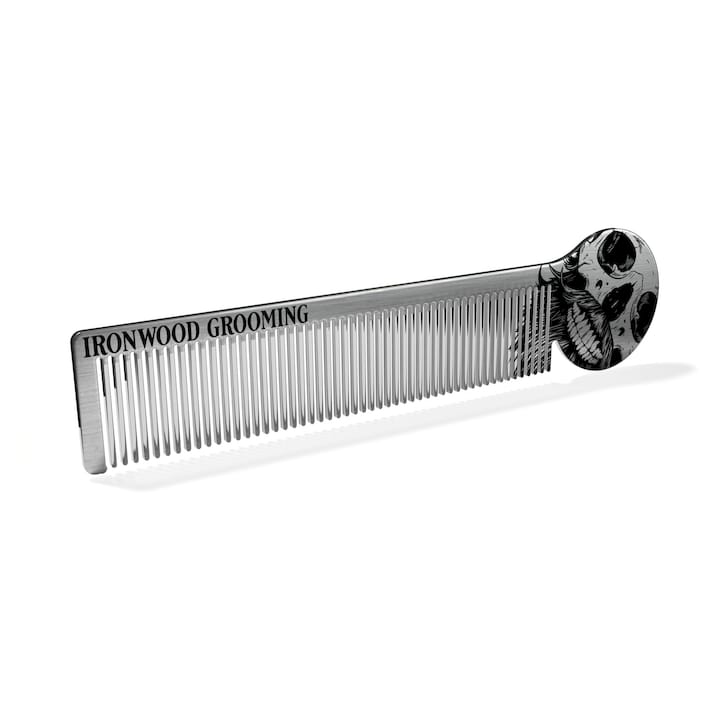
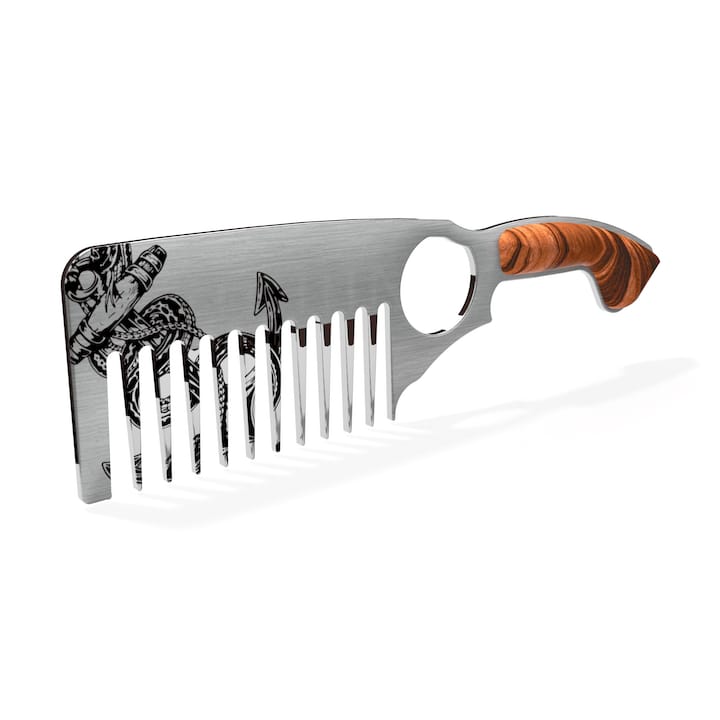
| Ironwoodgrooming kit | The Stainless Mustache Comb, Anchor Beard Comb, wax, and balm cover the full routine. |
Table of Contents
- How to connect your mustache to your beard, step by step
- What tools and products do you actually need?
- Daily styling techniques that train your hair to connect
- How to fix gaps and slow growth in the connection zone
- Your maintenance schedule for a clean, connected look
- Common mistakes that break the connection (and how to fix them)
- When should you see a barber or a dermatologist?
- The barber-backed sequence and Ironwoodgrooming product picks
- Why the beard-first sequence is the one worth trusting
- Ironwoodgrooming’s kit for a connected mustache and beard
- Sources
How to connect your mustache to your beard, step by step
The sequence matters more than any single product or technique. Barber-backed guidance is consistent on this: trim the beard first, then shape and blend the mustache so both flow naturally together. Most uneven results happen when men cut the mustache too short or fail to soften the corners where it meets the beard.
-
Grow everything out. Stop trimming for 4–6 weeks minimum. This gives the mustache time to thicken and the connection zone enough density to work with. Art of Manliness recommends growing a full beard first to skip the awkward mustache-only phase entirely.
-
Set the beard baseline. Use a trimmer with a longer guard to establish your beard’s overall length and shape. Work from the cheeks down, keeping the neckline clean. This is your anchor point for everything else.
-
Bulk trim the beard. Once the baseline is set, bring the beard to your target length using even, downward strokes. Do not touch the mustache yet.
-
Define the lip line. Switch to small scissors and a fine-tooth comb. Men’s Health advises using scissors and a comb to define the lip line carefully, since over-trimming here is the single most common mistake. Trim only what falls below the lip edge.
-
Blend the corners. The corners of the mouth are the critical zone. Use a guard one level higher than your beard guard and make short, outward flicking strokes to soften the transition. Never carve a hard line here.
-
Check symmetry. Step back and look at your face straight-on, then from each side. The mustache should flow into the beard without a visible step or gap at the corners. If one side looks heavier, make one or two light passes, not a full re-trim.
Pro Tip: Always trim dry. Wet hair looks longer than it is, which means you will cut more than you intend. Dry trimming gives you an accurate read on the final result.
What tools and products do you actually need?
The right kit makes the difference between a clean connection and a choppy one. You do not need a dozen products. You need the right ones, used correctly.
Trimmers. A quality adjustable trimmer with multiple guard lengths handles bulk trimming and baseline setting. Use longer guards for the beard body and step down gradually toward the corners.
Detail scissors. Small, sharp grooming scissors give you precision at the lip line that no trimmer guard can match. Use them for the final lip-line pass only.
Combs. Two combs serve different jobs. A fine-tooth stainless mustache comb controls individual mustache hairs during trimming and daily direction training. A wider-toothed anchor beard comb sets the beard baseline and detangles the beard body before trimming. Both are tools you use every day, not just on trim days.
Boar-bristle brush. Distributes product evenly and trains hair direction over time. Use it after applying balm or wax to push mustache hairs downward and outward toward the beard.
Mustache wax. Provides hold and direction for longer mustache hairs. A small amount, warmed between your fingertips, is enough to shape and train the corners toward the beard.
Beard balm and beard oil. Balm gives structure and light hold, making it better for training the connection zone. Oil adds moisture and shine but minimal hold. Use balm when you want to shape; use oil when the skin underneath feels dry or tight.
| Product category | Primary function | Best for | How often |
|---|---|---|---|
| Adjustable trimmer | Bulk length and baseline | Beard body, corner blending | Weekly |
| Detail scissors | Lip-line precision | Mustache edge only | Weekly |
| Mustache comb | Direction training, detangling | Daily mustache styling | Daily |
| Beard comb | Baseline setting, detangling | Pre-trim prep, daily grooming | Daily |
| Boar-bristle brush | Product distribution, training | After balm or wax application | Daily |
| Mustache wax | Hold and shaping | Corner training, longer hairs | Daily or as needed |
| Beard balm | Structure, light hold | Connection zone training | Daily |
| Beard oil | Moisture, skin health | Dry skin, coarse beard hydration | Daily |
Safety notes: Use a light hand with wax and balm. A pea-sized amount of wax and a dime-sized amount of balm are enough for most men. More product does not mean more hold; it means buildup and a greasy finish.
Daily styling techniques that train your hair to connect
Growing the hair is only half the work. Training it to lie in the right direction is what creates a visual connection even before the growth fully fills in. Think of it as beard training for direction and density, not just length.
Morning training routine:
- Apply a small amount of beard balm to the connection zone and mustache corners while the hair is slightly damp after washing
- Use your stainless mustache comb to direct mustache hairs downward and outward toward the beard
- Follow with a boar-bristle brush using short, downward strokes to reinforce direction and distribute the balm evenly
- If the mustache hairs are long enough, apply a touch of wax to the corners and press them gently toward the beard
Using a blow-dryer safely. Low heat, held 6–8 inches from the face, can help set hair direction after combing. Direct airflow downward along the mustache and into the corners. Never use high heat directly on facial hair; it dries out the skin and makes coarse hair brittle.
Weekly maintenance:
- Re-trim the beard baseline to keep the anchor point consistent
- Check the mustache length and trim only what has grown past the lip line
- Re-blend the corners using the step-down guard technique
- Wash the beard and mustache with a gentle cleanser, then reapply balm
Pro Tip: Reach for a matte beard balm instead of oil when your goal is structure and direction in the mustache area. Styling hold without shine comes from balm or wax, not oil. Oil is for skin health and softness, not for training hair to stay where you put it.
How to fix gaps and slow growth in the connection zone
Persistent gaps at the corners of the mouth are the most common frustration when joining a mustache and beard. Some of that is genetics. A lot of it is fixable.
Non-medical fixes first:
- Let the beard grow slightly longer in the connection zone to cover sparse areas naturally
- Use a slightly higher trimmer guard at the corners to leave more length there while keeping the rest of the beard shorter
- Style the mustache corners downward and outward with wax to visually close small gaps
- Consider a beardstache style, where the mustache is kept fuller and the beard is trimmed shorter, making the mustache the visual anchor rather than the connection point
For patchy beard growth, intentional styling often works better than waiting for growth that may not come.
Lifestyle and skin care. The AAD recommends gentle cleansing, moisturizing, and careful grooming to maintain follicle and skin health in the beard area. Healthy skin in the connection zone supports better-looking facial hair. Wash the area daily with a mild cleanser, apply a light moisturizer or beard oil, and avoid picking or scratching at sparse patches.
Diet matters too. Omega-3 fatty acids support general hair health and are a reasonable addition to a broader strategy for slow or thin growth. Fatty fish, walnuts, and flaxseed are straightforward dietary sources. Hydration and adequate sleep also affect hair growth cycles, though results from lifestyle changes take weeks to show.
Medical-adjacent options. Topical minoxidil is sometimes used off-label to stimulate facial hair growth in sparse areas. This is not a DIY decision. Consult a dermatologist before using any topical pharmacology on your face; application sites, frequency, and potential side effects require professional oversight.
See a professional if you notice:
- Sudden or rapid hair loss in the beard or mustache area
- Skin redness, scaling, or scarring in the connection zone
- Itching or inflammation that does not resolve with basic skin care
- Asymmetric patchiness that appears quickly rather than gradually
Beard and mustache skin problems including folliculitis, ringworm, and alopecia areata can all affect the connection zone and require medical treatment, not grooming fixes.
Your maintenance schedule for a clean, connected look
Consistency keeps the connection intentional. Without a regular schedule, the mustache grows past the lip line, the corners get ragged, and the whole look loses its shape within two weeks.
Daily (5 minutes):
- Comb the mustache downward and outward with a fine-tooth mustache comb
- Apply a small amount of balm or oil to the beard and connection zone
- Brush through with a boar-bristle brush to set direction
Weekly (15–20 minutes):
- Trim the beard to the established baseline using your trimmer
- Trim the mustache lip line with detail scissors and a comb
- Re-blend the corners with a step-down guard
- Check symmetry from the front and both sides before finishing
Monthly:
- Full reshape with a barber or a careful at-home session using a longer guard to reset the baseline
- Assess the connection zone: is it filling in, staying the same, or thinning?
- Adjust your training routine or product amounts based on what you see
For a daily beard training routine that builds on these habits, the key is repetition. Hair trains to lie in a direction over weeks, not days.
Guard quick-reference (qualitative):
- Stubble guard: Use for the neckline cleanup and cheek line definition only
- Short guard: Beard body when you prefer a close, tight look
- Medium guard: Standard beard baseline for most connected styles; use one level higher at the corners
- Long guard: Early grow-out phase or when you want more length to work with in the connection zone
Common mistakes that break the connection (and how to fix them)
Most men break the connection at one of four points. Knowing which mistake you made tells you exactly how to recover.
Trimming the mustache before setting the beard baseline. This is the most common timing error. Without a beard baseline, you have no reference for how long the mustache should be, and you almost always cut it too short. Fix: let the mustache grow back and set the beard baseline before touching it again.
Carving hard corner lines. A sharp, defined corner between the mustache and beard looks intentional in the wrong way. It creates a visual break instead of a flow. Fix: use a higher guard and outward flicking strokes to soften the transition. Blend, do not carve.
Trimming wet hair. Wet hair compresses and appears shorter than it is when dry. Trimming wet leads to an over-cut that you cannot undo until regrowth. Fix: always trim dry, and if you have just showered, wait 10–15 minutes before picking up the trimmer.
Asymmetric trimming. One corner blended, one corner sharp. Usually happens when you focus on one side and rush the other. Fix: after each pass on one side, immediately mirror it on the other before moving on. Check symmetry in a well-lit mirror from both the front and a 45-degree angle.
Pro Tip: The most damaging mistake is not a bad trim. It is impatience. Trimming the mustache before the beard has enough length to anchor against is the single fastest way to set yourself back 3–4 weeks. Set the beard first, every time.
When should you see a barber or a dermatologist?
Some problems need a professional. Knowing which professional saves you time and money.
Go to a barber when:
- The connection looks uneven despite consistent trimming
- You want a fade or skin-fade blended into the connection zone
- The beard shape needs a full reset after a grow-out phase
- You are attempting a complex style (beardstache, extended goatee) for the first time
Professional beard shaping gives you a clean baseline to maintain at home between visits.
Questions to ask your barber:
- Can you show me the guard sizes you use at the corners?
- What blending technique do you use for the mustache-to-beard transition?
- How often should I come in to maintain this shape?
Go to a dermatologist when:
- You notice sudden or patchy hair loss in the connection zone
- The skin in the sparse area is red, inflamed, or scaly
- You want to discuss topical treatments like minoxidil
- You suspect a skin condition like folliculitis or alopecia areata
Questions to ask your dermatologist:
- Is my patchiness genetic or related to a treatable skin condition?
- Am I a candidate for topical minoxidil on the face?
- What skin-care routine supports healthy follicles in this area?
- Are there any signs of scarring that would affect regrowth?
Expect a barber visit to take 30–45 minutes for a full shape and blend. A dermatology consultation typically runs 20–30 minutes and may include a scalp or skin exam.
The barber-backed sequence and Ironwoodgrooming product picks
The professional sequence is straightforward: trim dry, set the beard baseline with a longer guard, bulk trim the beard body, define the lip line with scissors, then blend the corners last using a higher guard and short outward flicks. That final detail stage is where most mistakes happen, so incremental passes matter more than aggressive cuts.
Ironwoodgrooming tools for this routine:
- Stainless Mustache Comb: Use daily to direct mustache hairs downward and outward. The fine teeth give you control over individual hairs during training and before trimming. Run it through the mustache before every trim to align hairs and get an accurate read on length.
- Anchor Beard Comb: Use before and during trimming to lift and guide beard hairs against the grain, then comb through after each pass to check evenness. The wider teeth handle coarser beard hair without snagging.
- Mustache wax: Warm a small amount between your fingertips and press the corners downward toward the beard. Use daily during the training phase, then as needed once the connection is established.
- Beard balm: Apply a dime-sized amount to the connection zone after combing. Balm gives structure without shine, making it the right choice for training hairs to stay in place.
Pro Tip: Barbers often finish the corner blend with one light pass using the trimmer held at a slight outward angle rather than flat against the skin. That small angle change softens the edge without removing length, and it is the move that separates a clean blend from a hard line.
Why the beard-first sequence is the one worth trusting
The beard-first approach is not just a grooming preference. It is the logical structure of the whole routine. The beard is the frame; the mustache is the detail work inside it. You would not paint trim before the walls are done, and you would not define the mustache before the beard has a shape to connect to.
What most guides understate is the role of patience in the connection zone specifically. The corners of the mouth are often the last area to fill in, and men who trim aggressively early tend to create a permanent visual gap by removing the hairs that would have eventually covered it. Letting those corners grow, even when they look scraggly for a few weeks, is the stronger move.
Ironwoodgrooming’s small-batch, plant-based formulas are built for exactly this kind of daily training routine: enough hold to shape without buildup, clean ingredients that do not irritate the skin in the connection zone, and products designed for coarse beards that need real structure, not just shine.
Ironwoodgrooming’s kit for a connected mustache and beard
Ironwoodgrooming makes the tools and products in this guide, and they are worth using because they are built for the specific demands of this routine: daily combing, corner training, and a clean baseline between barber visits.
The two tools you need first are the Stainless Mustache Comb for daily direction training and the Anchor Beard Comb for baseline setting and pre-trim prep. Pair them with Ironwoodgrooming’s mustache wax for corner hold and a beard balm for structure in the connection zone. Every formula is small-batch, plant-based, and made without fillers, so daily use does not mean buildup or irritation.
Browse the full collection at Ironwoodgrooming and build the kit that fits your current stage, whether you are just starting the grow-out or maintaining a connection that is already there.
Sources
- How to trim moustache with beard 2026 guide
- How to grow a mustache — Men’s Health
- Healthy beard — American Academy of Dermatology (AAD)
- Art of Manliness — How to grow a mustache (site main page reference)
- PubMed record (3442272) — NCBI
- Omega-3 fatty acids — Cleveland Clinic
This article is general information, not a substitute for advice from a qualified doctor. Consult a qualified healthcare professional about your own circumstances before acting on anything here.

