


Most men wash their beard with whatever shampoo or body wash is already in the shower. That habit is one of the primary drivers of chronic beard itch, flaking, and irritation — not the beard itself. The underlying issue is surfactant chemistry and pH. Conventional shampoos are formulated for scalp conditions and use aggressive surfactants that strip facial sebum and disrupt the skin’s acid mantle. A simple shift to a sulfate-free, pH-balanced beard cleanser used two to three times per week, followed immediately by a natural oil, is often enough to resolve most beard-related skin problems within about two weeks.
Why surfactant chemistry determines beard comfort
A surfactant — short for surface-active agent — is the molecule that does the actual cleaning in any wash product. It has a hydrophilic (water-attracting) head and a hydrophobic (oil-attracting) tail. When you lather and rinse, the hydrophobic tails surround oil, dirt, and sebum, while the hydrophilic heads pull the whole complex away with the water. The key question is how aggressively the surfactant interacts with the skin’s lipids — and whether it removes only surface contaminants or continues deeper into the protective lipid layer.
Sodium lauryl sulfate (SLS) and sodium laureth sulfate (SLES) are the dominant surfactants in many conventional shampoos and body washes. They are highly effective at removing oil — including the sebum that protects and hydrates the skin beneath your beard. Controlled studies in human skin have shown that SLS significantly disrupts the acid mantle and increases transepidermal water loss (TEWL) compared with milder surfactants, confirming its barrier-damaging potential on facial skin, which has a lower pH tolerance than the scalp.
Alkyl polyglucosides (APGs) — the surfactant family that includes decyl glucoside and coco-glucoside — work through the same basic micelle-forming mechanism but with a milder interaction profile. They are derived from plant sugars (glucose) and fatty alcohols, and they clean effectively at lower active concentrations while producing less barrier disruption and irritation. Under standardized OECD 301 test conditions, APGs are readily biodegradable, breaking down in wastewater treatment systems without leaving persistent residues, whereas SLS and SLES show slower and less complete biodegradation.
This is the chemistry behind “sulfate-free” and “eco-friendly” on a beard wash label. It is not just marketing language — it reflects measurable differences in barrier impact, irritation potential, and environmental fate.
Why pH balance matters for facial skin and wastewater systems
Facial skin maintains an ideal surface pH of approximately 4.5–5.5, often referred to as the acid mantle — a thin film of sebum, sweat, and corneocyte byproducts that supports barrier function, microbiome balance, and moisture retention. Standard scalp shampoos typically sit around pH 6–7, and many traditional bar soaps reach pH 9–10. When these higher-pH products are applied to facial skin, they temporarily raise the surface pH, weaken the acid mantle, and increase TEWL until the skin can re-acidify — a process that can take several hours.
A pH-balanced beard wash formulated in the 4.5–5.5 range cleans without significantly disturbing this acid mantle. Barrier lipids remain more intact, compensatory sebum overproduction is less likely, and the itch–flake cycle that many men blame on their beard is interrupted at the level of skin physiology rather than masked with heavier products.
There is also an environmental dimension. Biological wastewater treatment processes rely on pH-sensitive microbial communities. Large volumes of highly alkaline or strongly acidic products can interfere with these systems. Biodegradable, near-neutral surfactants such as APGs are more compatible with treatment plant biology and break down more completely before effluent reaches natural waterways.

What to look for — and what to avoid — in a beard wash
Look for:
- Alkyl polyglucoside surfactants — decyl glucoside or coco-glucoside near the top of the ingredient list. These signal a mild, biodegradable surfactant system instead of sulfates.
- pH-balanced formula (4.5–5.5) — often noted on products formulated specifically for beard and facial skin. This range aligns with the natural acid mantle.
- Natural carrier oils — jojoba, argan, or sweet almond oil add light conditioning and help replenish lipids removed during cleansing.
- Aloe vera — provides soothing, water-based hydration to the skin beneath the beard.
- Low-dose antimicrobial essential oils — tea tree or peppermint oil at appropriate concentrations can help manage bacterial buildup and odor without resorting to harsher synthetic antimicrobials.
- Sustainable packaging — glass, aluminum, or certified recyclable plastics reduce long-term waste.
Avoid:
- Sodium lauryl sulfate (SLS) and sodium laureth sulfate (SLES)
- Synthetic catch-all “fragrance” — a label term that can legally mask dozens of undisclosed aromatic chemicals
- Parabens (methylparaben, propylparaben, butylparaben) and phthalates
- Formaldehyde-releasing preservatives (DMDM hydantoin, imidazolidinyl urea)
Ironwood’s Ultra Soft Beard Wash is built around these principles — sulfate-free surfactants, pH-conscious formulation, and clean, natural ingredients designed for coarse beards and sensitive skin. For men who prefer a combined step, the Lucky Beard Soap & Conditioner pairs gentle cleansing with conditioning oils in a single bar. The full beard wash collection lists every ingredient for full transparency.
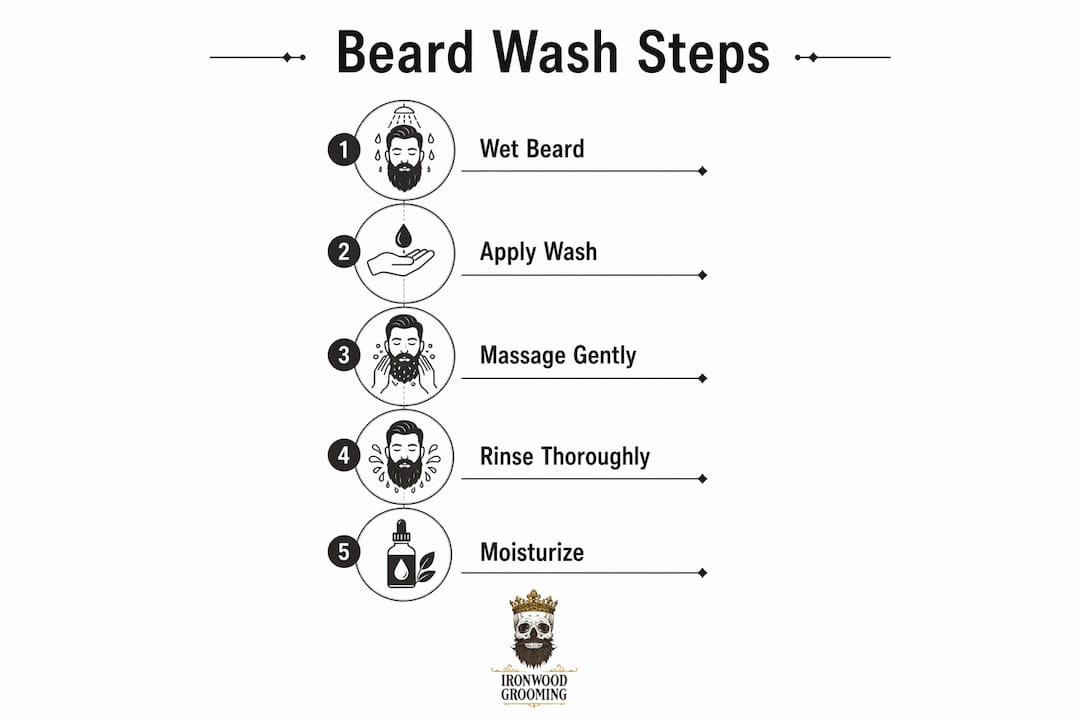
Step-by-step beard wash routine backed by skin science
Product choice sets the foundation, but technique determines how much benefit you actually get. A well-formulated wash used poorly still delivers mediocre results.
- Comb before wetting. Use a wide-tooth comb to detangle and loosen surface debris, working from tips to roots. This reduces mechanical stress during washing and helps the cleanser reach the skin.
- Wet thoroughly with lukewarm water. Run water at around 38°C (100°F) through your beard for at least 20 seconds, separating sections with your fingers so every strand is soaked. Warm (not hot) water promotes slight cuticle lifting and hygroscopic swelling, improving cleanser penetration without excessive lipid stripping.
- Apply the right amount. Use a dime-sized amount for shorter facial hair and up to a nickel-sized amount for a fuller beard. Beyond that, you increase residue, not cleaning power.
- Massage in circular motions for 1–2 minutes. Work fingertips down to the skin beneath the hair. Circular massage improves contact with follicles, supports gentle exfoliation, and stimulates local circulation — all of which help dislodge buildup that surface-only scrubbing misses.
- Rinse thoroughly for at least one minute. Continue with lukewarm water while separating strands. Residual surfactant left on the skin can prolong acid mantle disruption; rinsing until the water runs clear minimizes this effect.
- Pat dry gently. Press with a clean towel rather than rubbing. Rubbing increases frictional damage and frizz, especially in coarse or curly beards.
- Apply beard oil immediately. Slightly damp skin and hair improve oil spread and absorption. Work the oil into the skin beneath the beard first, then through the hair. For persistent beard itch, pairing proper wash frequency with daily oil application is often the most effective long-term fix.
- Dispose sustainably. Rinse empty containers before recycling. Ironwood’s Reign Face & Beard Soap uses minimal packaging by design — bar formats inherently reduce plastic use.
Pro tip: On non-wash days, a brief lukewarm water rinse refreshes the beard and removes surface dust without stripping sebum. This extends the life of your beard wash and reduces packaging turnover over time.
How often to wash — and what to do between wash days
For most men, two to three beard washes per week strike the right balance between cleanliness and barrier preservation. Even with a gentle formula, daily washing removes the sebum your skin produces to protect and hydrate the beard. Over-cleansing drives the very itch, flake, and brittleness that many men try to fix with more product.
Your activity level and environment should guide your schedule more than the calendar. Outdoor work in heat and humidity may justify three washes per week. A climate-controlled office routine may do well with two. The signal to wash is buildup, odor, or visible debris — not simply the day of the week.
Between washes:
- Rinse with lukewarm water to remove surface particles and refresh the hair without stripping oils.
- Apply a small amount of natural beard oil daily, focusing on the skin beneath the hair, to maintain moisture and reduce itch.
- Brush nightly with a boar-bristle brush to distribute sebum and oils evenly and clear accumulated pollutants.
- Use a beard balm for light hold and an additional barrier against wind and pollution when needed.
Longer beards generally require more oil and more frequent brushing. Shorter beards and stubble are more prone to ingrown hairs; gentle exfoliation once or twice a week helps. Dry climates call for heavier conditioning, while humid environments may require slightly more frequent washing to manage buildup. Adjust the routine to your environment and skin response rather than following a rigid schedule.
DIY eco-friendly beard wash with science-informed ingredients
Making your own beard wash gives you full control over what touches your skin. Liquid castile soap — saponified plant oils — is 100% plant-based, readily biodegradable under OECD 301 conditions, and generally well tolerated, making it a practical base for a simple homemade formula.
Basic formula (liquid, ~120ml):
- 90ml liquid castile soap
- 30ml distilled water or aloe vera juice
- 1 tsp jojoba oil
- 1 tsp argan oil
- 5–10 drops tea tree oil (antimicrobial) or lavender oil (soothing)
- 0.5g vitamin E oil (antioxidant — helps interrupt lipid oxidation in the carrier oils and extend shelf life)
Combine in a dark amber glass bottle, shake gently before each use, and store away from direct sunlight. UV light accelerates free radical oxidation in plant oils; amber glass blocks the most relevant wavelengths. With vitamin E included, this type of formula typically remains stable for several months under normal bathroom conditions.
For dry or coarse beards: Swap distilled water for aloe vera juice and increase jojoba oil to 2 teaspoons. Aloe vera adds extra hydration and soothing to the skin; additional jojoba helps compensate for the interrupted sebum distribution common in coarse, coily beards.
For oily beards: Keep the water base and reduce carrier oils to half a teaspoon each. Add about 5 drops of peppermint oil for a mild astringent effect and a fresh feel without over-drying.
Pro tip: Store in glass, not plastic. Glass protects essential oils from UV degradation and avoids potential leaching of plasticizers. Dark amber or cobalt bottles are the same format used for quality beard oils for this reason.
Sustainable disposal and packaging choices
Sustainable grooming extends beyond the formula itself. How you handle packaging at end-of-life matters.
- Glass containers — rinse and repurpose for storage, or place in glass recycling streams.
- Aluminum tubes and pump tops — often recyclable in US curbside programs, though pump mechanisms may need separation. Check local guidance.
- Plastic containers — codes 1 (PET) and 2 (HDPE) are widely accepted; codes 3, 6, and 7 are often excluded.
- Bar soap formats — paper or cardboard wrappers compost or recycle easily, and bar formats typically last longer than liquids, reducing total packaging over time.
Alternating between a liquid wash and a bar soap on different days can further reduce your packaging footprint. For a deeper dive into bar formats, read the guide on how to use beard soap the right way.
Key takeaways
| Point | The science behind it |
|---|---|
| Sulfates disrupt the acid mantle | SLS is well documented to increase TEWL and disturb facial skin’s pH 4.5–5.5 acid mantle; milder alkyl polyglucoside surfactants (decyl glucoside, coco-glucoside) clean effectively with less barrier disruption. |
| Biodegradable surfactants protect waterways | APGs meet OECD 301 criteria for ready biodegradability, breaking down in wastewater treatment systems more completely than SLS and SLES, which can leave more persistent residues. |
| Wash 2–3 times per week | Over-cleansing removes protective sebum faster than it can be replenished; frequency should follow buildup and activity level rather than a rigid daily schedule. |
| Massage technique reaches the skin | Circular fingertip massage for 1–2 minutes improves cleanser contact with follicles and dislodges deeper buildup that surface-only washing misses. |
| Apply oil immediately post-wash | Slightly damp skin and hair absorb oils more efficiently; post-wash application helps restore the lipid layer before TEWL rises as the skin dries. |
FAQ
What makes a beard wash eco-friendly?
An eco-friendly beard wash uses readily biodegradable surfactants — typically alkyl polyglucosides such as decyl glucoside or coco-glucoside — that break down in wastewater treatment systems without persistent residues. It avoids sulfates, parabens, phthalates, and undisclosed synthetic fragrance blends, and favors packaging like glass, aluminum, or certified recyclable plastics.
Why is pH balance important in a beard wash?
Facial skin’s acid mantle sits around pH 4.5–5.5. Products formulated at significantly higher pH, such as many scalp shampoos and bar soaps, temporarily disrupt this mantle, increasing TEWL and irritation risk. A beard wash in the 4.5–5.5 range cleans while keeping the skin closer to its natural pH.
How often should I wash my beard?
Most men do best with two to three washes per week. Daily washing, even with a gentle formula, can strip sebum faster than it is replaced. Let buildup, odor, and environment — not the calendar — dictate when you wash.
Can I make my own eco-friendly beard wash?
Yes. Liquid castile soap provides a plant-based, biodegradable base. Adding small amounts of jojoba and argan oil for conditioning, tea tree or lavender oil for antimicrobial and soothing effects, and vitamin E for antioxidant preservation creates a simple, science-informed formula. Store in amber glass away from direct sunlight.
Which plastic recycling codes are most widely accepted?
In many US municipal programs, plastics labeled with codes 1 (PET) and 2 (HDPE) are widely accepted. Codes 3, 6, and 7 are often excluded or require specialized facilities. Always check local guidelines, especially for mixed-material pumps and closures.
Keep Reading
- How to Use Beard Soap the Right Way (And Why It Changes Everything)
- Jojoba Oil vs. Argan Oil for Beards: Which One Does Your Skin Actually Need?
- Beard Itch: Why It Happens and How to Stop It for Good
Part of the Ironwood Regimen Series
New to beard care? Start here.
The Beginner Beard Regimen is the complete start-here guide — cleanse, hydrate, seal — for guys building their first real routine.
See the Beginner Regimen →
