


Ingrown hairs in the beard happen when a shaved or cut hair re-enters the skin instead of growing outward, triggering inflammation, redness, and those stubborn bumps you know all too well. The medical term for this is pseudofolliculitis barbae, and it’s not just a cosmetic nuisance. It’s a mechanical and biological condition driven by two main forces: your hair’s natural curl pattern and how you shave. Men with tightly coiled or coarse facial hair carry the highest risk because the hair’s curved shape makes it prone to bending back into the skin after a close cut. Shaving against the grain, stretching the skin tight, and using blade razors that cut hair below the skin’s surface all compound the problem.
The two pathways that create ingrown hairs are intrafollicular (the hair curves back into the follicle before exiting) and transfollicular (the hair exits the follicle but then pierces the surrounding skin). Both trigger the same inflammatory response. Genetics also play a role: variations in keratin genes, specifically KRT75 and K6hf, affect hair shaft shape and raise susceptibility.
Key causes at a glance:
- Tightly curled or coarse beard hair
- Close blade shaving that leaves sharp hair tips below the skin line
- Shaving against the direction of hair growth
- Stretching the skin while shaving
- Keratin gene variants that alter hair shaft structure
- Repeated shaving passes over the same area
- Wearing tight clothing that presses hair back into the skin
What ingrown beard hairs actually are, and who gets them most
An ingrown beard hair forms when a facial hair grows sideways or curves downward into the skin rather than up and out of the follicle. The result is a small, raised bump, often red and tender, that the body treats like a foreign invader. That immune response is what causes the swelling and discomfort.
Pseudofolliculitis barbae is the clinical name for the pattern of recurring ingrown hairs in the beard area, and it affects men who shave regularly far more than those who don’t. Men with tightly curled or coarse hair face a significantly higher risk, particularly Black men, because the natural curl of the hair shaft makes re-entry into the skin almost inevitable after a close shave. Understanding your coarse beard hair is the first step toward managing this condition.
Pseudofolliculitis barbae is not an infection. It is a mechanical and biological response to hair penetrating skin tissue, which means antibiotics alone won’t solve it. Changing how you shave and how you care for your skin is what actually breaks the cycle.
Who is most affected:
- Men with naturally curly or coarse facial hair
- Men who shave daily or very frequently
- Black men, due to hair curl patterns common in that population
- Men required to shave under strict grooming mandates (such as military service)
- Anyone using blade razors with improper technique
How to recognize ingrown hairs: symptoms and skin effects
The most obvious sign of an ingrown beard hair is a small, raised bump, called a papule, that appears within a day or two of shaving. If the bump fills with pus, it becomes a pustule, which looks similar to a pimple but sits right along the shave line. You’ll often feel tenderness or itching before you can even see the bump clearly.
Left untreated, pseudofolliculitis barbae can cause complications that go well beyond temporary irritation. Repeated inflammation in the same follicle leads to post-inflammatory hyperpigmentation, which shows up as dark spots on the skin. Chronic cases can produce scarring or even keloids, especially in men already prone to them.
Symptoms to watch for:
- Small red or skin-colored bumps along the jaw, neck, or chin
- Pustules (pus-filled bumps) resembling acne
- Tenderness or itching around shaved areas
- Visible hair looping back into the skin
- Dark spots or uneven skin tone from repeated inflammation
- Thickened or scarred skin in severe, long-term cases
The real causes of ingrown beard hairs, explained
The biology starts with hair shape. A tightly curled hair shaft exits the follicle at an angle, and after shaving creates a sharp tip, that angled tip has a natural tendency to curve back toward the skin. Blade razors make this worse because they cut hair below the skin’s surface, leaving a pointed end that’s already primed to penetrate tissue as the hair grows. Close shaving is one of the most consistent triggers.
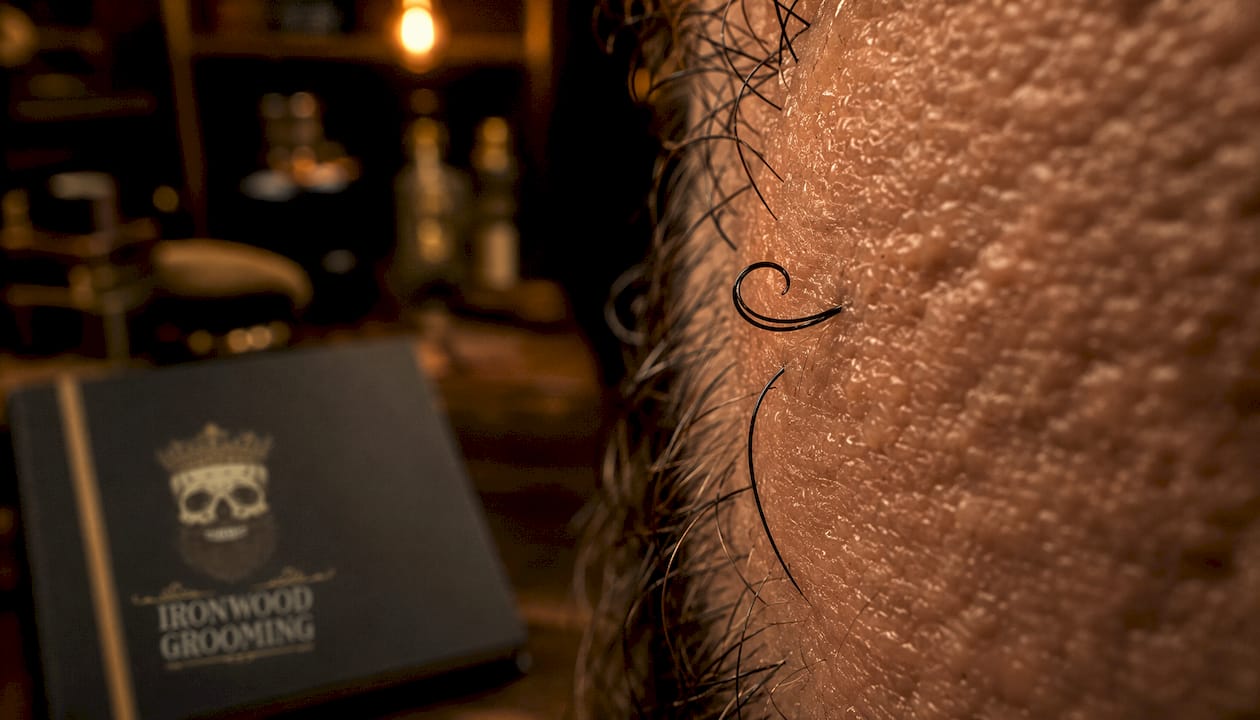
Shaving technique amplifies the biological risk. Pulling the skin tight while you shave allows the razor to cut even deeper, and when the skin relaxes, the hair tip retracts below the surface. Shaving against the grain produces the same sharp, subsurface cut. Areas where beard hair grows in multiple directions, like under the jawline, are especially vulnerable because hairs re-enter the skin from multiple angles after each shave.
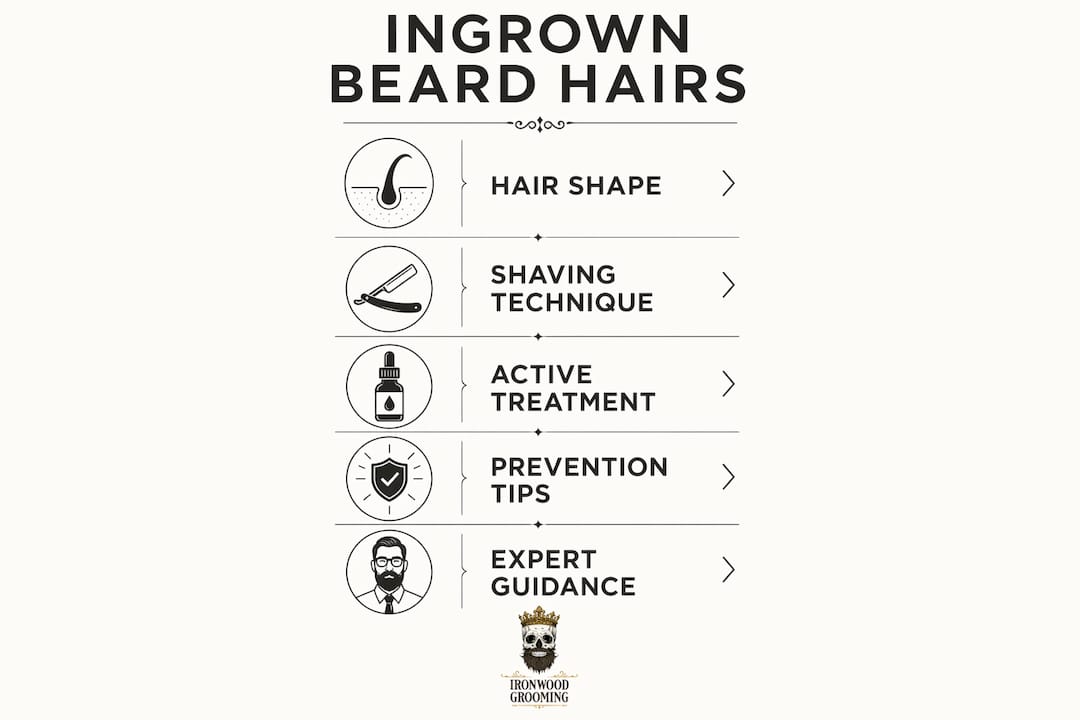
Genetics add another layer. Variations in keratin genes (KRT75 and K6hf) alter the shape of the hair shaft itself, making some men structurally more prone to ingrown hairs regardless of how carefully they shave. For these men, modifying grooming habits, not just adding a topical product, is the only path forward.
Specific causative factors:
- Curved hair shaft anatomy in coarse or curly hair
- Blade razors cutting hair below the skin line
- Shaving against the grain
- Skin stretching during shaving
- Keratin gene variants (KRT75, K6hf) affecting hair structure
- Multi-directional hair growth patterns under the jaw
- Repeated passes with a razor over the same skin area
How to treat active ingrown beard hairs
The first rule when you have active, inflamed bumps: stop shaving over them. Continuing to drag a blade across inflamed papules perpetuates the irritation and deepens the cycle. Give the skin a break, even a few days, and you’ll see a noticeable reduction in redness and swelling.
Warm compresses applied for several minutes soften the skin and help the trapped hair work its way closer to the surface. Once the tip of the hair is visible, you can use a sterile needle or fine-tipped tweezers to gently lift it free. Don’t dig or squeeze. The goal is to release the hair, not excavate it.
Treatment steps:
- Stop shaving over active bumps immediately
- Apply a warm, damp cloth to the area for 5–10 minutes
- Use a sterile needle to gently lift any visible hair tip
- Keep the area clean to prevent secondary bacterial infection
- Avoid picking or squeezing, which worsens scarring risk
- Resume shaving only after inflammation has fully cleared
Prevention tips and best shaving practices
Sharp razors are non-negotiable. A dull blade drags across the skin and creates jagged, uneven cuts that increase the chance of a hair tip curling back. Replace your blade regularly, and always shave with the grain to avoid cutting hair below the skin’s surface. Electric shavers, which cut hair at a less aggressive angle, carry a lower risk than blade razors.
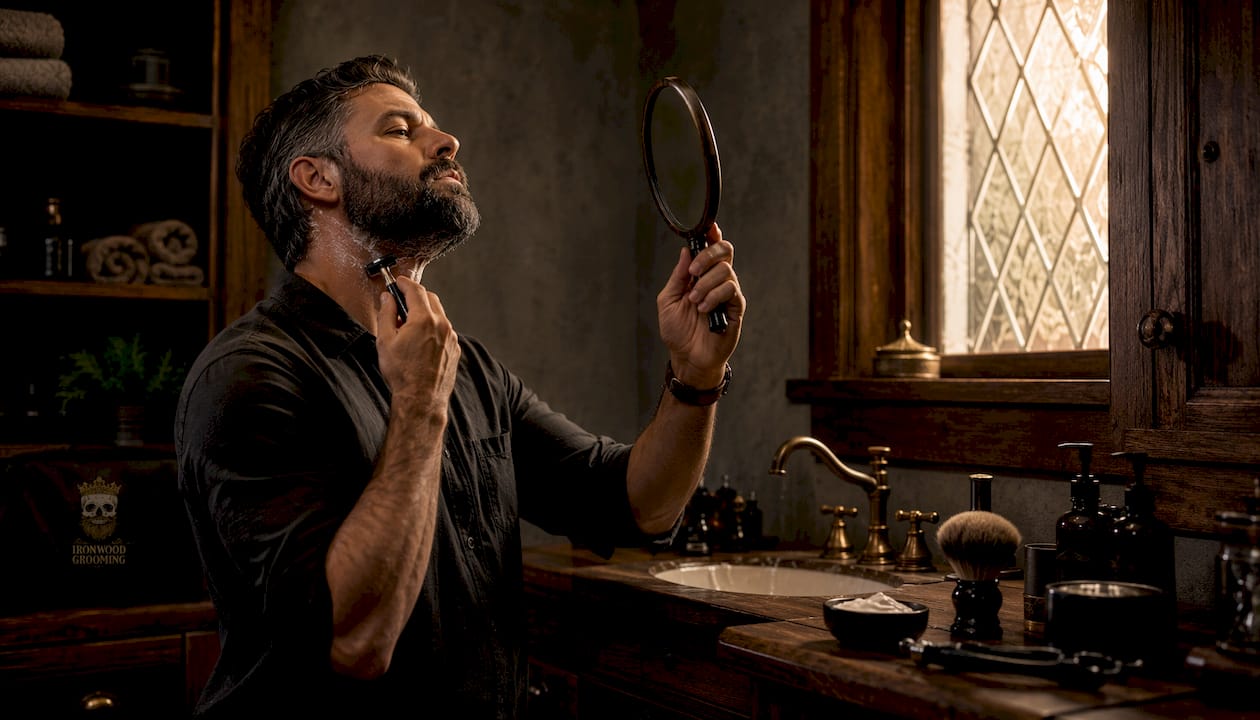
Preparation matters as much as technique. Washing your face with warm water before shaving softens the hair and opens the follicle, making the cut cleaner. Exfoliating gently before you shave removes dead skin cells that can trap growing hairs. A quality moisturizer or beard oil applied after shaving keeps the skin supple and reduces the friction that leads to irritation. Natural ingredients like beeswax can also protect irritated skin and form a barrier against further inflammation.
Prevention checklist:
- Use a sharp, clean razor and replace blades frequently
- Shave in the direction of hair growth, never against it
- Prep skin with warm water and gentle exfoliation before shaving
- Apply a moisturizing lubricant or shaving gel before the blade touches skin
- Avoid stretching the skin taut while shaving
- Limit passes over the same area to one or two at most
- Moisturize immediately after shaving to reduce post-shave irritation
Pro Tip: Switch to a single-blade or guarded razor if you’re prone to ingrown hairs. Multi-blade razors cut hair progressively shorter with each pass, which dramatically increases the chance of hair tips retracting below the skin line.
Expert grooming guidance from Ironwoodgrooming for coarse beards
Coarse beard hair behaves differently than fine hair, and that difference changes everything about how you should approach your grooming routine. The standard advice to “just exfoliate more” often falls short for men with wiry beard hair because the root issue is structural, not surface-level. Exfoliation helps, but it can’t change the angle at which a tightly curled hair exits the follicle.
The Ironwoodgrooming approach focuses on keeping the beard at a length that reduces the risk of re-entry. Letting stubble grow slightly longer, rather than shaving to the skin, means the hair tip never gets sharp enough to pierce tissue. Pairing that with a premium beard oil keeps the skin beneath the beard hydrated and resilient, which reduces the inflammatory response when a hair does curl back.
The goal isn’t just to treat the bump after it appears. It’s to build a daily routine that makes your skin and hair too healthy for ingrown hairs to take hold in the first place. Consistent moisture, the right tools, and technique that respects your hair’s natural growth pattern are what separate men who struggle with razor bumps from men who don’t.
Ironwoodgrooming expert tips for coarse beard management:
- Maintain a short but not skin-close beard length to reduce sharp hair tips
- Use a guarded or single-blade razor instead of multi-blade cartridges
- Apply beard oil daily to keep skin hydrated and follicles clear
- Follow a consistent beard care routine that includes cleansing, conditioning, and moisturizing
- Treat any active bumps immediately rather than shaving over them
- Recognize that genetic hair structure may require permanent technique adjustments, not just temporary fixes
Key Takeaways
Ingrown beard hairs are primarily a mechanical and biological condition caused by curved hair re-entering the skin after shaving, and changing your technique and daily care routine is more effective than any single topical treatment.
| Point | Details |
|---|---|
| Root cause is structural | Tightly curled or coarse hair and close blade shaving create sharp tips that penetrate skin. |
| Pseudofolliculitis barbae is not an infection | It’s a mechanical condition, so shaving habit changes outperform antibiotics alone. |
| Genetics raise your baseline risk | Keratin gene variants (KRT75, K6hf) alter hair shaft shape, requiring modified grooming strategies. |
| Untreated cases cause lasting damage | Chronic inflammation leads to hyperpigmentation, scarring, and keloids over time. |
| Daily moisture and technique are your best defense | Sharp razors, grain-direction shaving, and consistent beard oil use reduce ingrown hair risk significantly. |

