


Most beard dandruff isn’t dry skin. It’s seborrheic dermatitis, driven by a yeast called Malassezia, and it responds to a specific routine: a ketoconazole 1% wash two to three times a week (left on for three to five minutes before rinsing), exfoliation once to three times weekly, and a low-oleic moisturizer or beard oil applied daily. Stick with it for two to four weeks. If flaking persists or worsens, see a dermatologist.
TL;DR:
- Using a ketoconazole 1% wash two to three times weekly and exfoliating up to three times a week are key for persistent beard dandruff caused by yeast overgrowth.
- Applying a low-oleic oil or beard moisturizer daily while the skin is damp helps prevent flare-ups from returning during maintenance.
- The condition often shows as greasy yellowish flakes with redness, distinguishable from dry skin, which produces smaller, whiter flakes without irritation.
- In case of no improvement after four weeks or worsening symptoms, seeing a dermatologist is recommended for possible stronger treatments or ruling out other conditions.
- Proper sequencing of treatment—antifungal contact, gentle exfoliation, then moisture—is essential for effective resolution and long-term management.
Table of Contents
- What Causes Beard Dandruff in the First Place?
- How Do You Actually Treat It, Step by Step?
- How Do You Keep Beard Dandruff From Coming Back?
- When Should You See a Dermatologist About Beard Dandruff?
- What Ironwoodgrooming Gets Right About Beard Skin Science
- The Routine Matters More Than the Product
- Eviden Essential Beard Oil: A Maintenance Option Aligned With Medical Guidance
- Sources
What Causes Beard Dandruff in the First Place?
Your beard sits on some of the oiliest skin on your face, and that’s the problem as detailed in how beard skin care differs from regular facial care. Sebaceous glands cluster around hair follicles, and Malassezia, a yeast that lives on everyone’s skin, feeds on the oils those glands produce. When it overgrows, it triggers inflammation and the flaking men call beardruff. That process is seborrheic dermatitis, and clinical reviews confirm Malassezia as its primary driver, which is why treatment targets the yeast, not just the flakes.
Not all beard flaking looks the same. Seborrheic dermatitis usually shows up as greasy, yellowish flakes with redness underneath, while plain dry skin produces smaller, drier, whiter flakes without much irritation. The distinction matters because a moisturizer alone won’t fix a yeast overgrowth, and an antifungal wash is overkill for garden variety dryness.
A handful of triggers tend to set it off or make it worse:
- Stress and hormonal shifts, which increase oil production
- Seasonal changes, especially cold, dry winters or humid summers
- Heavy, high-oleic oils that feed Malassezia instead of starving it
- Inadequate cleansing that lets oil and dead skin build up at the root
- Over-washing or aggressive brushing, which strips the skin barrier and backfires
Beard flaking can occasionally overlap with psoriasis, eczema, or a fungal infection called tinea barbae. If your routine isn’t working after a few weeks, that overlap is worth ruling out, which is exactly what the last section of this guide covers.
How Do You Actually Treat It, Step by Step?
Treating an active flare comes down to sequencing: antifungal contact, gentle exfoliation, and immediate moisture, done in that order and not rushed.
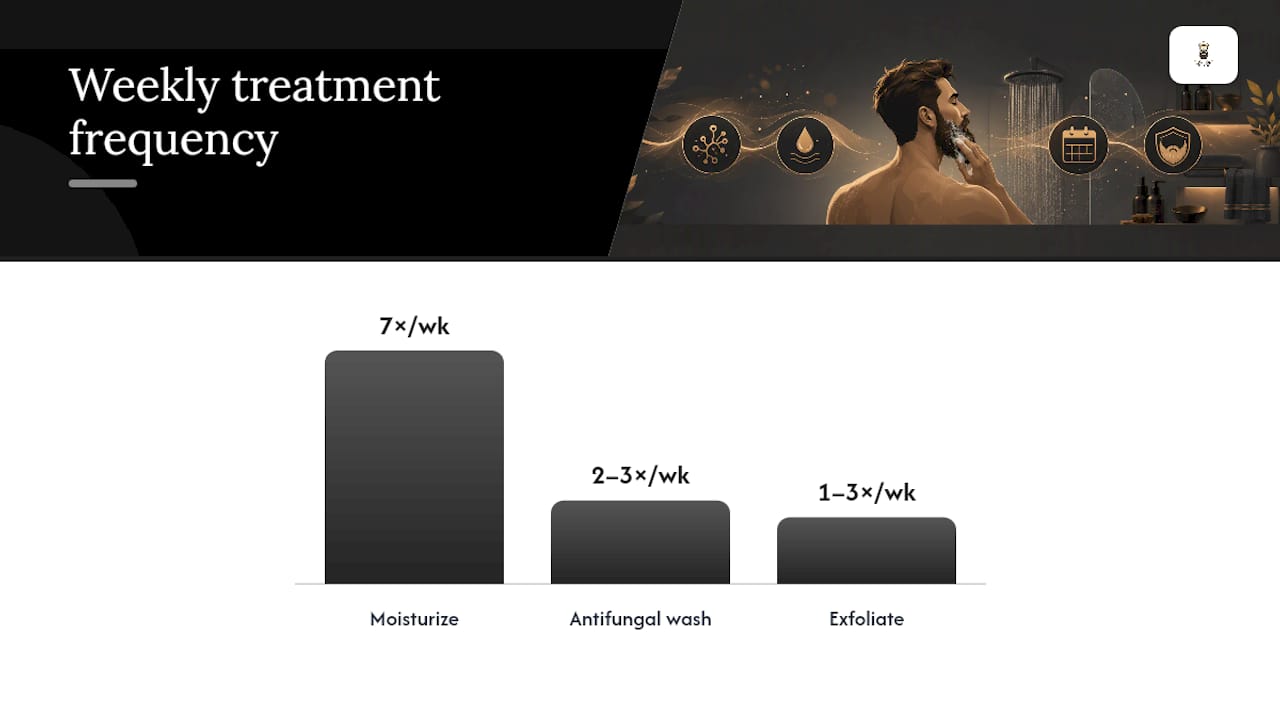
- Wash with a ketoconazole 1% shampoo two to three times a week. Apply it to dry or damp skin at the base of your beard, not just the hair, and massage it in like you’re working a cleanser into your scalp. Contact time is what makes ketoconazole work, so let it sit for three to five minutes before rinsing thoroughly with lukewarm water.
- Exfoliate once to three times a week, depending on how your skin reacts. Mechanical exfoliation (a soft brush or washcloth) works for most guys, but if your beard is thick enough to trap dead skin against the surface, a chemical exfoliant like a low-strength salicylic acid reaches the skin more reliably than a physical scrub. During an active flare, skip aggressive scrubbing; it triggers more inflammation instead of clearing it.
- Moisturize daily while your beard is still damp. Skipping this step causes your skin to overcompensate with more oil production, which feeds the same yeast you’re trying to control. Choose an MCT (C8) or jojoba based oil over anything high in oleic acid, and apply a few drops, enough to coat the skin without leaving it greasy.
- On non-wash days, cleanse gently with lukewarm water or a mild, fragrance-free cleanser. Avoid hot water, which strips natural oils and irritates already inflamed skin, and pat your beard dry instead of rubbing it with a towel.
- Skip petroleum jelly and other occlusive products during active treatment. They trap moisture against the skin, which sounds helpful but actually creates the warm, damp environment Malassezia thrives in.
Pro Tip: Apply your ketoconazole wash right before you brush your teeth or shave, not right as you step into the shower. Giving it a full three to five minutes of undisturbed contact time, rather than rinsing the second the water hits it, is the difference between a wash that works and one that doesn’t.
Rinse thoroughly. Leftover shampoo residue at the beard base is a common reason guys feel like the treatment “isn’t working” when really it’s just not being rinsed out.
How Do You Keep Beard Dandruff From Coming Back?
Once the flare clears, usually within two to four weeks, the goal shifts from treatment to maintenance. That means less frequency, not less consistency.
A realistic weekly rhythm looks like this:
- Cleanse daily with plain water or a gentle, fragrance-free cleanser
- Use your ketoconazole wash two to three times a week if you’re prone to flare-ups, or scale back to once a week if your skin has calmed down
- Exfoliate once a week if your skin tolerates it well
- Moisturize daily with a low-oleic oil or beard butter, applied to damp skin
Grooming habits matter more than most guys assume. Brushing or combing more than once or twice a day creates chronic friction that irritates the skin and traps dead cells instead of clearing them, which quietly undoes your treatment progress. Keep your brush and comb clean, since built-up oil and skin cells on grooming tools can reintroduce the exact buildup you’re trying to prevent. Trim regularly to keep airflow reaching the skin underneath.
Product selection is where most maintenance routines quietly fail. Avoid heavy, occlusive oils and anything high in oleic acid, like straight olive or castor oil, since they can feed the yeast that caused the problem in the first place. Reach for MCT or jojoba based formulas instead, and keep cleansers fragrance-free to avoid unnecessary irritation. If you know a stressful week or a seasonal shift is coming, bump your medicated wash back up temporarily rather than waiting for flakes to reappear.
When Should You See a Dermatologist About Beard Dandruff?
Home treatment handles most cases, but certain signs mean it’s time for a professional evaluation rather than another round of over-the-counter products.
- Skin that’s cracked, oozing, or acutely painful to the touch
- No improvement after four full weeks of consistent ketoconazole use
- A rash that’s spreading beyond the beard line or intensifying
- Patchy hair loss alongside the flaking, which can signal a fungal infection like tinea barbae
A dermatologist may prescribe a higher-strength topical antifungal, a short course of a facial-safe topical steroid for a stubborn flare, or a calcineurin inhibitor for cases where steroids aren’t ideal long-term. Prolonged steroid use on facial skin thins it over time, so these are meant as short bridges, not permanent fixes. If your dermatologist suspects tinea barbae or a bacterial infection instead of straightforward seborrheic dermatitis, a skin scraping or fungal culture confirms the diagnosis before treatment changes course. Whatever you’re prescribed, follow the exact duration given and resist the urge to self-extend a steroid regimen once flakes disappear.
What Ironwoodgrooming Gets Right About Beard Skin Science
Robert, who writes Ironwoodgrooming’s grooming blog, has spent years breaking down skin-barrier care and sensitive-skin beard routines for men whose facial hair doesn’t cooperate with generic advice. That focus shapes how Ironwoodgrooming formulates.
- Every blend is small-batch and plant-based, with no filler oils added just to stretch a formula
- Formulations lean on low-oleic carriers instead of the olive- and castor-heavy oils that can feed Malassezia
- Ingredient lists stay simple enough to check against the “oils to avoid” guidance above
None of that replaces a dermatologist’s diagnosis. It does mean the products sitting in your medicine cabinet won’t work against the treatment plan your skin actually needs, a detail covered in more depth in Ironwoodgrooming’s guidance on vegan beard care for reactive skin.
The Routine Matters More Than the Product
Here’s what most guys get backwards: they treat beard dandruff like a product problem when it’s actually a sequencing problem. You can own the best ketoconazole wash on the market and still get nowhere if you rinse it out after thirty seconds instead of giving it the three to five minutes it needs to work. Contact time is the unglamorous detail that decides whether a treatment plan succeeds, and it’s the detail conventional advice skips past to sell you the next product.
The other place conventional wisdom falls short is oil selection. Guys reach for whatever smells good or feels premium without checking whether it’s high in oleic acid, and then wonder why their flaking returns every few weeks despite a “good” routine. Fix the sequence first: antifungal contact, gentle exfoliation, then moisture. Fix your oil choice second. Everything else, brush frequency, water temperature, product branding, is secondary to those two decisions.
— Robert
Eviden Essential Beard Oil: A Maintenance Option Aligned With Medical Guidance
Once your skin has calmed down, Eviden Essential Beard Oil fits the maintenance phase of this routine, not the active-flare phase. It’s built to condition and support your skin barrier daily, not to treat an existing case of seborrheic dermatitis on its own.
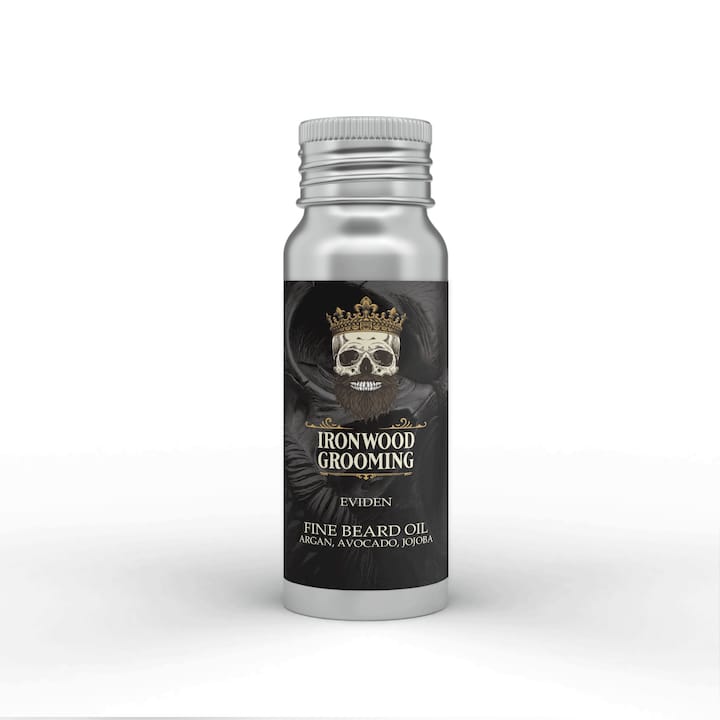
Its formulation matches the low-oleic guidance dermatologists point to: a plant-based blend without the heavy, high-oleic carriers that can feed Malassezia, and light enough that it absorbs instead of sitting on the surface. Work a few drops into a damp beard right after your wash, while your skin can still absorb it, and you get daily barrier support without undoing the work your medicated shampoo just did. If your maintenance routine needs an oil that won’t fight against it, that product page is the place to start.
This article is general information, not a substitute for advice from a qualified doctor. Consult a qualified healthcare professional about your own circumstances before acting on anything here.
Sources
- How to Treat Beard Dandruff - WebMD
- How to Get Rid of Beard Dandruff | GQ
- PMC article on Malassezia and seborrheic dermatitis

