


Rinse your beard the moment you leave the pool, before the chlorine has a chance to settle in. Then run through a short cleanse, condition, dry, and seal sequence with the right products. Do this after every swim and you stop dryness, frizz, and color fading before they start. Skip it a few times and the damage compounds fast.
TL;DR:
- Rinsing your beard for 60 to 90 seconds with lukewarm water immediately after swimming prevents chlorine from bonding with hair proteins.
- Using a sulfate-free beard wash two to three times weekly restores moisture and handles chemical buildup without damaging the hair.
- Applying beard oil to the skin before drying seals in moisture, rebuilds lipids, and prevents porosity and brittleness caused by chlorine damage.
- Deep-conditioning treatments and trimming damaged ends are essential for repairing already brittle or greenish-tinted beard hair.
- Pre-wetting the beard and applying a light barrier oil before swimming significantly reduces chlorine absorption and damage over time.
Table of Contents
- Your Post-Swim Beard Care Checklist (3 to 6 Minutes)
- How Does Chlorine Actually Damage Beard Hair?
- What’s the Best Way to Wash and Rehydrate After a Swim?
- How Do You Repair a Beard That’s Already Chlorine Damaged?
- Can You Protect Your Beard Before You Even Get in the Water?
- Which Ironwood Grooming Products Fit Each Step?
- What I’d Tell Any Swimmer Serious About Their Beard
- What Actually Works vs. What Sounds Good
- Ready to Build Your Swim-Proof Beard Routine?
- Sources
Your Post-Swim Beard Care Checklist (3 to 6 Minutes)
You don’t need a spa session after every lap workout. You need a routine you’ll actually repeat, even when you’re cold, tired, and ready to get home. Here’s the sequence that works whether you swam for 20 minutes or two hours.
- Rinse immediately. Step under a shower or sink and run lukewarm water through your beard for 60 to 90 seconds, working it down to the skin. This is the single step that matters most, since chlorine keeps reacting with hair proteins the longer it sits.
- Wash with a beard-specific cleanser. You don’t need this after every swim, but a sulfate-free beard wash 2 to 3 times a week handles chemical buildup without over-stripping.
- Condition or rehydrate. A leave-in conditioner or a few drops of beard oil worked into damp hair replaces what the rinse and wash removed.
- Dry gently. Pat, don’t rub. A microfiber towel or old cotton t-shirt cuts friction that leads to frizz and breakage.
For short swims, steps 1 and 3 alone will usually cover you. For anything over 45 minutes, or daily training sessions, don’t skip the wash.
Pro Tip: Keep a small travel bottle of beard oil in your gym bag. A dry beard left untreated for even a few hours after a swim absorbs less product later.
How Does Chlorine Actually Damage Beard Hair?
Chlorine doesn’t just dry out your beard. It changes the hair’s structure. Chlorinated water strips away the natural sebum coating each strand, and that loss of oil opens the hair cuticle, the outer layer that normally lies flat and locks in moisture.
Once that cuticle is raised, the hair becomes more porous, and porous hair behaves differently in every way that matters to your beard:
- It absorbs and loses moisture faster, so it swings between waterlogged and bone dry.
- It discolors more easily, which is why lighter or gray beards sometimes take on a greenish or brassy tint after months of pool exposure.
- It snaps and splits more readily under the stress of towel drying or combing.
Repeat that cycle two or three times a week, and buildup from chemicals starts collecting at the base of the hair, tightening skin and triggering flaking underneath. That’s when a beard stops feeling coarse and starts feeling brittle.
What’s the Best Way to Wash and Rehydrate After a Swim?
Getting this part right is where most guys either save their beard or slowly wreck it. The order and the products both matter.
Rinsing: Use lukewarm water, not hot. Hot water feels good but strips more oil than you’re replacing. Ninety seconds of thorough rinsing, working from the skin outward, removes most surface chlorine before it fully bonds to the hair.
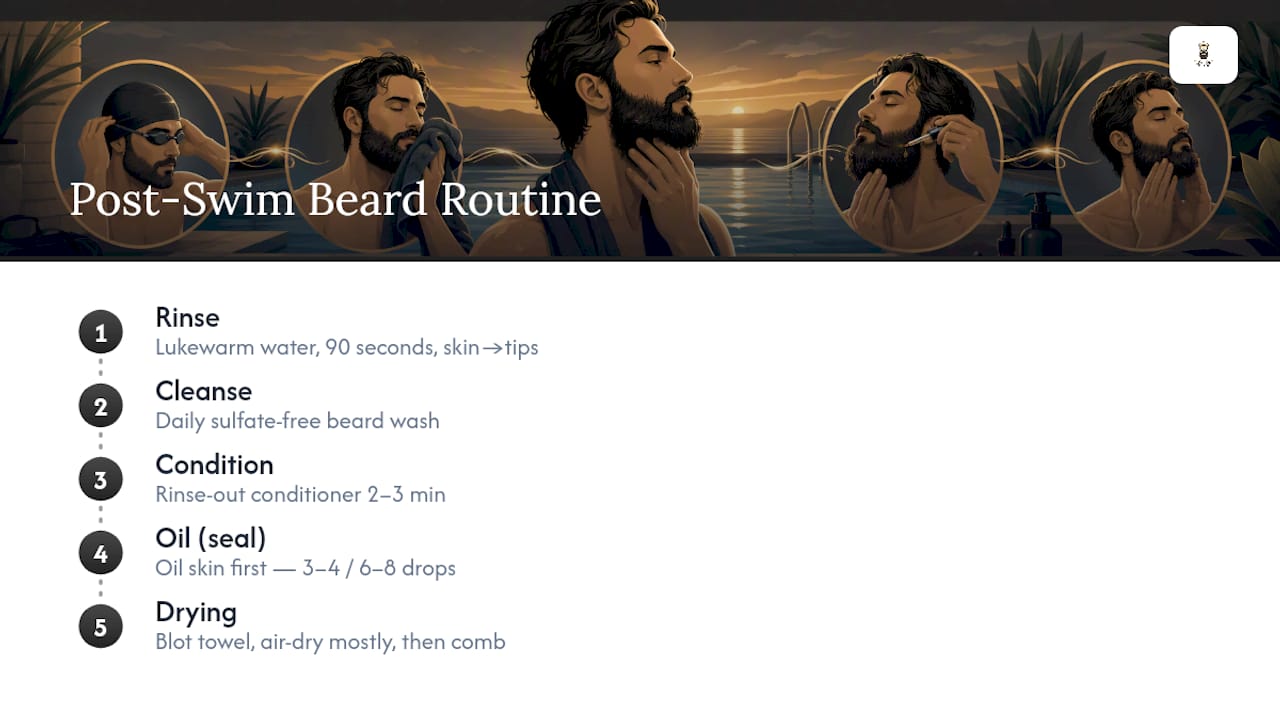
Cleansing: Pick a sulfate-free, beard-specific wash for regular use. Dermatologists recommend washing the face and beard daily with a gentle cleanser suited to your skin type, then following with a moisturizer. If you swim daily, that daily gentle cleanse becomes non-negotiable, not optional.
Conditioning: After washing, a rinse-out conditioner left on for two to three minutes replenishes lipids the chlorine pulled out. On non-wash days, a leave-in conditioner or beard balm does the same job without the extra step.
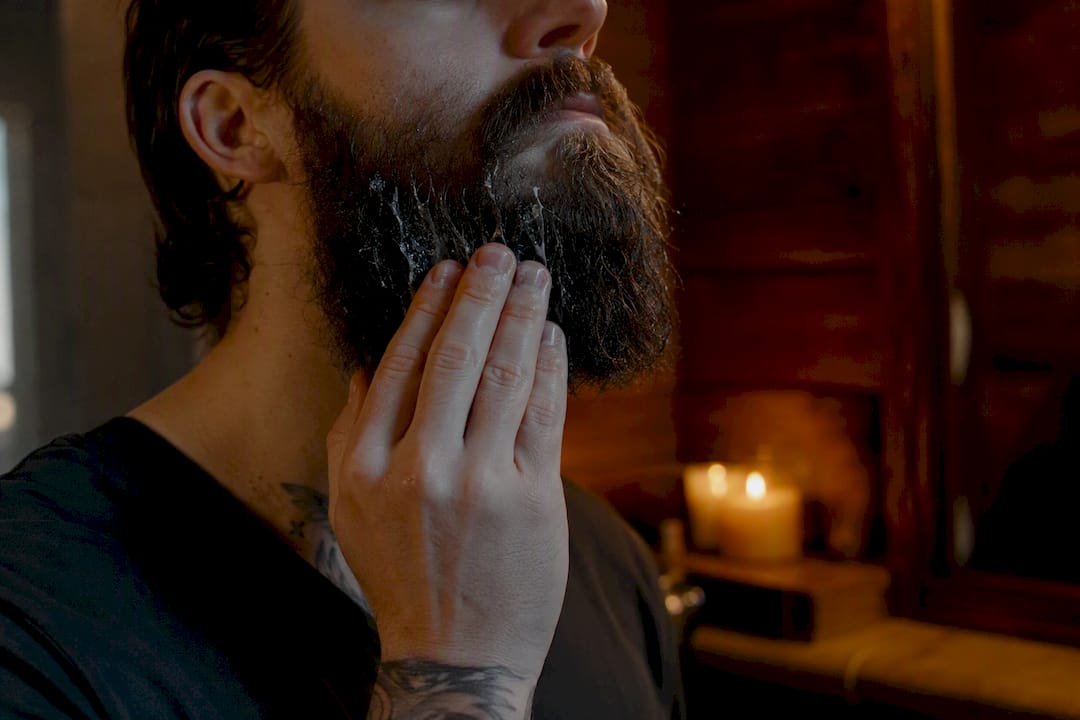
Sealing with oil: This is where most men get the technique wrong. Apply oil to the skin first, not just the hair. Massage 3 to 4 drops into the skin beneath a short beard, or 6 to 8 drops for anything past two inches, then comb it through to coat the strands.
Drying: Never rub with a towel. Blot, then let the beard air dry most of the way before combing to avoid tearing weakened, porous strands.
Pro Tip: If your beard still feels waxy or tight an hour after drying, you’re using too little conditioner, not too much oil. Chlorine-damaged hair drinks moisture faster than usual.
How Do You Repair a Beard That’s Already Chlorine Damaged?
If your beard already feels straw-like or has that faint greenish cast, you need a repair phase, not just maintenance.
- Clarify sparingly. A clarifying wash once a week at most removes mineral and chemical buildup, but always follow it with a heavier conditioner. Clarifying alone without replacing lost oils just accelerates dryness.
- Deep-condition monthly. A monthly deep-conditioning treatment left on for 10 to 15 minutes restores moisture that daily rinsing can’t fully replace.
- Trim damaged ends. Split ends travel up the shaft if left alone. A trim regularly every several weeks removes the worst of it, more often if you’re swimming daily.
- Watch the skin, not just the hair. Persistent redness, painful bumps, or flaking that doesn’t respond to conditioning after two or three weeks is a signal to see a dermatologist rather than push through with more product.
Can You Protect Your Beard Before You Even Get in the Water?
The easiest way to reduce chlorine damage is to give it less hair to attack in the first place.
Wetting your beard with clean, fresh water before you swim means the hair absorbs less pool water once you’re in, since it’s already saturated. Follow that with a thin coat of beard oil or a light balm worked into the skin and hair. It acts as a temporary barrier the same way a swimmer’s cap protects scalp hair.
- Pre-wet with tap water for 30 seconds before entering the pool.
- Apply a light layer of oil, focused on the skin, not a heavy coating.
- Tie or braid a longer beard to cut down on drag and repeated wetting.
- Limit full dunking when you can. Every submersion adds more chlorine contact time.
Pro Tip: A barrier oil works best when applied 5 to 10 minutes before you swim, giving it time to settle into the hair shaft instead of sitting on top.
Which Ironwood Grooming Products Fit Each Step?
Matching the right product to the right moment makes this routine easier to stick with. Here’s how it lines up.
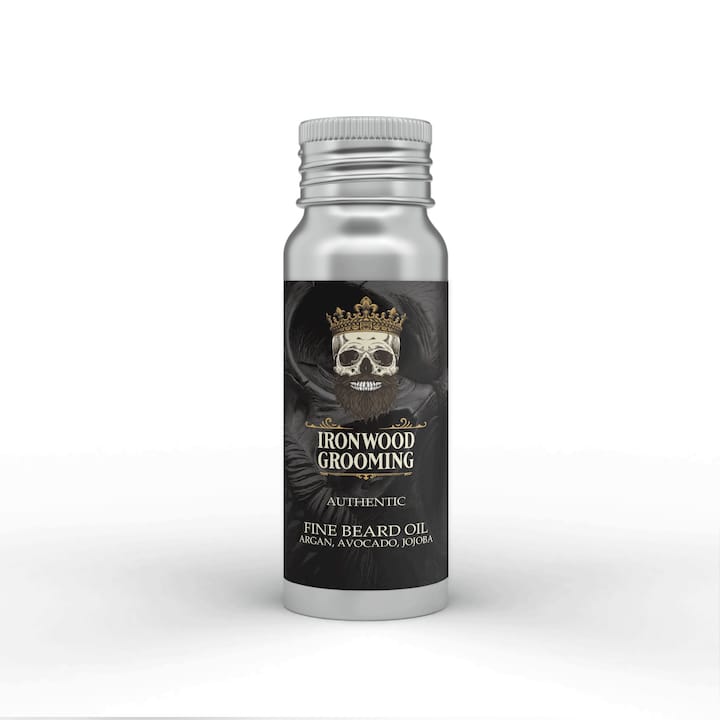
- Pre-swim barrier: Authentic Essential Beard Oil works well as a light, fast-absorbing coat before you get in the water. Eviden Essential Beard Oil and Crown Beard Oil are equally suited if you prefer a different scent profile for your gym bag.
- Post-swim hydration: The Majestic Beard Bundle pairs a cleanser, conditioner, and oil in one kit, built for guys who don’t want to think through three separate purchases. If you have sensitive skin or prefer plant-based formulas, the Vegan Majestic Beard Bundle covers the same routine.
- Detangling wet hair: The Stainless Moustache Comb handles a wet mustache without snagging, while the Deer Beard Comb works through a wet, tangled beard with less breakage than plastic combs.
- Finishing touch: A dab of Moustache Wax once the beard is dry keeps the mustache shaped through the rest of your day.
What I’d Tell Any Swimmer Serious About Their Beard
My own post-swim routine is short on purpose: rinse in the locker room shower before I even towel off, work a beard-specific wash through three times a week, and seal everything with oil applied to the skin first. That last part is the one most guys skip, and it’s the one that matters most for anyone dealing with beardruff or a coarse beard that won’t hold moisture. Ironwood Grooming builds its formulas in small batches specifically for men with coarse or sensitive-skin beards, which is exactly the profile chlorine punishes hardest.
If flaking, redness, or persistent irritation doesn’t ease up after two to three weeks of consistent conditioning, that’s your cue to see a dermatologist rather than keep layering on more oil. Product solves a lot of chlorine damage. It doesn’t solve a skin condition.
What Actually Works vs. What Sounds Good
Most beard advice for swimmers overcorrects toward washing more, when the real fix is washing smarter and sealing better. A daily beard wash sounds thorough, but for most guys it strips oil faster than a good conditioner and oil routine can replace it. The research backs a middle path: gentle daily rinsing, a dedicated cleanse a few times a week, and oil applied to the skin every single time you dry off.
The step people skip most is the pre-swim barrier. It takes fifteen seconds and cuts down how much chlorine your beard absorbs in the first place, which makes every step afterward more effective. Trimming gets undervalued too. Guys will spend money on serums while ignoring split ends that keep climbing up the shaft no matter how much oil goes on top.
If you swim four or five times a week, treat your beard like an athlete treats recovery: something you do consistently, not something you fix after it’s already broken.
— Robert
Ready to Build Your Swim-Proof Beard Routine?
Guesswork on product order is what leaves most swimmers with a straw-like, faded beard by the end of summer. Ironwood Grooming’s Majestic Beard Bundle solves that by pairing a cleanser, conditioner, and beard oil built specifically for coarse hair and daily wear, so you’re not mixing random products and hoping they work together. If you deal with sensitive skin or prefer plant-based ingredients, grab the Vegan Majestic Beard Bundle instead. Either kit gives you everything the post-swim routine above calls for, in one order. If your skin needs extra attention beyond the beard itself, pairing your routine with a simple three-step face care approach rounds things out. Order the bundle that matches your skin type today and have your full routine ready before your next swim.
Sources
- A dermatologist’s top tips for a healthy beard — American Academy of Dermatology
- Beard Care Dos and Don’ts: Sharp Beard in 2026 — The Barber List
- Pro beard care routine: The ultimate guide for men — Vixxar
- How to protect your beard from chlorine damage — Mayraki

