


Paraben-free beard products skip synthetic preservatives like methylparaben and propylparaben in favor of natural alternatives, making them a smarter default for sensitive skin and anyone watching daily chemical exposure. The core benefit is fewer irritation triggers and less cumulative buildup from ingredients your skin absorbs every day. Ironwoodgrooming builds its entire beard oil, wash, and balm lineup around this standard.
TL;DR:
- Paraben-free beard products use natural preservatives like vitamin E or rosemary extract, avoiding synthetic parabens linked to higher urinary paraben levels.
- Ingredients like jojoba and argan oil are preferred for their skin absorption and moisturizing benefits, while harmful parabens and synthetic fragrances should be avoided.
- Washing beards two to three times weekly with a gentle, sulfate-free cleanser helps prevent irritation and overproduction of dandruff.
- Patch testing new products for 24 hours is recommended to avoid sensitivities, especially if previous products caused reactions.
- A complete paraben-free routine includes natural oils, gentle washes, and styling tools like wood or steel combs for healthier, less irritated skin.
Table of Contents
- What Does Paraben-Free Actually Mean?
- Beard Oils, Washes, Balms, and Combs: What Each One Does
- How Do You Choose a Paraben-Free Beard Product?
- Ingredients Worth Seeking Out and Skipping
- Building a Daily Paraben-Free Beard Routine
- Ironwood Grooming’s Paraben-Free Lineup
- Less Is More With Concentrated Natural Formulas
- Ready to Switch? Here’s Where to Start
- Where to Learn More
- Sources
What Does Paraben-Free Actually Mean?
Parabens are synthetic preservatives that manufacturers add to cosmetics to stop mold, yeast, and bacteria from growing inside the bottle. The FDA identifies the most common forms as methylparaben, propylparaben, butylparaben, and ethylparaben, and confirms they’re allowed in cosmetics while research on long-term safety continues. That’s the honest picture: parabens aren’t banned, but the science isn’t fully settled either, which is exactly why cautious buyers steer around them.
The exposure angle backs this up. A cohort study on personal care product use found that men using more lotions and grooming products showed measurably higher urinary paraben concentrations, with lotions and suntan products among the strongest predictors. Your skin doesn’t just sit on top of what you apply. It absorbs a portion of it daily.
Who benefits most from going paraben-free?
- Men with eczema, rosacea, or a history of contact dermatitis
- Anyone who’s noticed redness or bumps after switching grooming products
- Guys applying beard oil or balm daily, since frequency multiplies exposure
- Eco-conscious buyers who want fewer synthetic inputs in their routine overall
Beard Oils, Washes, Balms, and Combs: What Each One Does
Every category in a paraben-free lineup solves a different problem, and knowing which one fixes what saves you from buying the wrong thing twice.
- Beard oil softens hair and moisturizes the skin underneath using carrier oils like jojoba or argan. It’s the daily foundation for anyone dealing with itch or flaking.
- Beard wash cleans without the harsh sulfates found in regular shampoo, which strip natural oils your beard actually needs.
- Balm and butter add light hold and deeper conditioning, useful for taming flyaways on longer beards.
- Wax locks in shape for mustaches and styled edges, holding firm without turning stiff or crunchy.
- A quality comb, ideally wood or steel, distributes product evenly and reduces the static and breakage that plastic combs tend to cause.
Formulation priorities shift by category. Oils lean on natural carrier oils and skip water entirely, which limits microbial risk. Washes need gentle surfactants plus a natural preservative since water-based formulas spoil faster. Fragrance-free versions matter most in the wash and oil categories, where product sits closest to skin the longest.
How Do You Choose a Paraben-Free Beard Product?
Reading a label takes thirty seconds once you know what you’re scanning for. Here’s the process:
- Flip to the ingredient list first, not the front label. Marketing claims like “natural” carry no legal definition, but the ingredient panel doesn’t lie.
- Scan for the four common parabens: methylparaben, propylparaben, butylparaben, ethylparaben. If any appear, it’s not paraben-free regardless of what the bottle says.
- Check for other irritants beyond parabens: sodium lauryl sulfate (SLS), synthetic “fragrance” (a catch-all term that can hide dozens of undisclosed compounds), and denatured alcohol high on the list.
- Look for natural preservatives like tocopherol (vitamin E) or rosemary extract, which signal a brand actually solved the preservation problem instead of ignoring it.
- Patch test on your forearm for 24 hours before applying anything new to your face, especially if you’ve reacted to products before.
Pro Tip: Buy the smallest size available the first time you try a new brand. A four-ounce bottle that irritates your skin is a wasted purchase; a travel-size tester is a cheap lesson.
Ingredients Worth Seeking Out and Skipping
Not every “natural” claim holds up under scrutiny, so it helps to know the specific names doing the work.
Look for these:
- Jojoba oil, which mimics your skin’s natural sebum and absorbs without clogging pores
- Argan oil, rich in vitamin E and fatty acids for softening coarse hair
- Coconut-derived cleansers as a gentler alternative to sulfates in washes
- Glycerin, a humectant that pulls moisture into the beard and skin
- Tocopherol and rosemary extract as natural preservative systems, though these break down faster than synthetic options and require good formulation practice to work reliably
Skip or scrutinize these:
- Methylparaben, propylparaben, butylparaben, ethylparaben, in any order on the label
- Generic “fragrance” or “parfum” without a full breakdown of what’s inside
- Heavy concentrations of potent essential oils like cinnamon or clove if your skin reacts easily
Building a Daily Paraben-Free Beard Routine
Consistency beats intensity here. A simple routine run daily outperforms an elaborate one you abandon after two weeks.
- Wash your beard two to three times a week, not daily. Overwashing strips the natural oils your skin needs, especially with coarse or curly beards.
- Apply beard oil right after showering, while hair is still slightly damp, using two to four drops depending on beard length.
- Layer balm or butter on top if you need extra hold or you’re dealing with dry patches and flyaways.
- Reserve wax for styling the mustache or shaping specific sections, applied last.
- Cut back product volume, not frequency, if your skin runs sensitive. A dime-sized amount goes further than most men assume.
Dandruff and flaking under the beard often trace back to overwashing or skipping oil entirely, not a lack of cleaning. If greasiness shows up, reducing oil volume rather than skipping days usually solves it faster.
Ironwood Grooming’s Paraben-Free Lineup
Robert built Ironwoodgrooming around small-batch formulation, which means no fillers, no shortcuts, and no synthetic preservatives standing in for real ingredient quality. Every product below fits the paraben-free, sensitive-skin standard this article covers.
- Authentic Essential Beard Oil: a foundational daily oil built on lightweight carriers that won’t clog pores.
- Eviden Essential Beard Oil: formulated for reactive skin that needs consistent, fragrance-conscious hydration.
- Crown Beard Oil: a richer scented option for men who want more depth without synthetic fragrance chemicals.
- Ultra Soft Beard Wash: a sulfate-free cleanser that removes buildup without stripping natural oils.
- Deer Beard Comb: a natural wood comb that reduces static and distributes oil evenly.
- Stainless Moustache Comb: a durable steel option built for daily styling.
- Moustache Wax: firm hold for shaping without stiffness or shine.
- Majestic Beard Bundle: pairs oil, wash, and balm for a complete paraben-free starting kit.
Men with reactive skin should start with the sensitive-skin regimen page, which walks through product order and application amounts step by step.
Less Is More With Concentrated Natural Formulas
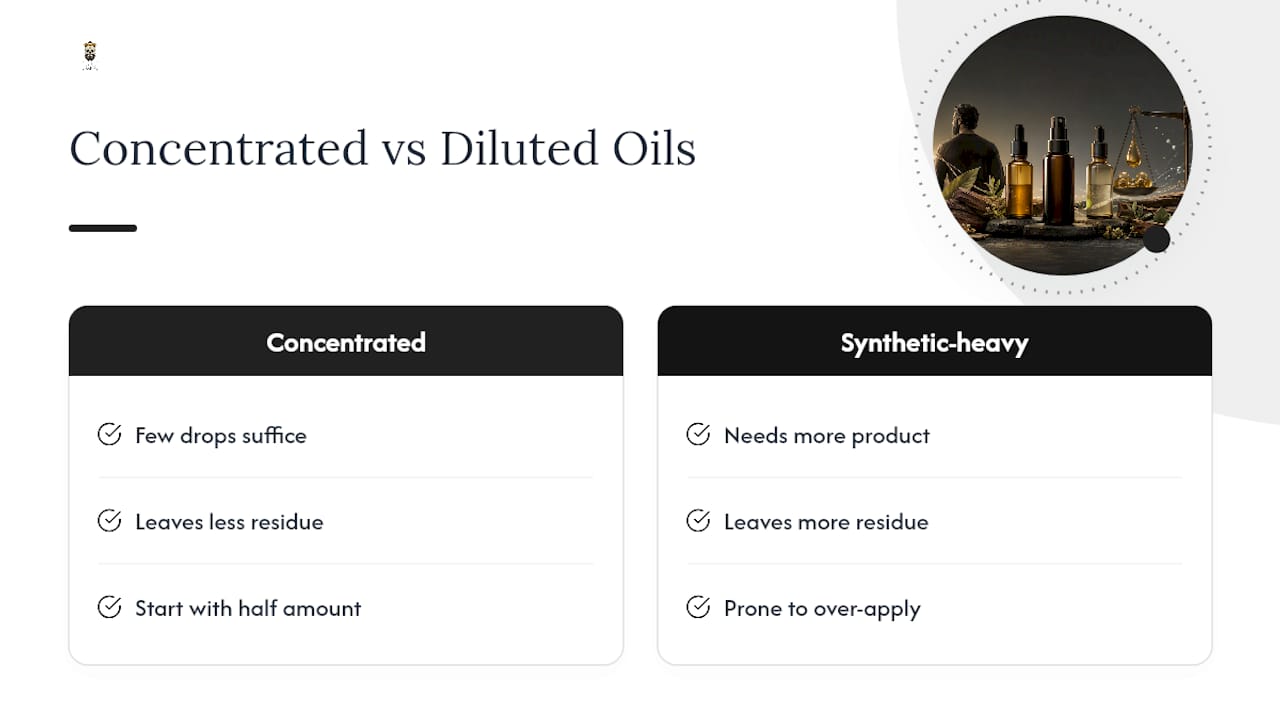
Coarse beards and reactive skin both respond better to concentrated, well-formulated natural products than to synthetic-heavy ones layered on thick. A few drops of a genuinely potent oil does more work than a handful of a diluted, fragrance-loaded one, and it leaves less residue behind for your skin to process.
My practical tip: start with half the amount you think you need. Most men over-apply beard oil out of habit, not necessity. If you’re ready to build a routine around this, the full beard oil collection is the place to start.
— Robert
Ready to Switch? Here’s Where to Start
If you’re done guessing what’s actually in your grooming products, Ironwoodgrooming gives you a straightforward path: small-batch, plant-based formulas with every paraben, sulfate, and synthetic filler left out from the start. No ingredient list to decode, no fine print to worry about.
The Majestic Beard Bundle covers wash, oil, and balm in one order, built for anyone starting a paraben-free routine from scratch. If you want to start smaller, the Authentic Essential Beard Oil or Eviden Essential Beard Oil both work as standalone entry points for sensitive skin. Men with dry or flaky patches often add the Westerly Vegan Beard Butter for extra conditioning at night.
Check the sensitive-skin regimen guide if you’re unsure where to begin, then place your order through the full product catalog whenever you’re ready to make the switch.
Where to Learn More
For the official word on paraben safety and naming, read the FDA’s guidance on parabens in cosmetics. The exposure research behind this article comes from a peer-reviewed biomonitoring study on personal care product use and urinary paraben levels. For ingredient breakdowns specific to beard oil formulation, see Ironwoodgrooming’s vegan beard oil ingredients guide.
This article is general information, not a substitute for advice from a qualified doctor. Consult a qualified healthcare professional about your own circumstances before acting on anything here.
Sources
- Parabens in cosmetics | FDA
- Personal care product use predicts urinary concentrations of phthalate metabolites and parabens in men | PMC
- Avoid Parabens in Men’s Grooming Products for Healthier Skin – Freeman Grooming

