


A beard protects your face from wind by acting as a physical barrier that traps a warm air layer against your skin, reducing windburn, moisture loss, and heat-driven discomfort. This mechanism, known in thermal physiology as boundary layer insulation, is the same principle that makes fur effective on animals in cold climates. If you have ever stepped into a biting headwind and felt your clean-shaven friend wince while you stayed comfortable, that is not coincidence. Your beard was working. Understanding why a beard protects your face from wind matters if you want to grow, maintain, and care for your facial hair with real purpose.
Why does a beard protect your face from wind?
A beard functions as a facial wind shield by disrupting laminar airflow — the smooth, fast-moving stream of air that pulls heat and moisture away from exposed skin. When wind hits a dense beard, it breaks into turbulent eddies that slow down and lose their ability to strip warmth from your face. The result is a thin, stationary boundary layer of air trapped between the hair and your skin. That layer acts as insulation.
Here is how the mechanism works step by step:
- Wind contacts the outer beard surface. Fast-moving air hits the outermost hairs and loses velocity as it fragments into smaller, slower currents.
- Turbulent flow forms inside the beard. Instead of flowing straight through, wind becomes chaotic and loses its ability to carry heat away efficiently.
- A boundary air layer forms at skin level. The still air closest to your skin stays warm, reducing the temperature differential between your face and the outside environment.
- Windburn and moisture evaporation drop. With less direct airflow hitting skin, the rate of transepidermal water loss decreases and the skin surface stays warmer and more hydrated.
Dense beards trap air that maintains approximately a 1 degree Fahrenheit advantage in cold conditions compared to bare skin. That number sounds modest, but in sustained cold wind, a single degree of retained warmth at the skin surface meaningfully reduces the cumulative stress on your face over hours outdoors. Think of your beard as a buffer that breaks laminar airflow and traps a stationary air boundary layer — not a solid wall, but a highly effective first line of defense.
Pro Tip: If you spend long hours outdoors in cold wind, a beard combined with a quality Ironwood Beard Balm creates a double layer of protection. The balm seals moisture into the skin while the hair disrupts airflow above it.
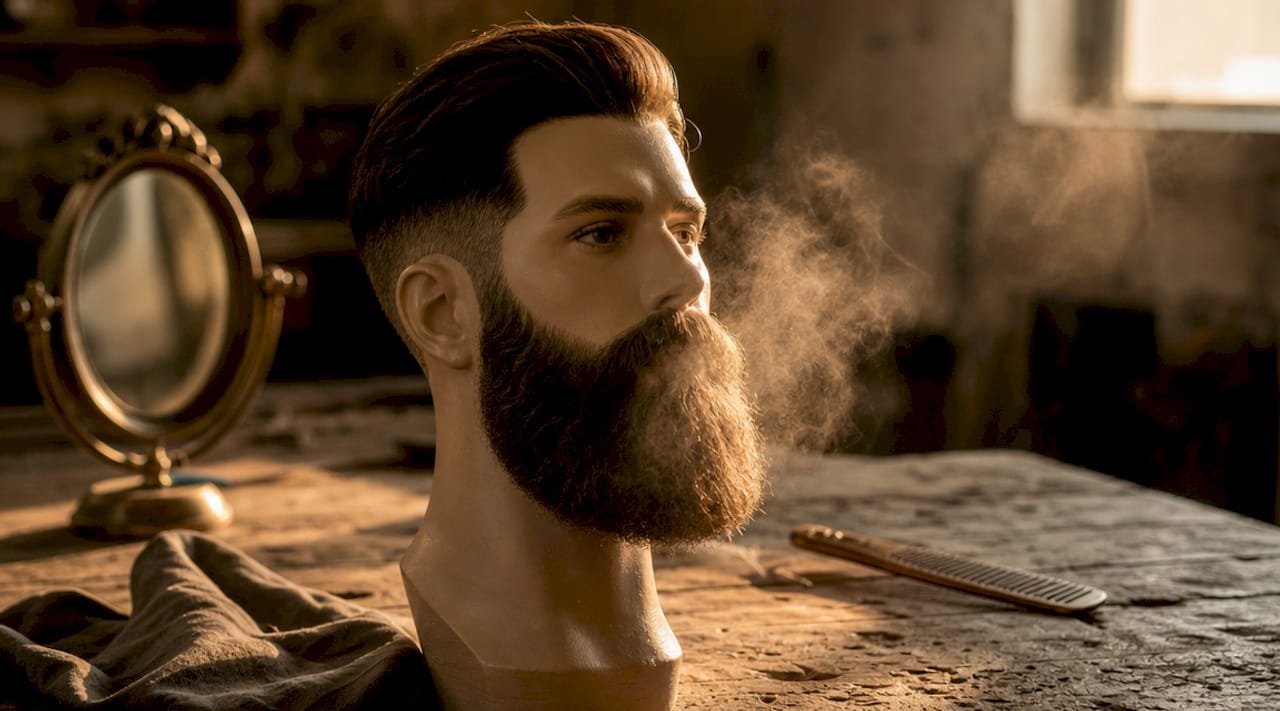
A beard is effective for comfort and moisture retention, though insulation remains limited compared to a scarf or balaclava. Think of your beard as your first line of defense, not your only one.
What other skin protection does a beard offer?
Wind resistance is only one part of the story. A well-grown beard delivers several additional layers of protection that clean-shaven men simply do not have.
- UV radiation blocking. Thick facial hair blocks 90 to 95 percent of harmful UV radiation, shielding the lower face from the sun damage that accelerates skin aging. For men who spend time outdoors, this is a meaningful reduction in cumulative UV exposure year over year.
- Pollution and allergen filtration. Beards absorb environmental pollutants like dust, pollen, and particulate matter, reducing the amount that contacts your skin directly. Men with allergies or asthma benefit from this filtering effect around the nose and mouth.
- Reduced skin aging. Full facial hair reduces UV exposure, slowing the breakdown of collagen in the lower face. The result is fewer fine lines and less sun-induced hyperpigmentation in the areas your beard covers.
- Cold weather illness defense. Cells in colder, exposed skin areas are less effective at fighting viruses. The warmth a beard retains around the nose and mouth may contribute to shorter illness duration during winter months.
Here is a direct comparison of what bearded versus clean-shaven skin faces in outdoor conditions:
| Condition | Bearded skin | Clean-shaven skin |
|---|---|---|
| Wind exposure | Reduced by boundary layer insulation | Full direct contact with moving air |
| UV radiation | 90 to 95 percent blocked by hair | Full exposure to lower face |
| Airborne allergens | Partially filtered by hair | Direct skin and nasal contact |
| Moisture retention | Higher due to reduced evaporation | Lower, higher windburn risk |
| Skin aging rate | Slower in covered areas | Faster due to UV and wind stress |
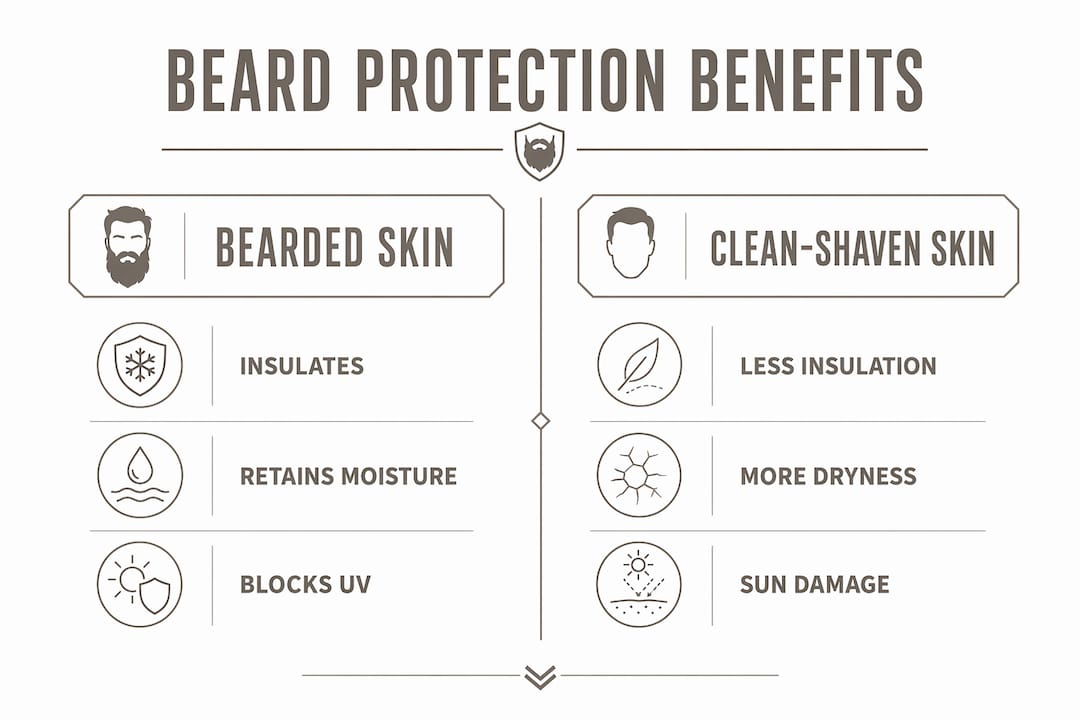
A well-maintained beard is not just an aesthetic choice. It is a functional layer of protection that works every time you step outside.
How do beard length and density affect wind protection?
Not every beard delivers equal protection. The physical characteristics of your facial hair determine how effective it is as a wind barrier, and the relationship between length, density, and protection is more nuanced than most men expect.
- Dense, full beards perform best. A thick beard with tight, uniform coverage traps the most air and creates the strongest boundary layer. This is the beard type that delivers the full 1 degree warmth advantage in cold conditions.
- Sparse beards can increase perceived cold. Sparse beards may increase perceived cold by allowing wind to penetrate through gaps in the hair. The wind still reaches the skin but is now also wicking moisture from the hair itself.
- Very long beards have mixed results. Extremely long hair can become heavy and shift in wind, creating gaps and allowing more airflow through. The outer layers may also absorb moisture and become cold, transferring that chill toward the skin.
- Short stubble offers minimal wind resistance. Stubble at 1 to 3 millimeters is too short to trap a meaningful air layer. It can actually increase friction against cold air and make the skin feel colder than a clean shave in some conditions.
- Medium full beards hit the sweet spot. A beard between one and three inches with good density provides the best combination of air trapping, coverage, and manageability.
Pro Tip: If your beard feels cold in wind rather than warm, density is likely the issue. Focus on filling gaps with consistent growth before worrying about length. A shorter, denser beard outperforms a long, patchy one every time.
A sparse, long beard may feel colder in heavy wind because turbulence allows more wind penetration than a shorter, denser beard would. This surprises most men who assume longer always means warmer.
How should you care for your beard to maximize protection?
Growing a beard is the first step. Keeping it functional as a wind and skin protector requires consistent care. A neglected beard works against you, not for you.
Use beard oil daily. Beard hair wicks natural sebum away from the skin, causing dryness and itching unless you replenish moisture with a quality oil. Apply a few drops of Ironwood Beard Oil to damp skin and hair after washing to lock in hydration and keep the skin barrier intact.
Avoid over-washing. Washing your beard with harsh shampoo daily strips the natural oils that keep both hair and skin healthy. Rinse with water most days and use Ironwood Beard Wash two to three times per week at most.
Apply beard balm in cold or windy conditions. Ironwood Beard Balm adds a layer of wax and butter over the hair that seals in moisture and adds a physical barrier on top of the natural wind resistance your beard already provides.
Comb regularly to distribute oils and maintain density. A quality comb trains hairs to grow in a consistent direction, which improves coverage and reduces gaps. Consistent coverage means better wind protection.
Trim to maintain shape without sacrificing density. Trimming removes split ends and damaged hair that weakens the beard's structure without reducing the overall coverage that blocks wind.
The skin beneath your beard needs as much attention as the hair itself. Dryness under a beard is common and leads to beardruff, itching, and inflammation that undermine the skin barrier your beard is supposed to protect.
Key takeaways
A beard protects your face from wind by trapping a stationary air layer that reduces heat loss, windburn, and moisture evaporation, with dense, medium-length beards delivering the strongest protection.
| Point | Details |
|---|---|
| Boundary layer insulation | Beard hairs disrupt airflow and trap warm air against the skin, reducing windburn. |
| Density beats length | A thick, shorter beard outperforms a long, sparse one in wind protection. |
| UV and pollution defense | Facial hair blocks 90 to 95 percent of UV rays and filters airborne allergens. |
| Oil wicking requires action | Beard hair draws sebum away from skin; daily beard oil use prevents dryness. |
| Balm adds a second barrier | Applying beard balm in cold conditions seals moisture and reinforces wind resistance. |
What I have learned from years of wind and cold
I have worn a full beard through winters in the Pacific Northwest, on mountain trails, and in open-field conditions where the wind does not stop. The difference between a well-maintained beard and a neglected one in those conditions is not subtle. A dry, brittle beard in cold wind feels like wearing a scratchy wool mask with holes in it. A conditioned, dense beard feels like armor.
The part that surprised me most was how much the skin underneath matters. You can grow the thickest beard in the room, but if the skin beneath it is cracked and dry, the wind still wins. The beard disrupts airflow, but it cannot compensate for a compromised skin barrier. That is why I stopped treating beard care as optional maintenance and started treating it as part of the protection system itself.
I have also found that men who dismiss beards as purely aesthetic are missing a real functional argument. The UV protection alone is worth the commitment if you spend time outdoors. The wind resistance is a bonus that compounds over years of reduced skin stress. The grooming habit that supports both is not complicated. It takes two minutes in the morning with the right products.
One honest caution: do not expect your beard to replace a scarf in serious cold. It is a first line of defense, not a complete solution. Layer it with proper outerwear and you have a system that works.
— Robert
Protect your beard, protect your face
Your beard is doing real work every time you step outside. Wind, UV rays, and airborne particles all meet your facial hair before they reach your skin. Ironwood Grooming builds products specifically to keep that system running at full strength. Ironwood Beard Oil replenishes the moisture your beard wicks away from skin. Ironwood Beard Balm adds a physical seal that reinforces your beard's natural wind resistance. Pair both with Ironwood Beard Wash for a complete protection routine. Every formula is small-batch, clean-ingredient, and built for men who take their beard seriously.
FAQ
Why does a beard protect your face from wind?
A beard disrupts laminar airflow and traps a stationary air layer against the skin, reducing heat loss and windburn. Dense beards maintain approximately a 1 degree warmth advantage in cold conditions compared to bare skin.
Does beard length or density matter more for wind protection?
Density matters more than length. A thick, medium-length beard creates a tighter boundary layer than a long, sparse beard, which can allow wind to penetrate through gaps and feel colder.
Can a beard block UV radiation as well as wind?
Yes. Thick facial hair blocks 90 to 95 percent of harmful UV radiation, reducing sun damage and slowing skin aging on the lower face. This benefit compounds significantly for men who spend regular time outdoors.
Why does my beard make my skin dry in cold weather?
Beard hair wicks natural sebum away from the skin along the hair shaft, depleting the moisture that keeps your skin barrier intact. Daily beard oil use replenishes that hydration and prevents dryness, beardruff, and irritation.
Is a beard enough protection against cold wind on its own?
A beard provides moderate wind resistance and reduces windburn, but it is not a substitute for a scarf or proper outerwear in severe cold. Use it as your first layer of defense and combine it with appropriate clothing for full protection.
Keep Reading
- Beard Itch: Why It Happens and How to Stop It for Good
- The Importance of Keeping Your Beard Hydrated
- How to Build a Complete Beard Care Routine (Morning + Night)
- Why Natural Ingredients Matter in Beard Care
Part of the Ironwood Regimen Series
This post is part of the Itch Killer Regimen — Beard Itch + Beardruff
Get the full routine for stopping itch, dryness, and beardruff at the source — restore your skin barrier and keep your beard's protective function working at full strength.
See the Itch Killer Regimen →
