


Hypoallergenic beard care is defined as a grooming approach that eliminates known allergens, synthetic fragrances, and harsh chemical compounds to protect sensitive skin beneath coarse facial hair. If your beard leaves your skin red, flaky, or constantly itchy, the products you're using are almost certainly the cause. When you switch to hypoallergenic beard products, you remove the most common triggers: sulfates, artificial fragrance, lanolin, and essential oil blends that irritate reactive skin. Ironwood Grooming formulates every product around carrier oils such as jojoba and argan that mimic natural sebum and reduce breakout risk in coarse facial hair. The result is a beard that looks stronger, feels softer, and stops fighting your skin.
What makes beard products truly hypoallergenic and safe for sensitive, coarse beards?
The term “hypoallergenic” is not regulated by the FDA, which means any brand can print it on a label without meeting a defined standard. True allergen-free beard grooming depends on what is actually inside the bottle, not what the front label promises.
Ingredients that protect rather than provoke
Non-comedogenic carrier oils like jojoba, argan, and grapeseed deeply hydrate sensitive skin without clogging pores. Jojoba is technically a liquid wax, which is why it absorbs so cleanly and rarely triggers reactions. Squalane, derived from sugarcane or olives, is another standout because it is structurally identical to the skin’s own lipids. These oils work with your skin’s chemistry rather than against it.
The ingredients to avoid are just as important:
- Synthetic fragrance: Listed as “fragrance” or “parfum” on labels, this single ingredient can contain dozens of undisclosed chemicals. Fragranced beard products are a leading cause of contact dermatitis in men with sensitive skin.
- Essential oils: Tea tree, eucalyptus, and peppermint are marketed as natural but are potent sensitizers for reactive skin. “Natural” does not mean safe.
- Lanolin: Derived from sheep’s wool, lanolin is a common allergen hiding in balms and conditioners.
- Sulfates (SLS/SLES): These cleansing agents strip the skin’s protective barrier, leaving coarse beard skin dry and vulnerable.
- Alcohol-based formulas: Drying alcohols like denatured alcohol or SD alcohol accelerate moisture loss in already coarse, textured hair.
The “natural” label is not regulated and does not guarantee product safety for sensitive skin. A minimal ingredient list with verified low-allergenicity components is always safer than a complex blend of botanical extracts, no matter how premium the packaging looks.
Pro Tip: Before committing to any new beard product, perform a week-long patch test on your inner forearm. Apply a small amount daily and watch for redness, itching, or swelling. This step is non-negotiable, even for products carrying a hypoallergenic label.

How to switch your grooming routine to hypoallergenic beard products effectively
Transitioning your routine does not mean throwing everything out at once. A gradual, structured approach gives your skin time to stabilize and helps you identify which products are actually working.
Audit your current products. Pull every product you use on your beard and check the ingredient list for synthetic fragrance, sulfates, lanolin, and essential oils. Set aside anything that contains these.
Start with your cleanser. The wash you use sets the foundation for everything else. Switch to a sulfate-free Ironwood Beard Wash first, since cleansers have the most direct contact with your skin. Cleanse only 2 to 3 times per week using lukewarm water. Hot water strips natural oils and worsens irritation.
Introduce your oil next. After cleansing, apply Ironwood Beard Oil to a slightly damp beard. Applying oil to damp hair improves absorption and prevents the greasy surface layer that many men complain about. Three to five drops is enough for most coarse beards.
Add a balm for daytime hold and moisture. Look for shea butter-based balms without added fragrance. Ironwood Beard Balm uses unrefined shea butter that is generally safe for sensitive users and provides conditioning with low allergenicity. Apply a small amount after your oil has absorbed.
Upgrade your tools. Boar bristle brushes and wooden combs distribute natural oils evenly and reduce frizz without irritating the skin beneath. Plastic combs with sharp seams drag against coarse hair and cause micro-abrasions that worsen sensitivity.
Patch test every new product. Even within your new allergen-free routine, introduce one product at a time over a week. This way, if a reaction occurs, you know exactly what caused it.
Adjust for the season. Humidity and dryness affect hydration needs differently across seasons. You may need a heavier balm in winter and a lighter oil-only routine in summer.
Pro Tip: Keep a simple grooming log for the first 30 days of your switch. Note what you applied, when, and how your skin responded. This turns guesswork into a clear picture of what your beard actually needs.
Which hypoallergenic beard products are best for men with coarse beards?
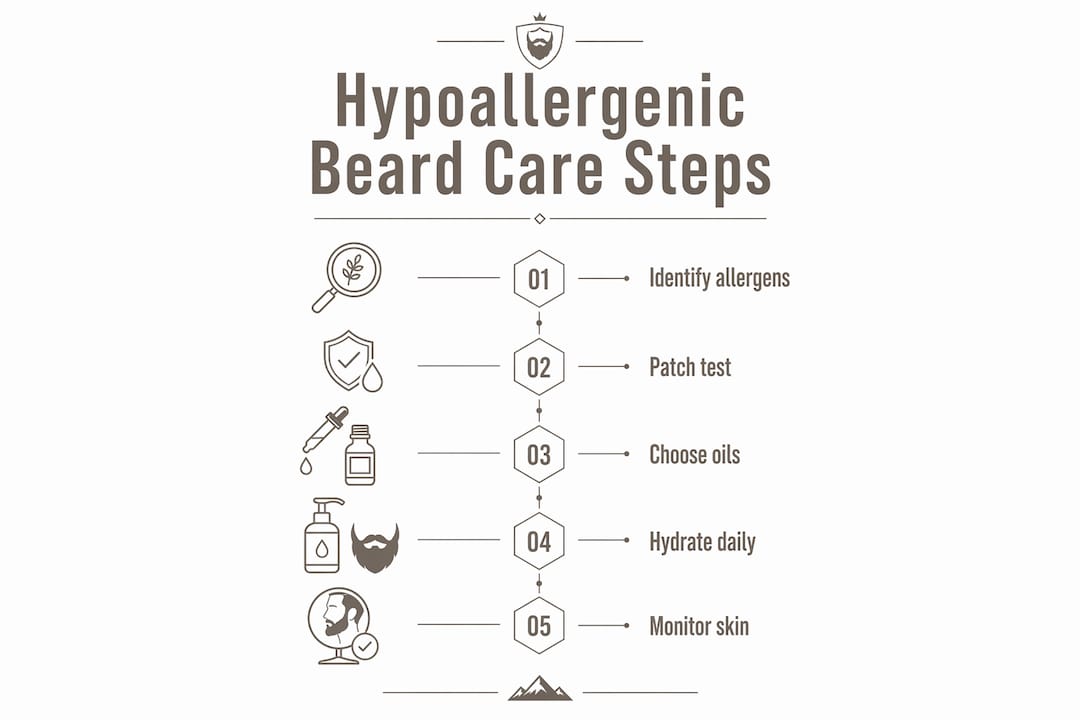
Coarse beard hair has a wider follicle diameter and a rougher cuticle surface, which means it needs heavier hydration and more slip than fine hair. Not every hypoallergenic product delivers both. Here is how the main categories compare.
| Product type | Best ingredient | Allergy profile | Best for |
|---|---|---|---|
| Beard oil (jojoba base) | Jojoba oil | Very low allergenicity, non-comedogenic | Daily moisture, skin hydration |
| Beard oil (squalane base) | Squalane | Extremely low, identical to skin lipids | Ultra-sensitive or acne-prone skin |
| Beard oil (grapeseed base) | Grapeseed oil | Low, lightweight | Oily skin types needing light moisture |
| Beard balm (shea butter) | Unrefined shea butter | Low, fragrance-free versions safest | Hold, conditioning, cold weather |
| Beard wash (sulfate-free) | Aloe vera, glycerin | Low when fragrance-free | Cleansing without stripping skin barrier |
A few points worth knowing before you buy:
- Jojoba-based Ironwood Beard Oils use carrier oils that closely replicate sebum, making them the most skin-compatible daily option for coarse beards.
- Squalane is the best choice if you have both beard irritation and acne-prone skin, since it hydrates without any pore-clogging risk.
- Grapeseed oil is lighter than jojoba and suits men who find heavier oils leave their skin feeling congested.
- Ironwood Beard Balm provides the hold and conditioning that coarse beards need in dry or cold conditions, fragrance-free and built on unrefined shea butter.
- Ironwood Beard Wash uses glycerin and aloe vera as primary humectants — drawing moisture into the skin rather than stripping it away.
If you want to verify that a product meets both hypoallergenic and vegan standards, the Ironwood Vegan Beard Checklist walks you through exactly what to look for on any label.
Common mistakes when switching to hypoallergenic beard products
Most men who try allergen-free grooming and still experience irritation are making one of these errors. Recognizing them early saves weeks of frustration.
- Skipping the patch test. Patch testing is critical even when a product carries a hypoallergenic label, because hidden allergens often exist in fragrance blends or essential oils. One week of testing on your forearm costs nothing and prevents a full-face reaction.
- Trusting “natural” or “organic” labels without reading the ingredient list. A product can be 100% natural and still contain potent sensitizers like tea tree oil, citrus extracts, or clove. Read every ingredient, not just the front label.
- Overwashing. Overwashing with harsh cleansers strips natural oils and worsens dryness and irritation. Washing more than three times a week with any cleanser, even a gentle one, disrupts the skin barrier you are trying to rebuild.
- Applying products to a dry beard. Oil applied to dry coarse hair sits on the surface instead of absorbing. Always apply to a slightly damp beard for maximum penetration and zero greasiness.
- Switching all products at once. If you replace your wash, oil, and balm simultaneously and develop a reaction, you have no way of knowing which product caused it. Introduce one product at a time.
- Ignoring seasonal changes. A routine that works in July will likely leave your skin dry and tight by December. Adjust product weight and application frequency as humidity drops.
“Skin health is the foundation of a great beard. No amount of styling fixes the damage caused by the wrong products. Get the chemistry right first, and everything else follows.”
If irritation persists after four weeks of a clean, allergen-free routine, consult a dermatologist. Persistent reactions may indicate a contact allergy that requires patch testing under clinical conditions, not just a product swap.
Key takeaways
Switching to hypoallergenic beard products requires eliminating synthetic fragrance, sulfates, and essential oils, then rebuilding your routine around jojoba, squalane, or shea butter formulas applied to a damp beard.
| Point | Details |
|---|---|
| Hypoallergenic is not regulated | Read ingredient lists carefully; “hypoallergenic” on the label is a marketing claim, not a safety guarantee. |
| Patch test every product | Test each new product on your forearm for one week before applying to your face. |
| Apply to damp beard | Oil absorbs deeper into coarse hair when applied right after rinsing, preventing greasiness and irritation. |
| Cleanse 2 to 3 times weekly | Overwashing strips the skin barrier; sulfate-free cleansers used sparingly protect sensitive skin. |
| Introduce products one at a time | Switching products gradually lets you identify the exact cause of any reaction. |
Why the switch matters more than most men realize
I have spent years watching men with coarse, reactive beards cycle through product after product, convinced the problem is their beard itself. It is almost never the beard. It is the formula. The grooming industry has spent decades loading products with synthetic fragrance because it sells. Fragrance is the single most common contact allergen in personal care, and it is in nearly every mainstream beard oil, balm, and wash on the shelf.
What changed my perspective was seeing how quickly skin responds when you remove the irritants. Men who had dealt with chronic beard itch, flaking, and redness for years cleared up within two weeks of switching to a genuinely clean formula. Not a pharmaceutical solution. Just the right oils and nothing else.
The part most articles miss is the damp application technique. Coarse hair has a tightly packed cuticle that resists absorption when dry. Applying oil to damp hair is not a minor tip. It is the difference between a product that works and one that just sits on the surface and makes your beard look greasy. That single change, combined with dropping fragranced products, accounts for the majority of the improvement most men experience.
Be patient with the process. Your skin needs time to rebuild its barrier after years of exposure to harsh ingredients. Give it four weeks before you judge any new routine. The strength of your beard routine is only as good as the health of the skin underneath it.
— Robert
Build your allergen-free grooming kit with Ironwood
Ironwood Grooming formulates every product in small batches with clean, verified ingredients specifically suited for men with coarse beards and sensitive skin. Ironwood Beard Oil delivers deep hydration through skin-compatible carrier oils with zero synthetic fragrance. Ironwood Beard Balm gives you hold and conditioning from unrefined shea butter without the allergens hiding in conventional balms. Pair either with Ironwood Beard Wash for a complete, irritation-free daily routine. Every formula is built for raw performance, not shelf appeal.
FAQ
What does hypoallergenic mean in beard care?
Hypoallergenic beard products are formulated without common allergens like synthetic fragrance, sulfates, lanolin, and sensitizing essential oils. The term is not FDA-regulated, so reading the ingredient list is the only reliable way to verify a product’s safety for sensitive skin.
How often should men with sensitive beards wash their beard?
Cleansing 2 to 3 times per week with a sulfate-free wash is the standard recommendation for sensitive skin. Washing more frequently strips the skin’s natural oils and weakens the barrier that protects against irritation.
Can natural or organic beard products still cause reactions?
Yes. Natural ingredients like tea tree oil, citrus extracts, and clove are potent sensitizers that frequently trigger contact dermatitis. A minimal ingredient list with verified low-allergenicity components is safer than any complex natural blend.
What is the best carrier oil for a coarse, sensitive beard?
Jojoba oil is the top choice because it closely mimics the skin’s natural sebum and has a very low allergenicity profile. Squalane is the best option for men who also deal with acne-prone skin, as it hydrates without any pore-clogging risk.
How long does it take to see results after switching to allergen-free products?
Most men with sensitive, coarse beards notice reduced itching and redness within one to two weeks of eliminating fragranced and sulfate-based products. Full skin barrier recovery typically takes four weeks of consistent use.
Keep Reading
- Beard Itch: Why It Happens and How to Stop It for Good
- Vegan Beard Care: Why It’s Better for Your Skin and the Planet
- Beard Soap vs. Beard Wash: What’s the Difference and Which One Do You Need?
- How to Build a Complete Beard Care Routine (Morning + Night)
Part of the Ironwood Regimen Series
This post is part of the Minimalist Regimen — Sensitive Skin Beard Care
Get the full clean, minimal routine built for sensitive and reactive skin — no irritants, no harsh chemicals, just what your beard actually needs.
See the Minimalist Regimen →
