


Beard itch during the growth phase isn’t a mystery — it’s biology and mechanics hitting at the same time. Sharp hair tips scrape the skin, sebum gets redistributed away from the surface, and dead skin cells collect beneath new growth. That combination is why the itch feels sudden and intense in the first few weeks. Skin conditions like seborrheic dermatitis or pseudofolliculitis barbae can layer on top of that irritation, turning a temporary phase into a persistent problem.
Understanding what’s actually happening — and when — gives you a clear plan for getting through it.
Why Beard Itch Peaks During the Growth Phase
The primary driver of early beard itch is mechanical. When you shave, the razor cuts each hair at an angle, leaving a sharp, stiff tip. As the hair grows out, that angled tip rubs against the skin and stimulates nerve endings around the follicle. It’s not an allergic reaction or a hygiene issue — it’s physics.
The itch typically peaks between days 10 and 21. At that stage, the hair is long enough to curl and drag across the skin, but not yet long enough to lie flat under its own weight. Once the beard reaches more length, the tips soften, the hair settles away from the skin, and the itch naturally fades.
- Freshly shaved hair tips act like micro‑abrasives.
- Itch intensity peaks at 10–21 days.
- Hair weight eventually pulls tips away from the skin.
- Coarser hair produces more friction than finer hair.
Pro tip: If you can push through the 10–21 day window without shaving, the itch will begin to resolve on its own. Shaving resets the cycle.
How Skin Dryness Worsens Beard Itch During Growth
Dry skin is the second major driver of growth‑phase itch. Your skin produces sebum — a natural oil that keeps the surface hydrated. As beard hair grows in, it redistributes that sebum away from the skin and along the hair shaft. The result is a dry, tight, reactive surface hidden beneath your beard.
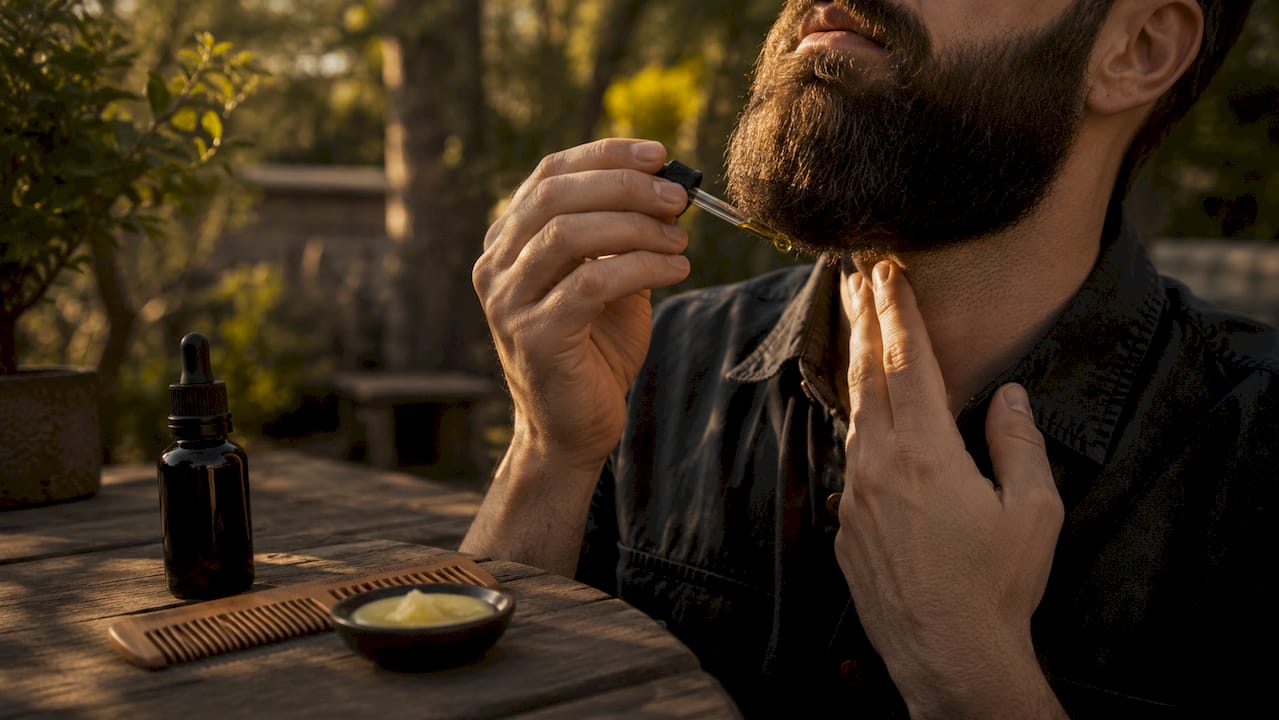
Dead skin cells compound the issue. Skin sheds constantly, but under a beard those cells collect at the base of the follicles. They mix with sebum residue and create a layer of debris that irritates the skin further. Cold weather and low humidity accelerate moisture loss, making winter months especially difficult for men growing beards.
- Reduced sebum on the skin surface increases dryness.
- Dead skin cells trapped under the beard increase irritation.
- Low humidity strips moisture from facial skin.
- Hot showers and harsh cleansers remove remaining oils.
- The area under a beard retains warmth and moisture, affecting comfort.
Pro tip: Apply beard oil directly to the skin beneath your beard — that’s where the dryness lives. For a deeper look at how sebum interacts with beard health, read Sebum and Beard Health: What Every Man Should Know.
What Dermatological Conditions Cause Persistent Beard Itch
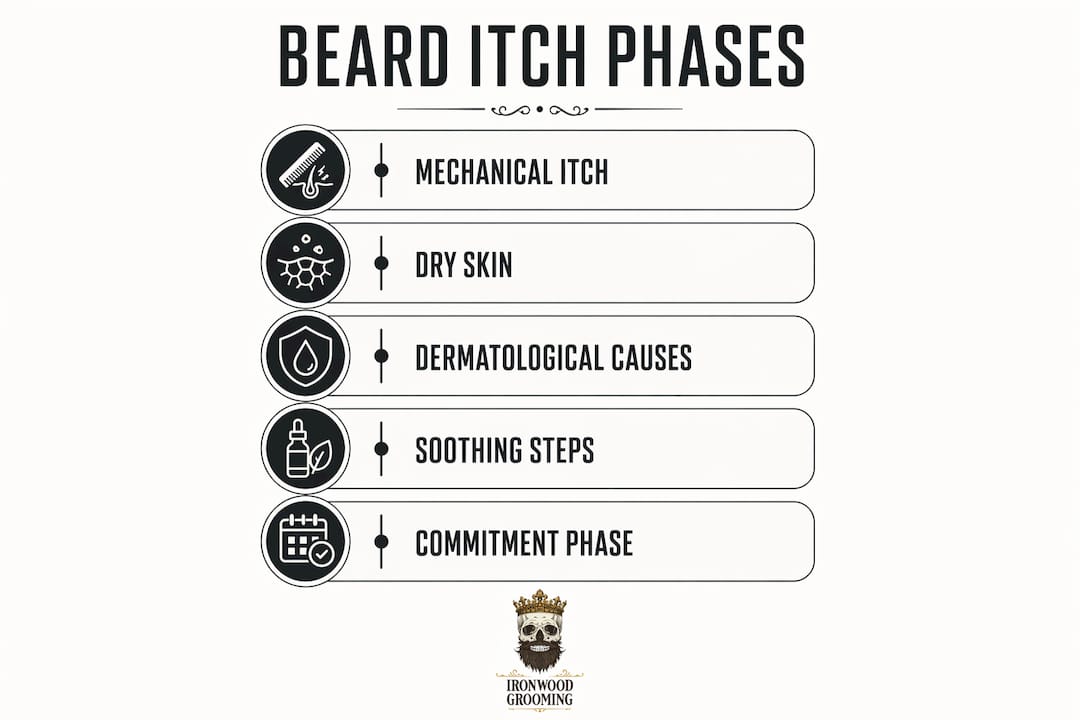
If the itch continues past the 21‑day window, a skin condition may be involved. The two most common are seborrheic dermatitis and pseudofolliculitis barbae.
Seborrheic dermatitis is an inflammatory condition associated with Malassezia yeast, which thrives in warm, sebum‑rich environments — like the skin beneath a beard. It produces redness, itching, and greasy or yellowish flaking. Clinical research supports the use of antifungal shampoos such as ketoconazole (1–2%) for managing symptoms.
Pseudofolliculitis barbae — ingrown hairs — occurs when hair curls back toward the skin after shaving, triggering inflammation. Men with coarse or curly hair are more prone to this condition. Close shaving increases the risk by creating sharper tips.
| Condition | Primary Cause | Key Symptom | Approach |
|---|---|---|---|
| Mechanical itch | Sharp hair tips | Prickly sensation | Daily beard oil, patience |
| Seborrheic dermatitis | Malassezia overgrowth | Redness + greasy flaking | Antifungal shampoo (ketoconazole 1–2%) |
| Pseudofolliculitis barbae | Ingrown hairs | Red, itchy bumps | Reduce shaving frequency, gentle exfoliation |
| Folliculitis | Bacterial infection | Pustules, tenderness | Dermatologist evaluation |
Persistent redness, pus‑filled bumps, or pain warrant a dermatologist visit.
How to Soothe Beard Itch During the Growth Phase
Relieving growth‑phase itch requires consistency. The goal is to restore moisture, remove debris, and reduce mechanical friction.
- Apply beard oil daily. Work a few drops into the skin beneath your beard. Jojoba oil resembles human sebum; argan oil provides fatty acids that support skin comfort. Ironwood’s Authentic Beard Oil is designed for daily skin‑first application.
- Exfoliate gently twice a week. Use a soft beard brush or gentle scrub to lift dead skin cells. Light pressure is enough — aggressive scrubbing increases irritation.
- Wash with a beard‑safe cleanser. Use a sulfate‑free beard wash once daily or every other day depending on dryness.
- Trim strategically. A light trim can reduce sharp tips without resetting the growth cycle. Avoid shaving to the skin.
- Support skin health internally. Omega‑3 fatty acids support barrier function; stress management supports overall skin comfort.
Pro tip: Follow the Ironwood Anti‑Itch Protocol — a structured 7‑day plan that sequences cleansing, oiling, and exfoliation to break the itch cycle.
Grooming Mistakes That Make Beard Itch Worse
- Over‑washing: Strips natural oils and worsens dryness.
- Scratching: Damages the skin barrier and increases irritation.
- Shaving during the itch phase: Resets the sharp‑tip cycle.
- Skipping beard oil: Leaves skin without moisture support.
- Using alcohol‑based products: Dries the skin aggressively.
- Ignoring persistent symptoms: Conditions like seborrheic dermatitis worsen without targeted care.
The fix is simple: wash gently, oil daily, exfoliate lightly, and avoid scratching. The Beginner Beard Regimen covers these fundamentals.
Key Takeaways
| Point | Details |
|---|---|
| Mechanical irritation peaks early | Sharp hair tips cause the most itch between days 10–21. |
| Sebum depletion drives dryness | Beard hair redistributes natural oils away from the skin. |
| Seborrheic dermatitis needs specific care | Redness + greasy flaking require antifungal management. |
| Grooming mistakes extend the itch | Over‑washing and scratching worsen irritation. |
| Beard oil is the core fix | Daily skin‑first application reduces dryness and friction. |
The Itch Phase Is a Test of Commitment
Most men quit growing a beard in week two — right at the peak of mechanical itch. They think something is wrong with their skin. Nothing is wrong. They just hit the hardest window without a plan.
The mistake is reacting to the itch instead of managing it. Washing more, scratching more, or shaving resets the cycle and prolongs discomfort. What works is simple: oil daily, brush daily, wash gently, and keep your hands off your face.
Men who follow a consistent routine almost always report that the itch drops sharply by days 18–22. Men who react to the itch instead of managing it are still uncomfortable at day 30.
If your itch comes with redness, greasy flakes, or bumps that don’t go away, that’s not normal beard itch — that’s a skin condition that needs a different approach.
Patience and consistency are what separate men who build great beards from men who give up in week two.
— Roberto, Ironwood Grooming
Keep Reading
- Beard Itch: Why It Happens and How to Stop It for Good
- Sebum and Beard Health: What Every Man Should Know
- Why Your Beard Needs Daily Brushing: A Coarse Beard Guide
Stop the Itch — Ironwood Regimen
The Itch Killer Regimen
Built specifically for beard itch and beardruff — the right products in the right sequence to break the itch cycle fast.
See the Itch Killer Regimen →
