


Professional beard shaping is the architectural process of designing and defining a beard’s lines, angles, and contours so they harmonize with your face. A basic trim manages length. Professional shaping manages structure. It focuses on symmetry, proportion, and how your beard interacts with your facial features. Clippers, scissors, and straight razors work together to create intentional, balanced results — and conditioning treatments support skin and hair health between visits.
If you want a beard that looks deliberate and polished rather than simply maintained, understanding what professional shaping actually involves is the first step.
What Professional Beard Shaping Is and How It Works
Professional beard shaping is a precision process built around structure and proportion. A barber doesn’t just reduce length — they design the cheek line, neckline, and density to complement your face shape. The result is a beard that looks intentional, not accidental.
A typical shaping session lasts 20–40 minutes and begins with an assessment of your growth pattern and facial structure. That assessment determines every line the barber draws. Sessions typically range from $25–$50 depending on location, and most men benefit from returning every 2–4 weeks to maintain the architecture.
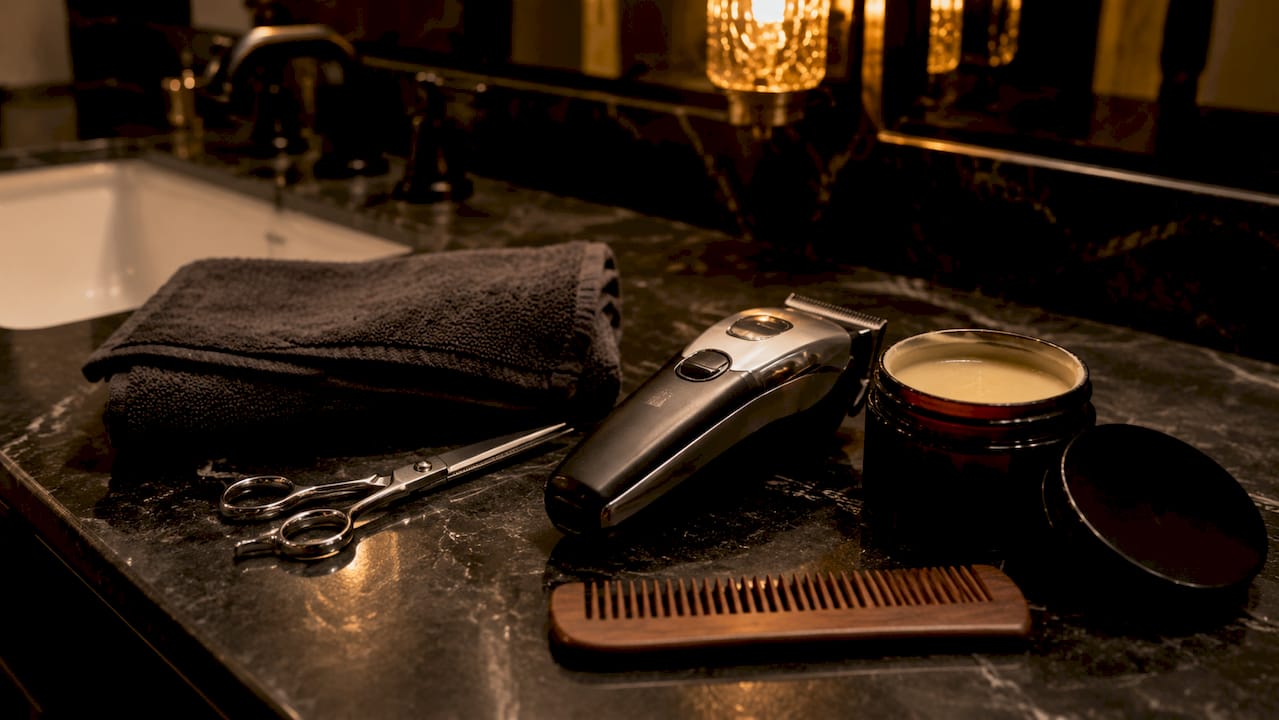
The tools are specific to the craft. Clippers handle bulk removal. Scissors refine texture and contour. Straight razors create the clean cosmetic edges that separate a shaped beard from an untouched one. A skilled barber moves between all three tools seamlessly.
How Professionals Evaluate Face Shape for Beard Design
Face shape is the foundation of every shaping decision. Barbers categorize faces as round, oval, square, or long, then adjust volume, line placement, and density to create balance. A round face benefits from more length at the chin. A square face benefits from softer cheek lines. A long face benefits from fuller sides.
Two techniques guide the most important lines:
- Cheek line definition: Many barbers use a three‑point reference system from the corner of the mouth to the ear. This keeps the cheek line aligned with natural facial contours and prevents distortion.
- Neckline placement: A common guideline places the neckline roughly two fingers above the Adam’s apple. Too high creates a floating beard. Too low makes the beard look unfinished.
- Density contouring: Barbers adjust fullness to balance facial proportions — adding length at the chin or tightening the sides depending on your structure.
- Symmetry checks: Professionals step back repeatedly to evaluate both sides from a distance. Small asymmetries invisible up close become obvious at three feet.
Pro tip: Identify your face shape before your next appointment. Knowing whether you’re oval, round, square, or long helps you communicate clearly and speeds up the design process.
Tools and Techniques Professionals Use for Precise Results
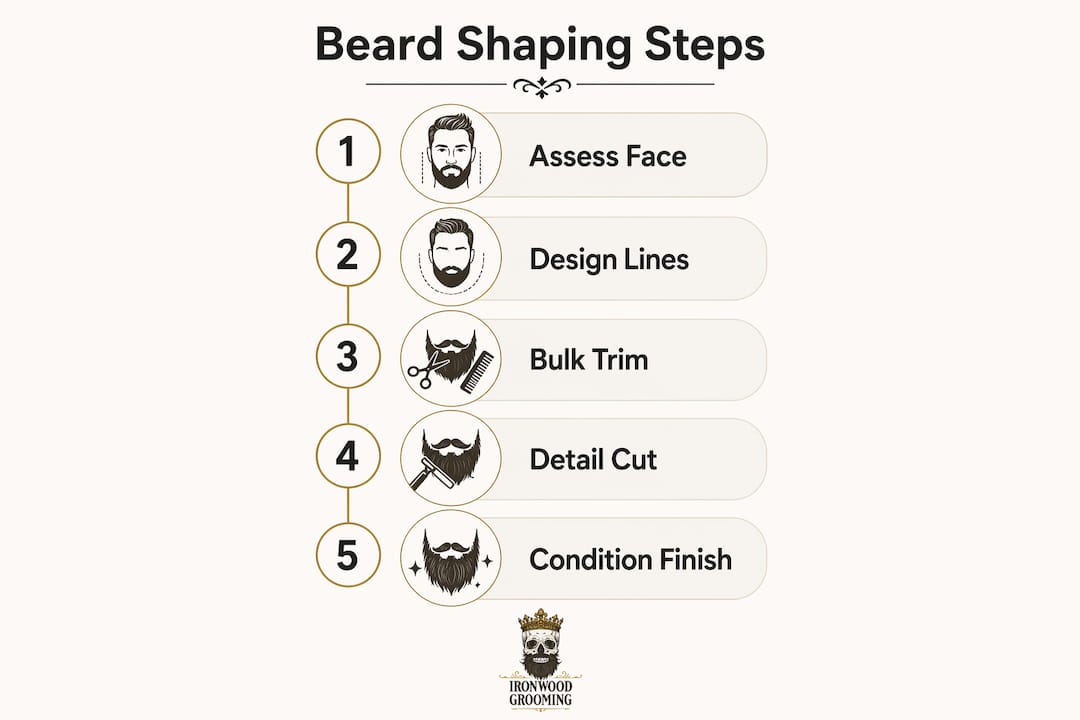
The difference between a shaped beard and a trimmed beard often comes down to the tools — and the order in which they’re used. Professionals follow a deliberate sequence to build structure before refining detail.
- Clippers with guards: Used first to set overall length and remove bulk. Guards create consistent length across zones.
- Scissors‑over‑comb: This technique gives precise control over contour and texture. The barber cuts only the hair extending beyond the comb’s teeth, shaping the beard in three dimensions.
- Straight razor edging: A straight razor creates the cleanest cosmetic edge along the cheek line, neckline, and mustache border.
- Hot towel application: A hot towel softens hair and warms the skin surface, improving razor glide and comfort.
- Conditioning treatment: Beard oils and balms are applied to condition the hair surface and support skin comfort between visits.
Pro tip: Ask your barber to apply a conditioning treatment at the end of every shaping session. Fresh lines + conditioned hair = a noticeably sharper result.
How Professional Shaping Differs from Basic Trimming
Trimming manages length. Shaping manages design.
Trimming reduces bulk uniformly. It doesn’t address cheek lines, neckline placement, or facial balance. Shaping creates intentional structure by treating the beard as part of your facial architecture.
Home trimming carries risks. Most men set their neckline too high, creating a floating beard that disconnects from the jaw. Uneven cheek lines become more visible as the beard grows. Patchiness that looks manageable in a bathroom mirror becomes obvious in natural light.
Professional shaping solves these issues. A barber can minimize patchiness by adjusting density and line placement. They correct asymmetry built up over months of home trimming. The result is a beard that looks designed — because it is.
The Recommended Routine for Maintaining a Shaped Beard
Consistency keeps a shaped beard looking sharp. Structure fades as the beard grows, so maintenance matters.
- Frequency: Professional shaping every 2–4 weeks resets architecture and maintains crisp lines.
- Between visits: Light at‑home maintenance keeps the beard presentable. Avoid redrawing cheek or neck lines yourself.
- Daily care: Apply beard oil every morning. Conditioning the skin beneath the beard directly affects how the beard looks and feels.
- Skin care: Wash two to three times per week with a gentle sulfate‑free cleanser.
- Brush or comb daily: Training your beard to grow in a consistent direction makes shaping sessions more effective. See Why Your Beard Needs Daily Brushing.
The Benefits of Beard Shaping Beyond Appearance
Professional shaping improves more than appearance. Skin health, hair condition, and confidence all benefit from regular grooming.
Skin health beneath the beard is often overlooked. Proper care reduces irritation, ingrown hairs, and flaking — issues that undermine even the best shaping work. Conditioning treatments support the skin barrier and keep the beard comfortable.
Hair condition improves with regular attention. Split ends and dryness make a shaped beard look rough. Barbers remove damaged ends and apply conditioning treatments that support softness over time.
Confidence is a real outcome. A beard that fits your face and is consistently maintained changes how you carry yourself. It signals attention to detail — in professional settings and everywhere else.
Key Takeaways
| Point | Details |
|---|---|
| Shaping vs trimming | Shaping designs structure; trimming manages length. |
| Face shape drives design | Cheek and neck lines are customized to your proportions. |
| Tools matter | Scissors‑over‑comb + straight razor edging create professional results. |
| Frequency matters | Shaping every 2–4 weeks maintains architecture. |
| Skin care is foundational | Conditioning treatments and daily beard oil support long‑term results. |
Why Most Men Think About Beard Shaping the Wrong Way
Most men walk into a barbershop thinking about their beard in isolation — length, lines, mustache cleanup. That’s the wrong frame. Your beard is part of your face, not a separate object. The best barbers start by studying your facial structure before touching a tool.
The most common mistake is setting the neckline too high. It shortens the face and disconnects the beard from the jaw. The two‑finger guideline above the Adam’s apple is a reliable starting point for most face shapes.
The second mistake is skipping skin care. Dry, irritated skin beneath the beard shows through the hair — creating flaking and dullness that no shaping can fix. Addressing beard itch and beardruff is foundational.
Treat professional shaping as a reset, not a one‑time fix. Go every 2–4 weeks. Use quality products between visits. Your barber sets the structure — your daily routine maintains it.
— Roberto, Ironwood Grooming
Keep Reading
- Why Your Beard Needs Daily Brushing: A Coarse Beard Guide
- Beard Conditioning Routines: Examples for Every Man
- Coarse Beard Grooming Routine Explained
Part of the Ironwood Regimen Series
New to beard care? Start here.
The Beginner Beard Regimen is the complete start-here guide — cleanse, hydrate, seal — for guys building their first real routine.
See the Beginner Regimen →
