


Beard balms and butters melt because their structural ingredients — beeswax, shea butter, cocoa butter — are natural waxes and fats with low softening points. This is not a defect. It is chemistry. Understanding what happens inside the tin gives you the knowledge to store, use, and restore your products correctly, and to choose the right formula for your climate.
Why Beard Products Melt: The Ingredient Chemistry
Beeswax, one of the most common wax bases in beard balm, begins softening in blended formulas well before its isolated melting point because the surrounding oils and butters lower the overall melting threshold of the mixture. Here is how the key ingredients behave under heat:
- Beeswax provides structure and hold. It softens gradually as heat rises and loses its lattice structure if overheated.
- Candelilla wax (a vegan alternative) has a slightly higher melting point but still softens in sustained heat above 80°F.
- Shea butter melts between 89°F and 100°F (32°C–38°C), making it one of the first ingredients to liquefy in warm weather.
- Cocoa butter melts around 93°F–101°F (34°C–38°C) and contributes to the creamy texture that disappears when a balm gets too warm.
- Carrier oils like jojoba, argan, and sweet almond do not melt — they are already liquid at room temperature and remain stable, but they separate from the wax matrix when the wax melts.
Emulsifiers hold wax and oil together in a uniform blend. When a product overheats, those emulsifying bonds break down. The result is a greasy, separated product that no longer performs the way it should — oily on top with a waxy layer beneath after cooling. This is why beard balms melt unevenly and why the re-hardened product often has a different texture than the original.
Pro tip: When choosing a balm for warm climates, look for formulas with a higher beeswax or candelilla wax percentage. More wax means a higher overall melting threshold for the finished product. For a full breakdown of what clean, intentional ingredients look like in practice, read Why Natural Ingredients Matter in Beard Care.
How Heat Affects Beard Oil, Balm, and Butter Stability
Heat exposure changes beard products in four distinct ways, each of which affects your grooming results directly.
Separation and liquefaction are the most visible signs. Products soften and liquefy during shipping or when left in a warm vehicle, leaving you with a runny product that leaks and loses its original consistency. This is especially common in summer months when mailboxes and delivery vehicles reach temperatures well above 100°F.
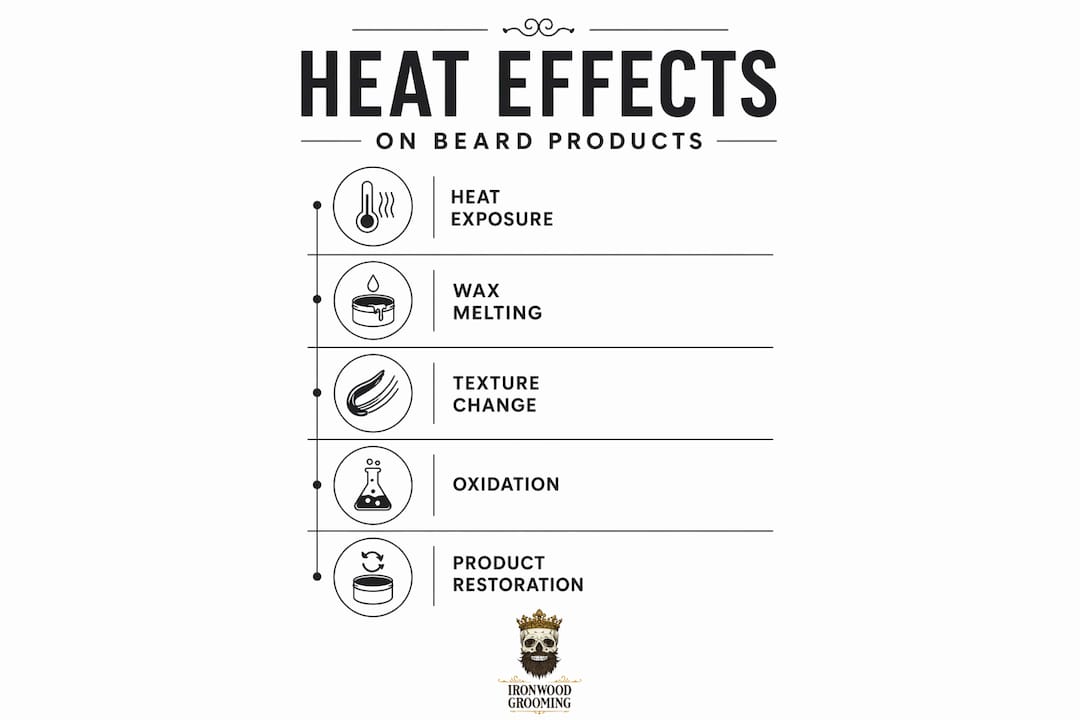
Texture and hold degradation follow repeated heat exposure. Repeated melting and resolidifying leads to inconsistent texture and reduced hold performance. Each melt-and-reset cycle disrupts the emulsifying properties of the wax, meaning the product that re-hardens in your tin is not the same product you originally bought.
Oxidation and scent loss are less obvious but equally damaging. Heat accelerates the oxidation of carrier oils like argan and jojoba. Oxidized oils smell rancid and lose their conditioning properties. Fragrance compounds also volatilize faster at high temperatures, which is why a balm left in a hot bathroom starts to smell faint or off within weeks.
Increased sebum interaction compounds the problem on your skin. Sebum production increases with heat, and sweat evaporates leaving an oil residue on your beard. When you apply a heavy balm on top of that, you are stacking oils on oils. The result is a greasy, uncomfortable beard that looks weighed down rather than groomed. For the full picture on how sebum affects product choice, read Sebum and Beard Health: What Every Man Should Know.
How to Store Beard Products in Hot Environments
Protecting your products from heat is straightforward once you know the rules.
- Store below 75°F (24°C) at all times. A bathroom cabinet away from the shower, a bedroom dresser drawer, or a climate-controlled closet all work well. The shower environment — steam, heat, humidity — is one of the worst places to store any wax-based product.
- Never leave products in your car. Vehicle interiors can reach 130°F–170°F on a hot day. Even a 20-minute errand is enough to fully melt a tin of balm and ruin its texture permanently.
- Keep products out of direct sunlight. UV exposure accelerates oil oxidation and raises product temperature even through a closed tin. A windowsill is one of the worst storage locations for any wax-based product.
- Switch to lightweight oils in hot weather. In warm climates, heavy balms trap heat and sebum, making beards greasy and uncomfortable. A pure beard oil with jojoba or argan as the base gives you conditioning without the wax buildup. For seasonal product swaps that actually work, read Sweat-Proof Beard Hold: How to Keep Your Beard Fresh Through Workouts and Heat.
- Apply products to a cool, dry beard. Applying balm right after a hot shower when your skin is still warm speeds up melting on contact. Let your beard cool and dry fully before applying any wax-based product.
- Use a beard oil before heat styling. If you use a blow dryer or beard straightener, apply a beard oil first. The oil creates a thermal barrier between the heat source and your hair shaft. Do not exceed 400°F on any beard tool. This is not optional advice for coarse beards — it is the difference between a groomed beard and a brittle one.
Pro tip: Travel with a small tin of balm stored in an insulated toiletry bag. The insulation keeps ambient heat from reaching the product during flights, road trips, or outdoor events.
How to Fix and Restore a Melted Beard Balm
A melted balm is not automatically ruined. The right restoration method depends on how badly the product was affected.
Double boiler method is the gold standard. Place the open tin in a shallow pan of warm water over low heat. The water temperature stays below boiling, which means the wax never exceeds a safe range. Stir gently as the product re-melts, then remove from heat and let it cool at room temperature. Do not place it in the freezer to speed up cooling — rapid temperature changes cause graininess.
Avoid the microwave entirely. Microwaves heat unevenly and can scorch the wax in seconds, destroying the texture and hold properties permanently. The emulsifiers that give balm its structure cannot survive that kind of uneven heat.
| Method | Safety | Result Quality | Risk Level |
|---|---|---|---|
| Double boiler | High | Excellent | Low |
| Warm water bath (sealed tin) | Medium | Good | Low |
| Microwave | Low | Poor | High |
| Direct stovetop heat | Low | Poor | High |
When to discard: the oil and wax have separated and will not re-blend after stirring, the product smells rancid or noticeably different, graininess persists after two careful re-melt cycles, or the color has changed significantly indicating oxidation.
When to salvage: the product melted once and simply needs to be re-set, texture is slightly off but scent and color are normal, or separation is minor and the product re-blends with gentle heat and stirring.
One common mistake is adding more oil to a grainy product to smooth it out. This throws off the wax-to-oil ratio and weakens hold further. Stick to the double boiler method and let chemistry do the work.
Key Takeaways
| Point | Details |
|---|---|
| Melting starts around 75°F | Shea and cocoa butter soften first; beeswax follows as temperatures climb higher. |
| Heat breaks emulsifiers | Separation and graininess result from disrupted wax-oil bonds, not just temperature alone. |
| Store below 75°F always | Avoid cars, windowsills, and hot bathrooms to preserve wax lattice structure. |
| Switch to oils in summer | Lightweight beard oils outperform heavy balms in heat by avoiding wax buildup on skin. |
| Use a double boiler to restore | Gentle, even heat re-melts balm safely; microwaves destroy texture and emulsifiers. |
My Take on Heat and Beard Products After Years of Formulation Work
Most men treat a melted balm like a disaster. I treat it as a diagnostic. If your product melted in normal summer conditions, the formula was not built for your environment. That is not a character flaw in you. It is a formulation problem.
The biggest mistake I see is men reaching for more product when their beard feels dry in the heat. More balm in 90°F weather does not mean more conditioning. It means more wax sitting on top of already-active sebum, which creates a greasy, heavy beard that attracts dust and feels suffocating. The answer is almost always a lighter oil, applied in a smaller amount, more frequently.
I also think most storage advice undersells the car problem. People know not to leave pets in hot cars. They do not apply the same logic to their grooming products. A tin of balm left on a dashboard in July is going through a full melt cycle every single day. By the time you use it again, the texture is gone and the scent has faded. Keep a dedicated travel kit and leave the main supply at home.
If you want beard products that hold their structure across seasons, look for small-batch formulas built with clean, intentional ingredients and tighter quality control — that means more consistent wax ratios and fewer filler ingredients that degrade under heat. That consistency shows up in how the product performs on your face, not just in the tin. Why Natural Ingredients Matter in Beard Care breaks down exactly what to look for on the label.
— Robert, Ironwood Grooming
FAQ
Why does beard balm melt in a hot car?
Beard balm melts in hot cars because vehicle interiors can exceed 130°F, which surpasses the softening point of shea butter and cocoa butter at around 90°F–100°F. The wax structure collapses and the oils separate, permanently altering the product’s texture.
What is the safe storage temperature for beard products?
Beard balms should be stored below 75°F to preserve their wax lattice structure and prevent separation. A cool, dark drawer or cabinet away from heat sources is the best option.
Does beard oil melt in heat the same way balm does?
Beard oil does not melt because it contains no wax. However, heat accelerates oxidation in carrier oils like argan and jojoba, which degrades their conditioning properties and can cause a rancid smell over time.
Can I fix a beard balm that has already melted?
Yes. Use a double boiler to gently re-melt the product, stir to recombine the wax and oil, then let it cool slowly at room temperature. Avoid the microwave — overheating ruins the emulsifiers that give balm its texture and hold.
Should I use balm or oil in hot weather?
Oil is the better choice in hot weather. Heavy balms trap heat and sebum in warm climates, leading to greasiness and discomfort. A lightweight beard oil conditions without adding wax buildup on top of already-active skin oils.
Keep Reading
- Sweat-Proof Beard Hold: How to Keep Your Beard Fresh Through Workouts and Heat
- Why Natural Ingredients Matter in Beard Care
- Sebum and Beard Health: What Every Man Should Know
Part of the Ironwood Regimen Series
New to beard care? Start here.
The Beginner Beard Regimen is the complete start-here guide — cleanse, hydrate, seal — for guys building their first real routine.
See the Beginner Regimen →
