


Why your beard loses moisture every single day
Your beard is actively working against your skin. Every strand of facial hair acts like a wick, pulling sebum up and away from the skin surface before it can do its job. Dermatologists call this sebum starvation, and it’s the core reason your skin beneath the beard stays dry no matter how much product you apply.
The process compounds fast. Once sebum gets intercepted by the beard hair shaft, the outermost skin layer, called the stratum corneum, loses its lipid “mortar.” Water escapes through the weakened barrier in a process known as transepidermal water loss (TEWL). Cold air, wind, and low humidity accelerate that evaporation further.
Here’s what’s happening beneath the surface:
- Beard hair absorbs sebum through capillary action before it reaches skin
- The stratum corneum becomes lipid-deficient, losing its ability to hold water
- Dead skin and bacteria form a biofilm that blocks new sebum from surfacing
- Environmental stressors pull remaining moisture out through TEWL
- The cycle repeats daily, compounding over weeks and months
What’s really causing your beard to dry out?
The wicking effect of beard hair is the biological starting point, but several external forces pile on top of it. Understanding each one tells you exactly where to intervene.

Environmental stressors hit hard and fast. Cold weather reduces blood flow to follicles, limiting nutrient delivery to the root. Wind strips surface oils mechanically. Low humidity pulls water directly from your epidermis, raising TEWL and leaving skin tight and irritated. Moving between freezing outdoor air and dry indoor heat creates a constant cycle of moisture loss.
Hard water and chlorine are underrated culprits. Calcium and magnesium minerals in hard water coat each strand, physically blocking moisture absorption. Chlorine strips natural oils on contact, leaving hair brittle and prone to breakage. If you swim regularly or live in a hard water area, these factors compound the sebum starvation problem significantly.
Diet and hydration matter more than most men realize. Dehydration reduces the water available to follicles from the inside out. Deficiencies in biotin, zinc, or iron can weaken hair structure and slow sebum production, making external moisture loss even harder to offset.
| Factor | Effect on beard moisture |
|---|---|
| Sebum wicking | Starves skin of natural oil before it reaches the surface |
| Cold and wind | Accelerates TEWL and strips surface lipids |
| Hard water minerals | Coats strands and blocks moisture absorption |
| Chlorine exposure | Strips oils, causes brittleness and breakage |
| Dehydration and poor diet | Reduces internal moisture delivery to follicles |
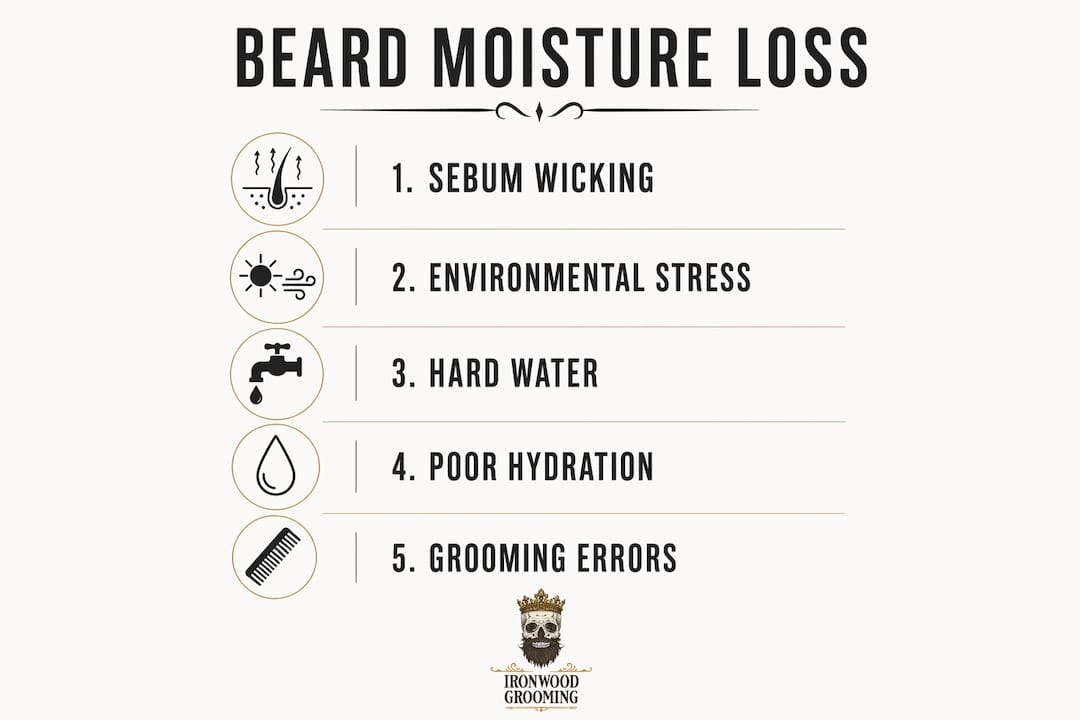
Grooming mistakes that make beard dryness worse
Most men fighting dry beards are unknowingly making it worse with their daily routine. These are the habits that accelerate moisture loss fastest.
- Over-washing: Sebum replenishment takes 24–48 hours. Washing daily, especially with hot water, strips oils faster than your skin can replace them.
- Sulfate-based washes: Sulfate-containing beard washes strip natural sebum heavily after a single wash, leaving skin exposed and tight.
- Alcohol-based products: Alcohol-based products reduce surface moisture rapidly, compounding the dryness that TEWL already causes.
- Using regular hair shampoo: Scalp shampoo is formulated to handle the scalp’s high sebum output. Your facial skin produces far less oil. Using scalp shampoo on your beard strips the last of your skin’s natural protection.
- Applying oil to uncleaned skin: Applying beard oil to inflamed, uncleaned skin traps bacteria and sebum against the follicle, worsening oiliness and itch simultaneously. Oil cannot penetrate a biofilm-blocked barrier. It sits on the surface while the skin beneath stays dehydrated.
- Skipping skin cleansing: Biofilm buildup at the follicle base blocks any treatment from reaching the skin. Without proper cleansing, nothing you apply will work.
Pro Tip: If your beard feels oily at the root but dry and itchy at the surface, that’s the classic biofilm signature. More oil won’t fix it. Cleansing first will.
How your grooming needs shift with beard growth
Your beard’s moisture demands change at every stage of growth, and the American Academy of Dermatology recommends adjusting your routine accordingly. Using the same products from stubble to full beard is one of the most common reasons men stay stuck in a cycle of dryness.
- Stubble phase: Skin is exposed and vulnerable to UV damage and ingrown hairs. Use a gentle exfoliating scrub periodically to prevent folliculitis, and follow with a moisturizer that includes SPF protection. Understanding the beard hair growth cycle helps you time these transitions correctly.
- Growing in: As coverage increases, switch from a face moisturizer to a dedicated beard conditioner. The skin barrier needs targeted support now that sebum interception is ramping up.
- Full beard: Longer hair faces wind, friction, and UV exposure that the root environment can’t protect against. You need products that seal the hair shaft as well as support the skin beneath. A complete beard care routine built for this stage makes a measurable difference in how your beard holds moisture through the day.
Skin health drives beard hydration at every phase. A compromised barrier under the beard means no topical product can do its job properly, regardless of how premium the formula is.
Expert methods that actually restore beard moisture
Restoring hydration requires a sequenced approach, not just adding more product. The science points to three steps that work together.
Step 1: Clear the biofilm. Before any oil or balm can reach your skin, the bacterial biofilm blocking your follicles needs to go. Look for a cleanser formulated with lauric acid, found naturally in coconut oil. Lauric acid is antimicrobial and small enough to disrupt biofilm at the follicle base without stripping your skin’s own sebum. This is the step most men skip, and it’s why their products stop working. Learn how to use beard soap correctly to get this step right.
Step 2: Rebuild the barrier. Once the skin is clear, it can receive repair. Omega-7 fatty acids, found in sea buckthorn oil, integrate directly into the stratum corneum rather than sitting on top of it. Unlike occlusive oils that seal the surface, omega-7 becomes part of the barrier itself, which is why the relief it provides lasts beyond the next shower. Pairing this with skin hydration boosters that target the epidermal layer compounds the repair.
Step 3: Seal the hair shaft. For beards past a few inches, the hair shaft itself needs protection. Stearic acid provides structural coating; oleic acid maintains flexibility. Together they close the cuticle layer and prevent moisture from escaping along the full length of the strand.
Apply beard oil or balm immediately after washing while the beard is still damp. Open pores absorb product faster at this stage, locking in hydration that lasts through the day. Wash two to three times per week, not daily, to give sebum time to replenish.
Pro Tip: If you suspect your flaking is greasy and yellowish rather than dry and white, that may be seborrheic dermatitis caused by Malassezia yeast. Standard beard oils can feed the yeast and worsen it. See a dermatologist before adding more product.
Ironwoodgrooming oils built for men who refuse to settle
Dry beard problems call for products built around the science, not around marketing. Ironwoodgrooming’s small-batch beard oils are formulated specifically for men with coarse beards and irritated skin beneath, using clean ingredients without fillers.
The Authentic Essential Beard Oil delivers daily moisture without greasiness, making it the right starting point for any hydration routine. For men who want longer-lasting softness and a richer feel, the Crown Beard Oil provides luxury-grade hydration suited to daily use in demanding environments. The King Beard Oil goes deeper, with an intense formula designed to nourish the skin beneath thick, coarse beards where moisture loss hits hardest.
Every formula is handcrafted in small batches to preserve potency. No shortcuts, no synthetic fillers. Shop Ironwoodgrooming’s beard oils and build a routine that actually holds moisture from morning to night.
Key Takeaways
Your beard loses moisture daily because beard hair wicks sebum away from skin, triggering transepidermal water loss that no standard moisturizer can reverse without first clearing the biofilm barrier.
| Point | Details |
|---|---|
| Sebum wicking is the root cause | Beard hair intercepts skin oil before it reaches the surface, causing sebum starvation and TEWL. |
| Grooming mistakes compound dryness | Sulfate washes, alcohol products, and daily hot-water washing strip oils faster than skin replenishes them in 24–48 hours. |
| Phase-based grooming matters | The American Academy of Dermatology recommends exfoliation at the stubble stage and dedicated conditioners once the beard grows in. |
| Biofilm must be cleared first | Lauric acid cleansers disrupt the bacterial blockade so oils and barrier-repair ingredients can actually reach the skin. |
| Ironwoodgrooming oils target the skin | Authentic Essential, Crown, and King Beard Oils are formulated for coarse beards and dry skin, without grease or fillers. |
Recommended
- How to Moisturize a Coarse Beard: The Layering Method | Ironwood Grooming
- Beard Moisturizing Routine for Thick Hair: 2026 Guide – Ironwood Grooming
- Beard Itch: Why It Happens and How to Stop It for Good | Ironwood Grooming
- Why Your Beard Needs Daily Brushing: A Coarse Beard Guide – Ironwood Grooming

