


Warm a pea-sized amount of wax between your fingers until it turns glossy, then work it into dry hair from the roots at the center out toward the tips. That single move solves most of what goes wrong with mustache wax application: clumping, weak hold, and that stiff, shellacked look nobody wants.
A few things to lock in before you touch the wax:
- Start with a completely dry mustache. Wet or damp hair repels wax instead of gripping it.
- Use less than you think you need. You can always add a second micro-layer.
- Finish with a fine-tooth comb to distribute the product evenly and train the direction of growth.
Expect several hours of solid hold from a quality wax, less in humidity, and plan to reapply once daily if you’re styling a handlebar.
Key Takeaways
Reliable mustache wax application comes down to warming a small amount, working center outward on dry hair, and letting it set untouched.
| Point | Details |
|---|---|
| Prep before product | Wash, dry completely, and comb your mustache before touching any wax. |
| Start small | A pea-sized amount is enough; add thin layers rather than one thick coat. |
| Direction matters | Press wax into the roots at the center first, then work outward to the tips. |
| Match wax to style | Light hold suits natural looks; firmer hold or layering suits handlebar training. |
| Ironwood supports the routine | Moustache Wax and the Stainless Moustache Comb handle hold and distribution in this exact sequence. |
Table of Contents
- Tools and Preparation for Mustache Wax Application
- Step-by-Step Mustache Wax Application Technique
- Adjusting Your Technique for Different Mustache Styles
- Fixing the Most Common Mustache Wax Mistakes
- How to Remove Wax and Maintain Your Mustache
- What Ironwood Grooming Recommends at Each Stage
- Why Most Mustache Wax Advice Gets the Order Wrong
- Get the Full Kit for Your Mustache Routine
- Frequently Asked Questions About Mustache Wax Application
- Sources
Tools and Preparation for Mustache Wax Application
Good mustache wax application starts before you ever open the tin. Gather your gear: a firm-hold wax, a fine tooth comb (stainless steel holds up better than plastic and won’t snag), small grooming scissors or a trimmer, and a clean towel.
Wash your mustache with a gentle beard or mustache shampoo, towel dry it completely, then comb it straight down. Trimming and starting with clean, dry hair improves how well wax grips and how predictable your styling turns out, since damp or oily strands just slide the wax right off instead of holding it in place. This is also the moment to address length and symmetry: barbers recommend trimming from the outside in and combing hairs straight down to judge how much hangs over the lip before you commit to a shape.
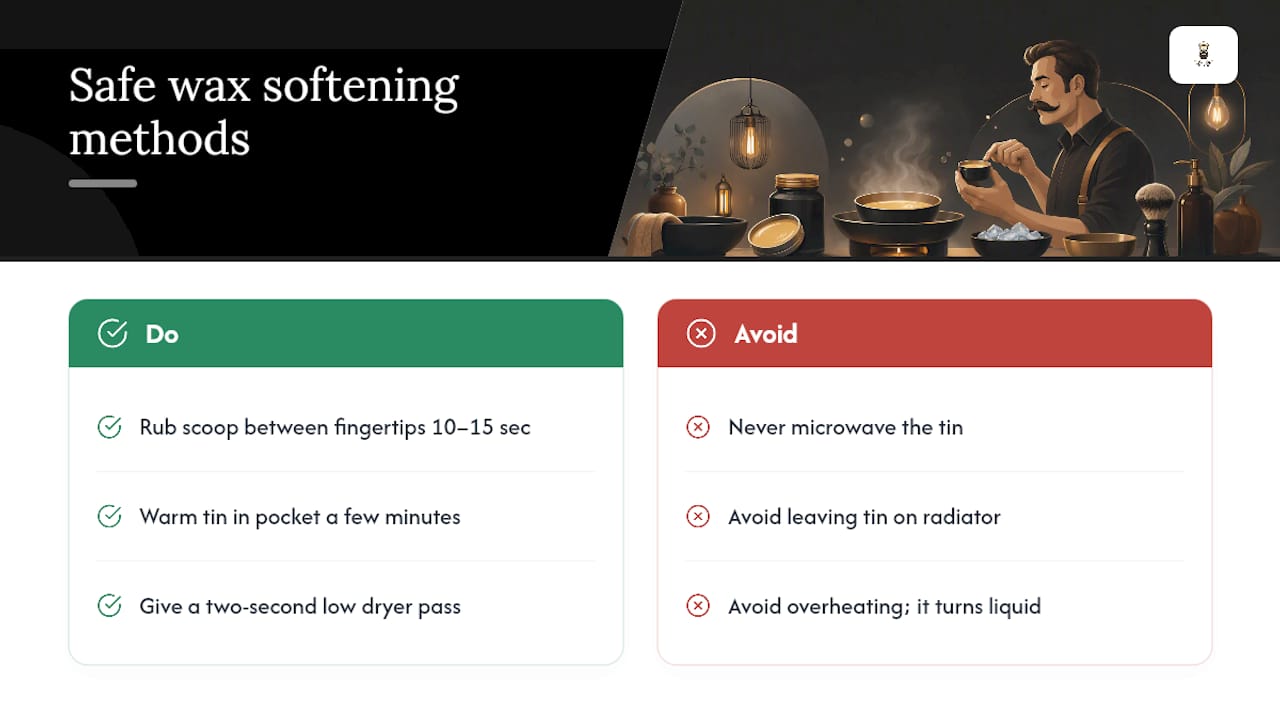
To soften wax, rub a small scoop between your fingertips for 10 to 15 seconds, or set the tin in your pocket for a few minutes of body heat. A two-second pass of a hair dryer on low also works. Never microwave it or leave it on a radiator. Overheated wax turns liquid, loses its structure, and won’t set properly once it cools.
Pro Tip: Scoop your first amount with a toothpick or the flat edge of a comb rather than your fingernail. It’s easier to control portion size, and you won’t waste product digging wax out from under your nails later.
Step-by-Step Mustache Wax Application Technique
Once your mustache is dry, trimmed, and your wax is warmed to a pliable, glossy texture, the actual application takes less than two minutes.
- Scoop and warm. Take a pea-sized amount and roll it between your fingertips until it’s smooth and shows no white streaks or clumps. Any lumps mean it’s not warm enough yet, so keep working it.
- Press into the roots at the center. Start directly under your nose and press the wax into the base of the hair first. This is where hold matters most, and it’s where amateurs skip straight to the tips and end up with a limp center and overloaded ends.
- Work outward toward the tips. Pull the wax down and out in the direction you want the hair to sit, following the natural growth pattern rather than fighting it.
- Comb through to distribute. Run a stainless steel mustache comb through the hair to break up any remaining unevenness and detangle as you go. This step catches spots your fingers missed.
- Shape it. Twist, roll, or curl the ends depending on the look you’re going for. Add a second micro-layer only if the first pass didn’t give you enough grip, rather than loading up all at once.
Let the wax set for two to three minutes without touching it. This cooling window is what locks the shape in place, and vendors who specialize in wax application consistently point to warming the product and working from center outward as the difference between a style that holds all day and one that droops by lunch. Resist the urge to keep adjusting it during those first few minutes. Every touch before it hardens resets the clock and softens your shape.
Adjusting Your Technique for Different Mustache Styles
The core application method stays the same no matter what look you’re after. What changes is how much wax you use and how you finish the shaping.
- Natural or trimmed style: Use the smallest amount that gives you control, smooth it outward in one direction, and finish with a comb. No twisting, no curling, just clean and neat.
- Trimmed lip-line look: Keep the hair above your lip short so it doesn’t interfere with eating or drinking, and use a lighter wax so it doesn’t feel heavy against your skin.
- Handlebar: This one takes patience. You’ll need to grow the ends longer than the rest of the mustache, and you train the curl by twisting the tips while the wax is still soft, then holding the shape as it sets. A firmer hold wax, or two thin layers instead of one thick one, gives handlebar ends the structure to stay curled through the day.
Pro Tip: If your handlebar ends keep drooping by afternoon, the problem usually isn’t your technique, it’s your wax strength. Light-hold waxes work fine for natural looks but can’t fight gravity on longer, trained ends. Handlebar/wax specialty resources consistently point to firmer formulations and direct-apply technique for styles that need to hold a curl.
Fixing the Most Common Mustache Wax Mistakes
Even with good technique, a few things trip up almost everyone starting out.
- Wax balling up or clumping: This usually means you applied it to damp hair or didn’t warm it enough. Wash it out, dry completely, and reapply with properly softened wax.
- Greasy or stiff, unnatural look: You used too much. Wash it out and start over with half the amount, or switch to a lighter-hold formula if this happens repeatedly.
- Hold not lasting: Warm the wax more thoroughly before applying, add a thin second layer at the roots, or trim the ends slightly since shorter, lighter hair holds shape longer than long, heavy ends.
- Flaking or buildup: Wash more often and use a dedicated beard shampoo instead of bar soap. Heavy daily layering without washing is almost always the root cause.
How to Remove Wax and Maintain Your Mustache
Wax needs to come out regularly or it builds up and dulls the hair. If you’re waxing daily for a handlebar, wash it out every night. Lighter, occasional users can stretch that to every two or three days.
- Wet your mustache thoroughly with warm water to start breaking the wax down.
- Apply a beard or mustache shampoo and massage it in for a full minute, working it into the roots where wax collects most.
- Rinse completely, checking for any residue near the skin.
- Towel dry, then apply a few drops of beard oil to replace the moisture the shampoo stripped and to soften the hair before your next styling session.
Skip harsh bar soaps. They strip the natural oils your skin needs and leave hair drier for the next wax application. Vendor guidance on wax removal consistently recommends shampoo followed by oil as the standard reset between styling sessions.
What Ironwood Grooming Recommends at Each Stage
Robert, who works with Ironwood Grooming, built this routine around one principle: small-batch, plant-based formulas hold better because they aren’t cut with fillers that break down under heat or humidity; this is why understanding the role of beeswax polish in cosmetics explained can help you appreciate the firm hold beeswax provides in styling products.
- For hold: Moustache Wax gives you the firm grip needed for handlebar training without the stiff, plastic feel of cheaper waxes.
- For distribution: The Stainless Moustache Comb won’t snag or bend the way plastic combs do, which matters when you’re working wax through coarse hair.
- For post-wash conditioning: A few drops of beard oil after washout restores moisture your shampoo removed. Clinical sources on topical oils and skin hydration back up why this step isn’t optional for coarse or dry mustaches.
If you’d rather skip a concentrated essential oil blend, our vegan mustache wax alternatives guide walks through plant-based options. Medical sources note that concentrated essential oils can irritate sensitive facial skin, which is exactly why we formulate with diluted, purpose-built blends instead of raw oils.
Wax locks your shape in place, but trimming is what defines that shape in the first place. Get the cut right first, and the wax does far less work.
Why Most Mustache Wax Advice Gets the Order Wrong
Most guides treat wax application like a standalone skill, separate from trimming, separate from washing, separate from the hair type you’re actually working with. That’s backward. The single biggest factor in whether your mustache wax holds isn’t the wax at all, it’s what condition your hair was in before you touched the tin.
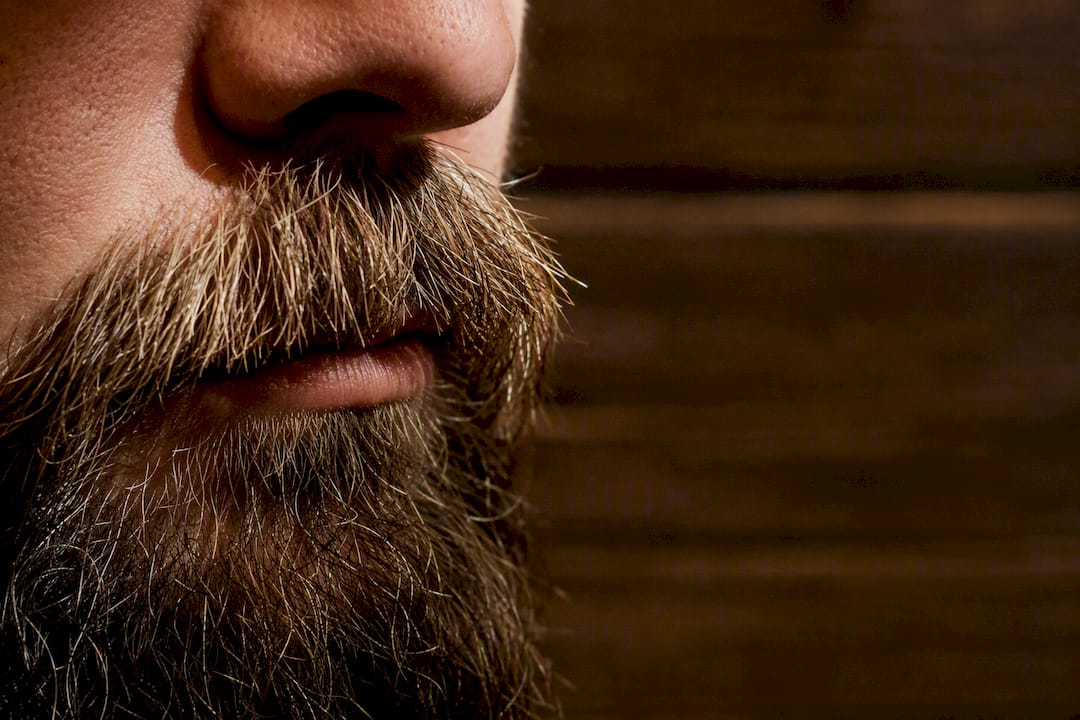
Coarse hair, in particular, gets terrible advice. The instinct is to use more wax to fight the texture, when what actually works is warming the product more thoroughly and applying it in thinner layers. Coarse strands need saturation, not volume. I’d also push back on the common idea that heavier hold always means better hold. A firm wax on hair that hasn’t been trimmed to the right length just adds weight without adding structure, which is why your handlebar droops by 3 p.m. even though you used plenty of product.
If you take one thing from this, prioritize your trim and your prep over your product choice. Buy good wax, yes. But get the cut and the drying routine right first.
Get the Full Kit for Your Mustache Routine
You’ve got the technique down. The gap for most guys isn’t knowledge, it’s having wax that actually softens evenly and a comb that doesn’t fight coarse hair on the way through. That’s the entire reason Ironwoodgrooming builds its mustache line in small batches with plant-based ingredients instead of the synthetic fillers that make cheaper waxes crack or turn greasy by midday.
If you’re starting from scratch, the Majestic Beard Bundle pairs our Moustache Wax with a beard oil and comb so you’re not guessing what to buy piece by piece. Prefer a fully plant-based lineup? The Vegan Majestic Beard Bundle covers the same routine with vegan formulations. Browse the full moustache wax collection and pick the hold strength that matches the style you’re training toward.
Frequently Asked Questions About Mustache Wax Application
How much mustache wax should I use for the first application? Start with an amount roughly the size of a pea. You can always add a thin second layer at the roots if you need more hold, but scraping off excess wax from over-application wastes product and time.
Can I apply mustache wax to wet hair? No. Wax needs completely dry hair to grip properly. Applying it to damp hair usually causes clumping and a weak, uneven hold that falls apart within an hour.
How often should I wash mustache wax out? Daily if you’re using firm-hold wax for handlebar training, every two to three days for lighter, occasional use. Watch for flaking or dullness as a sign you’re overdue for a wash.
Why does my mustache wax feel greasy instead of holding shape? You’re likely using too much product or a wax that’s too soft for your hair type. Wash it out, reapply a smaller amount, and consider a firmer hold formula if this keeps happening.
Do I need special tools to apply mustache wax correctly? A stainless steel fine-tooth comb makes distribution far more even than fingers alone, and it holds up better against coarse hair than plastic alternatives without snagging or bending.
Sources
- How to Trim Your Mustache for Maximum Handsome — GQ
- NCBI — Clinical skin/hair care context
- Johns Hopkins Medicine — Aromatherapy and essential oils
- The WAX FAQtor — Handlebar Club

