


Jojoba and argan are the two most effective carrier oils in beard care. Most beard oils use both — and for good reason. But they are not interchangeable, and understanding what each one actually does at the ingredient level changes how you choose products and how you use them. If your beard is dry, itchy, or prone to flaking, the answer is almost always in the oil. The question is which one, and why.
What Jojoba Oil Actually Is
Jojoba is not technically an oil. It is a liquid wax ester — a distinction that matters more than most men realize. Human sebum, the natural oil your skin produces to condition your beard and protect the skin beneath it, is also a wax ester. That biochemical similarity is why jojoba absorbs into the skin and hair shaft rather than sitting on the surface. No other common carrier oil shares that profile.
What that means in practice:
- Jojoba does not clog pores — it mimics sebum closely enough that the skin treats it as its own
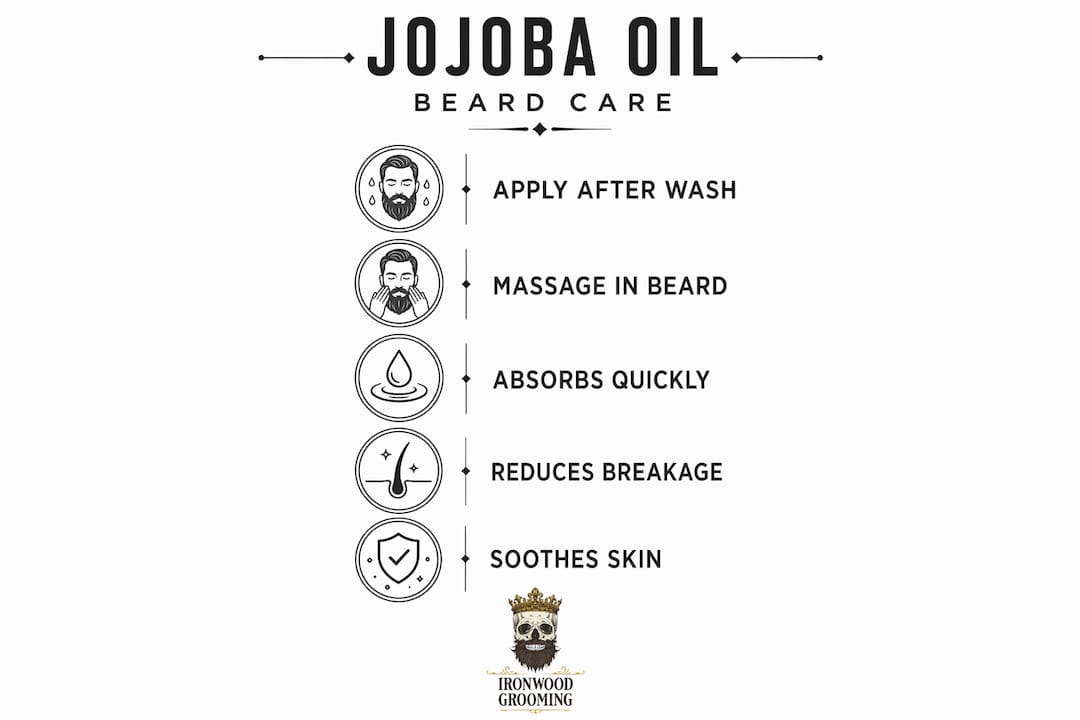
- It absorbs fast and leaves no greasy residue
- It hydrates the skin beneath the beard, not just the hair shaft
- It reduces inflammatory cytokines — the chemical signals responsible for redness, itch, and persistent irritation
- It is stable and does not oxidize quickly, meaning it does not go rancid in the bottle or on your skin
For men with sensitive skin, reactive skin, or a history of beardruff, jojoba is the safest daily carrier oil available. It conditions without triggering the microbial imbalances that cause flaking. For the full science on sebum and why oil selection matters at the skin level, read Sebum and Beard Health: What Every Man Should Know.

What Argan Oil Actually Is
Argan oil is a true oil — a triglyceride-based lipid pressed from the kernels of the argan tree. Its fatty acid profile is dominated by oleic acid (roughly 43%) and linoleic acid (roughly 36%), both of which penetrate the hair cuticle and condition the hair shaft from within. Argan also contains high concentrations of vitamin E (tocopherols) and polyphenols, which provide antioxidant protection against environmental damage — UV exposure, pollution, and oxidative stress that degrades hair quality over time.
What argan delivers that jojoba does not:
- Visible shine and surface smoothing — argan coats the hair cuticle and reflects light, which is why beards look noticeably glossier after argan application
- Stronger antioxidant protection from vitamin E at higher concentrations
- Deeper conditioning for the hair shaft itself, particularly on coarse or damaged hair
- A slightly heavier feel that works well for longer, denser beards that need more weight and control
The tradeoff: argan absorbs more slowly than jojoba and can feel heavier on the skin. For men with oily skin or a tendency toward breakouts, argan used alone in high concentrations can contribute to congestion. In a blended formula, that risk is managed by the jojoba component.
How They Compare Head to Head
| Property | Jojoba | Argan |
|---|---|---|
| Chemical type | Liquid wax ester | Triglyceride oil |
| Sebum similarity | Very high — closest match to human sebum | Moderate |
| Absorption speed | Fast, no residue | Moderate, slight surface feel |
| Pore safety | Does not clog pores | Generally safe, heavier in high doses |
| Skin hydration | Excellent — penetrates to skin layer | Good — primarily hair shaft focused |
| Hair shine | Moderate | High — visible gloss and smoothing |
| Anti-inflammatory | Yes — reduces cytokines | Yes — via vitamin E and polyphenols |
| Best for | Sensitive skin, daily use, beardruff | Coarse hair, shine, antioxidant protection |
| Daily use | Yes | Yes, ideally blended |
The case for using clean, natural ingredients in a daily grooming formula comes down to complementary mechanisms: jojoba handles skin-level hydration and sebum compatibility, argan handles hair shaft conditioning and antioxidant protection. Neither does the other’s job as well alone.
Which One Does Your Beard Actually Need?
The honest answer for most men is both — but the ratio matters depending on your skin type and beard characteristics.
Prioritize jojoba if:
- Your skin under the beard is dry, itchy, or prone to flaking
- You have sensitive or reactive skin that breaks out easily
- You are dealing with beardruff or seborrheic dermatitis
- You have a shorter beard where skin contact is the primary concern
- You want fast absorption with no greasy feel
Prioritize argan if:
- Your beard is coarse, wiry, or prone to frizz
- You want visible shine and a smoother surface appearance
- You have a longer, denser beard that needs more conditioning weight
- You are in a dry or high-UV environment where antioxidant protection matters
- Your skin is not sensitive and tolerates heavier oils well
Use both if: you want the complete picture — skin-level hydration from jojoba and hair shaft conditioning from argan, in a single daily application. This is why Ironwood’s beard oils are built on a jojoba and argan base. Not because it sounds good on a label, but because the two oils address different layers of the same problem. Ironwood’s beard oils deliver both in a formula designed for daily use without buildup or residue.
How to Apply for Maximum Absorption
The application method matters as much as the oil itself. Both jojoba and argan absorb significantly better into damp hair than dry hair — the open cuticle from moisture allows the oil to penetrate the shaft rather than sitting on the surface.
- Wash your beard with a gentle, sulfate-free beard wash two to three times per week.
- Pat dry — leave slightly damp. This is the window. Apply oil now, not after the beard has fully dried.
- Dispense 4 to 8 drops into your palm depending on beard length. Work your palms together to warm the oil.
- Apply from skin outward. Start at the skin beneath the beard and work outward to the tips. The skin is where jojoba does its best work. Do not skip it.
- Comb through. A stainless steel comb distributes the oil evenly from root to tip and prevents buildup in one spot. Follow with a boar bristle brush for longer beards to smooth the surface and lock in the argan’s conditioning effect.
- Follow with balm if needed. Both oils absorb fast enough that beard balm applied after will not compete with them.
Pro tip: If your beard feels greasy after oiling, you either used too much or applied to fully dry hair. Cut back to 4 drops and apply to damp hair. The grease disappears and the conditioning stays.
What to Avoid
Not all carrier oils belong in a daily beard routine. Two common ones cause more problems than they solve:
- Coconut oil: Heavy, slow-absorbing, and high in lauric acid — which can clog pores and trigger breakouts in men with oily or acne-prone skin. Works for occasional deep conditioning but is not a daily driver.
- Castor oil: Thick, sticky, and too heavy for daily use. High in ricinoleic acid, which some men find irritating. Best used sparingly as a targeted treatment, not as a base oil.
- Olive oil: Roughly 73% oleic acid — which feeds Malassezia yeast and can worsen beardruff in men prone to seborrheic dermatitis. Avoid if you have any history of beard flaking.
Why I Use Both Every Day
I have tested most of the carrier oils that show up in beard products. The pattern is consistent: men with skin problems under their beard almost always improve when they switch to a jojoba-forward formula. Men with coarse, frizzy hair almost always see better results when argan is in the blend. The men who see the best results are the ones using both.
The damp-application method is the detail most men miss. I have had men tell me jojoba does not work for them, and in every case they were applying it to a dry beard. The oil sits on the surface, the beard feels coated, and they conclude the ingredient is the problem. It is not. Apply to damp hair and the experience is completely different.
Build your routine around a jojoba and argan blend applied daily to a damp beard. Everything else — balm, butter, brush technique — builds on that foundation. Get the oil right first.
— Robert, Ironwood Grooming
FAQ
Is jojoba or argan better for beard care?
Both serve different functions. Jojoba is better for skin-level hydration, sensitive skin, and beardruff because it mimics sebum and absorbs without clogging pores. Argan is better for hair shaft conditioning, shine, and coarse or frizzy beards. A blended formula delivers both benefits in one daily application.
Can I use jojoba oil on my beard every day?
Yes. Jojoba is one of the few carrier oils safe for daily use on facial skin. Its wax ester structure means it absorbs cleanly without buildup or pore congestion. Apply 4 to 8 drops to a damp beard every morning.
Does argan oil clog pores?
Argan oil is generally considered non-comedogenic and safe for most skin types. In high concentrations used alone, it can feel heavier on oily skin. In a blended formula with jojoba, the absorption is balanced and pore congestion is not a concern for most men.
Why does my beard feel greasy after applying oil?
Two causes: too much product, or applying to dry hair. Both jojoba and argan absorb significantly better into damp hair. Apply immediately after patting dry, use 4 to 6 drops for short to medium beards, and the greasy feel disappears.
What oils should I avoid in beard products?
Avoid coconut oil for daily use if you have oily or acne-prone skin. Avoid castor oil as a base — it is too thick for daily application. Avoid olive oil if you have any history of beardruff or seborrheic dermatitis, as its high oleic acid content feeds Malassezia yeast.
Keep Reading
- Sebum and Beard Health: What Every Man Should Know
- Why Natural Ingredients Matter in Beard Care
- Beard Itch: Why It Happens and How to Stop It for Good
Part of the Ironwood Regimen Series
This post is part of the Beard Itch + Beardruff Regimen
Get the full routine for stopping itch and beardruff at the source — clean, hydrate, seal.
See the Itch Killer Regimen →
