


Vegan beard products contain zero animal‑derived ingredients and are produced without animal exploitation. That definition sounds simple. In practice, verifying a truly vegan product requires more than reading the front of a package — it requires understanding ingredient sourcing, certification standards, and the difference between marketing language and verified claims.
This guide gives you a repeatable process for evaluating any beard product, from label reading to certification checks to choosing the right formula for your beard.
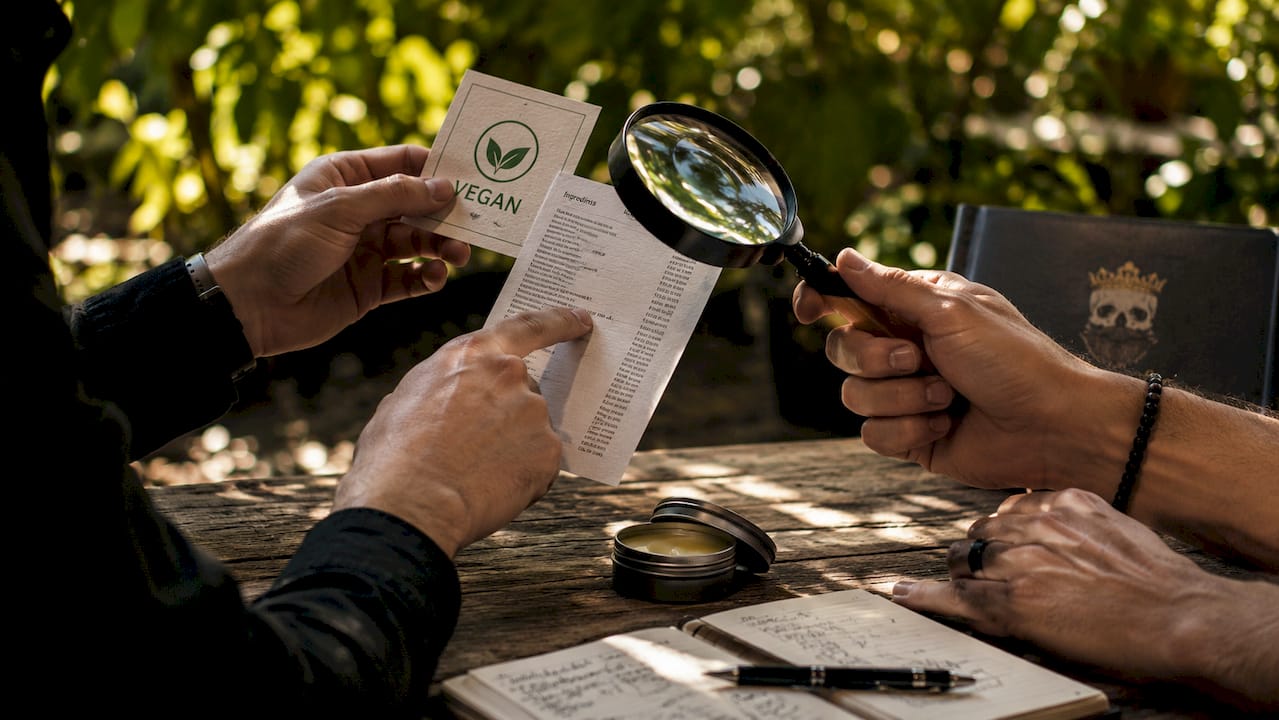
How to Read a Beard Product Label for Vegan Status
A recognized vegan certification is the fastest and most reliable indicator that a product contains no animal‑derived ingredients. Ingredient lists alone have limitations — sourcing ambiguity can hide animal derivatives behind generic names. A certification logo cuts through that uncertainty immediately.
When no certification is present, the ingredient list becomes your next tool. Cosmetic labels follow INCI (International Nomenclature of Cosmetic Ingredients) standards, which means every ingredient appears under a standardized name. INCI gives you consistency — but it does not always reveal whether an ingredient is plant‑ or animal‑derived.
Obvious Animal‑Derived Ingredients to Reject
- Beeswax (Cera Alba): Common in balms for hold and texture.
- Lanolin: A wax derived from sheep’s wool.
- Gelatin: Derived from animal collagen.
- Keratin: Typically sourced from animal hair, feathers, or hooves.
- Honey (Mel): Used as a humectant in some grooming products.
Gray‑Area Ingredients That Require Follow‑Up
Some ingredients can be plant‑ or animal‑derived, and the INCI name alone doesn’t reveal the source. These require brand confirmation:
- Glycerin: Can be derived from plant oils or animal fats.
- Lecithin: Often soy‑based but can be egg‑derived.
- Fragrance / Parfum: A single entry that can represent dozens of components. While most modern fragrance houses use synthetic or plant‑derived aromatics, the lack of disclosure means you must confirm sourcing if the product is not certified vegan.
Pro tip: If a product lists “fragrance” or “parfum” and has no vegan certification, ask the brand whether the fragrance blend contains any animal‑derived components. Brands confident in their sourcing answer this quickly.
What Vegan Certifications Actually Mean
Vegan and cruelty‑free are separate claims. A product can be vegan in ingredients but still tested on animals. Conversely, a cruelty‑free product may contain beeswax or lanolin. You must verify both claims independently if ethics matter to you.
The most recognized vegan certifications in grooming include:
- The Vegan Society Sunflower Logo: One of the oldest and most trusted marks. Requires no animal ingredients and no animal testing at any stage.
- PETA Beauty Without Bunnies (Vegan): Confirms both vegan ingredients and cruelty‑free production.
- V‑Label: A widely used European certification requiring full ingredient traceability and independent verification.
For cruelty‑free verification specifically, the Leaping Bunny program is the gold standard in North America. It requires audited supplier documentation rather than self‑reported claims.
Practical takeaway: Look for The Vegan Society logo or PETA’s vegan designation for ingredient assurance. Add Leaping Bunny certification if you want confirmed cruelty‑free production.
Vegan Beard Oils vs. Balms: Matching the Product to Your Needs
Oils and balms serve different purposes. Oils focus on conditioning and supporting the skin beneath the beard. Balms provide styling hold and surface protection. Matching the product to your grooming goal is the key to satisfaction.
| Product Type | Primary Function | Key Plant‑Based Ingredients | Best For |
|---|---|---|---|
| Beard Oil | Moisturizing, conditioning | Jojoba, argan, almond, hemp seed, grape seed | Dry skin, coarse hair, daily hydration |
| Beard Balm | Styling, hold | Mango butter, shea butter, candelilla wax | Flyaways, shaping, medium‑length beards |
| Beard Butter | Deep conditioning | Cocoa butter, coconut oil, vitamin E | Very coarse or brittle beards |
| Beard Shampoo | Cleansing | Aloe vera, tea tree, castile base | Weekly washing, buildup removal |
Well‑formulated vegan beard oils built on jojoba, argan, almond, and hemp seed absorb cleanly and condition both the hair and the skin beneath. Vegan balms replace beeswax with candelilla wax — a plant‑derived wax with a higher melting point that provides comparable hold. The difference between a good vegan product and a great one comes down to ingredient quality and concentration, not just the absence of animal derivatives.
Pro tip: If your beard feels rough or your skin itches, start with a vegan beard oil applied to damp skin after washing. Add a balm only if you need hold or shaping.
Step‑by‑Step: How to Choose Vegan Beard Products
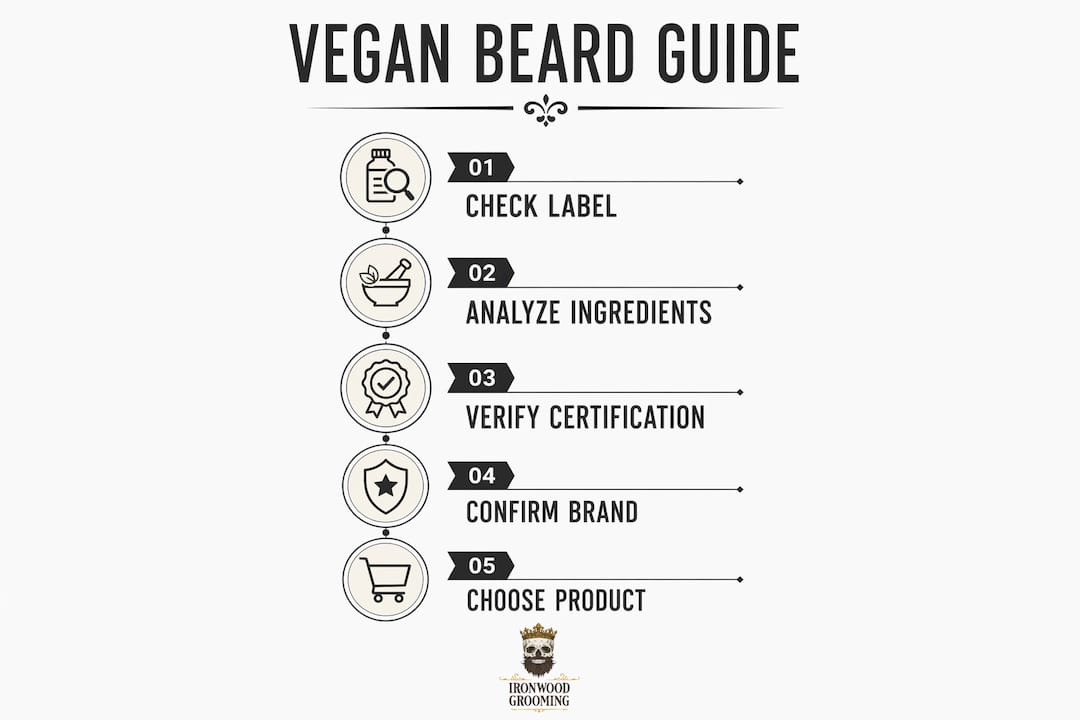
- Check for a recognized vegan certification. This resolves most questions immediately.
- Scan the ingredient list for obvious animal‑derived ingredients. Beeswax, lanolin, gelatin, keratin, and honey are automatic disqualifiers.
- Flag gray‑area ingredients. Glycerin, lecithin, and fragrance require brand confirmation.
- Treat unclear sourcing as unknown. Without certification, ambiguity requires follow‑up.
- Verify cruelty‑free status separately. Look for Leaping Bunny or PETA cruelty‑free certification.
- Match the product to your grooming goal. Use the table above to choose the right format.
| Situation | Action | Confidence Level |
|---|---|---|
| Vegan certification present | Accept as verified vegan | High |
| No certification, clean ingredient list | Likely vegan — confirm with brand | Medium |
| Gray‑area ingredients present | Contact brand for sourcing | Low until confirmed |
| No transparency | Avoid or skip | Not recommended |
Key Takeaways
| Point | Details |
|---|---|
| Certification beats label reading | A recognized vegan certification is the fastest and most reliable indicator. |
| Vegan and cruelty‑free are separate | Verify both claims independently. |
| Gray‑area ingredients require follow‑up | Glycerin, lecithin, and fragrance need sourcing confirmation. |
| Match product type to beard needs | Oils hydrate; balms style; butters deeply condition. |
| Unclear status means unknown | Treat any unverified product as uncertain until confirmed. |
Why Labels Alone Will Get You Burned
The most common mistake men make is trusting a “natural” claim on the front of a package without reading the back. “Natural” has no standardized definition in U.S. cosmetics. A product can call itself natural and still contain beeswax, lanolin, or animal‑derived glycerin.
The second trap is assuming plant‑based marketing equals vegan formulation. Brands use “botanical,” “plant‑powered,” and “clean” freely — even when their formulas include honey or animal‑derived waxes. Ingredient vetting must go beyond marketing language and reach the actual INCI list.
The habit that works is simple: certification first, ingredient scan second. If a brand cannot show you a recognized vegan certification and a clean ingredient list, the burden of proof is on them. Transparency is becoming the norm in grooming — choose the brands that show their work.
— Roberto, Ironwood Grooming
Keep Reading
- Vegan Beard Care for Sensitive and Reactive Skin
- Vegan Beard Care: Why It's Better for Your Skin and the Planet
- Why Natural Ingredients Matter in Beard Care
Part of the Ironwood Regimen Series
New to beard care? Start here.
The Beginner Beard Regimen is the complete start-here guide — cleanse, hydrate, seal — for guys building their first real routine.
See the Beginner Regimen →
