


Coarse beard hair is not a flaw. It’s a structure — one built differently from fine hair, and one that demands a routine designed around its biology. The outer cuticle of coarse facial hair sits more raised than flat, a behavior documented in hair fiber research by Robbins. That raised cuticle is why coarse hair feels rough, loses moisture faster, and frays at the tips long before finer hair types do. It’s also why the classic problems — itch, flaking, sandpapery ends, a beard that looks rugged instead of sharp — keep coming back when the routine is wrong.
The right routine doesn’t fight the hair. It works with the structure. Here’s how to build one that actually holds up.
The Six‑Step Coarse Beard Routine
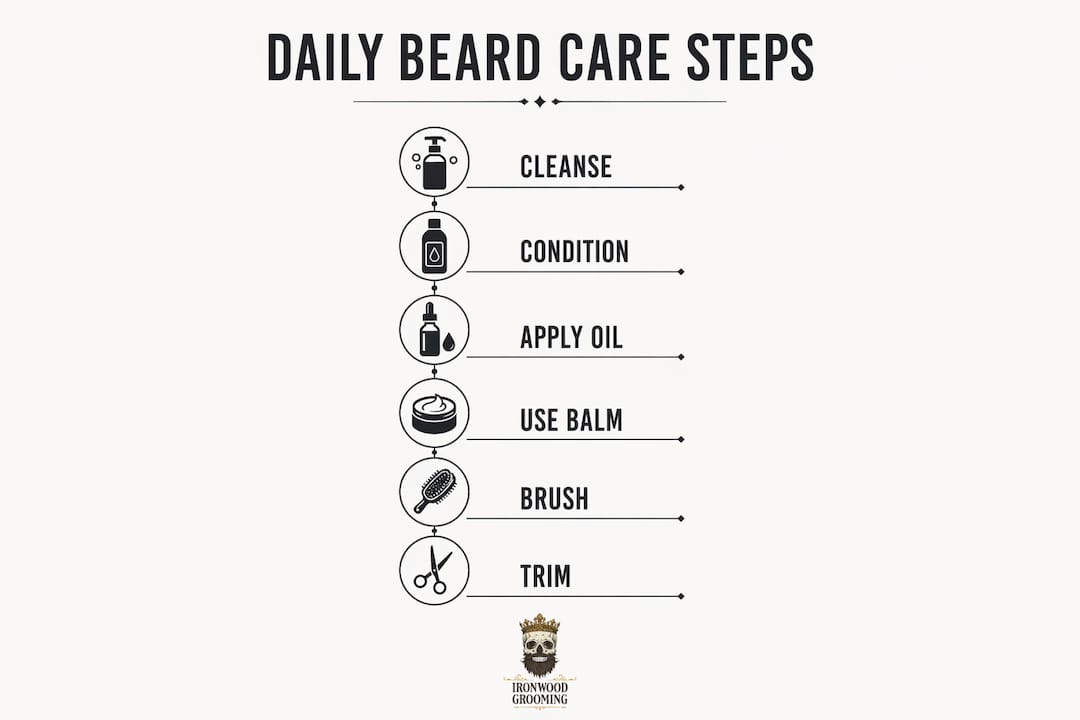
A coarse beard routine follows six steps in sequence: cleanse, condition, apply beard oil, apply beard balm, brush or comb, and trim. Each step has a job. Skipping one weakens the others.
- Cleanse. Wash your beard 2–3 times per week with a sulfate‑free beard wash. Dermatology research by Lodén shows that over‑cleansing strips the skin’s natural lipids faster than they can be replenished. On non‑wash days, rinse with lukewarm water only.
- Condition. Apply a beard conditioner immediately after washing and leave it on for 1–2 minutes. Conditioners help temporarily smooth the raised cuticle — a behavior consistent with how conditioning agents interact with coarse hair fibers.
- Apply beard oil. Pat your beard damp, then massage oil directly into the skin. This is the step most men skip, and it’s the reason itch persists. Jojoba oil — a liquid wax ester chemically similar to human sebum, as shown by Wisniak — absorbs into the skin without heaviness. Argan oil, documented by Charrouf & Guillaume, contributes fatty acids and vitamin E that support softness over time.
- Apply beard balm. Warm a small amount between your palms and press it through your beard. Balm adds light hold and surface conditioning. Use it after oil, not instead of it.
- Brush or comb. Use a boar bristle brush or wide‑tooth comb to distribute oils and train hairs to lie flat. Brushing also removes loose flakes and prevents the knots that make coarse beards look unkempt.
- Trim. Trim every 2–4 weeks to remove split ends and maintain shape. Always trim a dry beard. Wet hair stretches — Robbins’ work on hair fiber mechanics confirms this — which leads to uneven results once it dries.
Pro tip: Apply beard oil within two minutes of stepping out of the shower. Damp hair doesn’t “absorb” oil — but water reduces surface friction, allowing oils to spread more evenly across the cuticle.
How Coarse Beard Texture Shapes What Products You Need
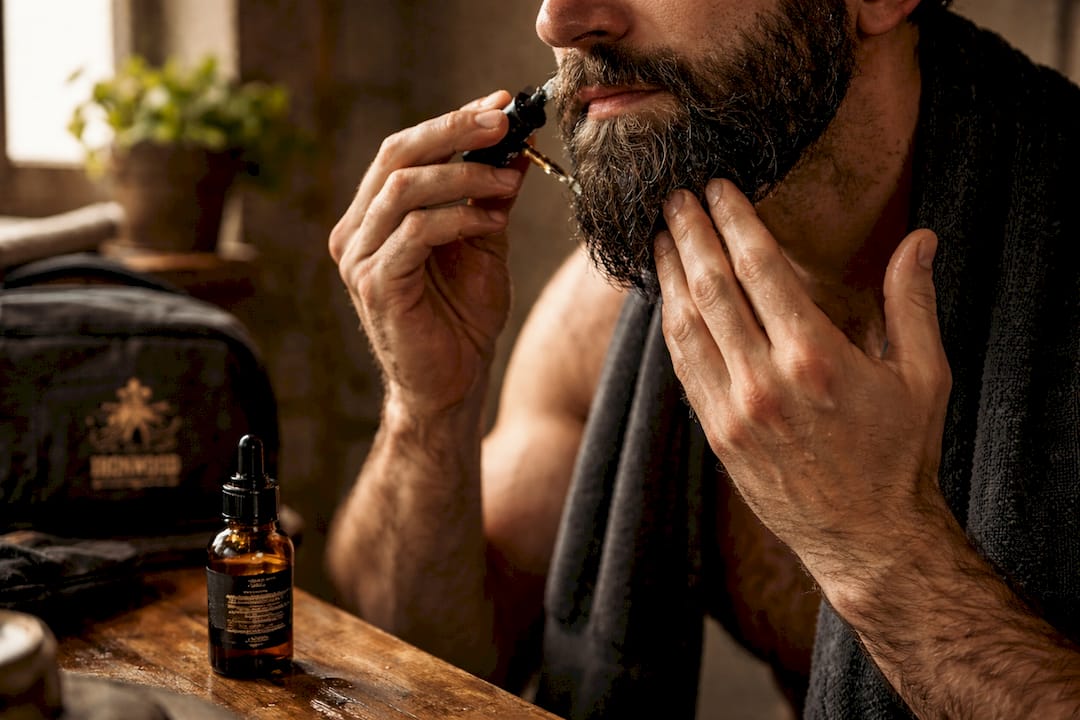
Coarse beard hair has a naturally raised cuticle layer. Robbins’ research shows that raised cuticles increase friction, reduce shine, and accelerate moisture loss. This is why coarse beards feel rougher and dry out faster than finer textures.
The two most effective carrier oils for coarse hair are jojoba and argan. Jojoba’s wax‑ester structure mirrors human sebum, allowing it to integrate well with the skin’s natural lipid layer. Argan oil’s fatty acid profile and vitamin E content — documented by Charrouf & Guillaume — support softness and manageability over time.
| Product type | Primary function | Best use case |
|---|---|---|
| Beard oil | Skin hydration, moisture support | Daily, after washing |
| Beard balm | Light hold, surface conditioning | Daily, after oil |
| Boar bristle brush | Oil distribution, hair training | Daily brushing |
| Wide‑tooth comb | Detangling, shaping | After brushing |
| Sulfate‑free wash | Gentle cleansing | 2–3 times per week |
Tools matter as much as products. A boar bristle brush moves oils through every layer of a thick beard in a way fingers cannot. A wide‑tooth comb detangles without snapping coarse strands. Avoid fine‑tooth combs on dry coarse beards — they create breakage and frizz.
- Choose oils with jojoba or argan as the first or second ingredient.
- Avoid products with high alcohol content — alcohol accelerates moisture loss.
- Use a balm with beeswax or shea butter for hold that doesn’t flake.
- Match your wash to your skin type — oily skin may need a slightly more clarifying formula.
How to Fix Itchiness, Flaking, and Uneven Shape
Coarse beard problems fall into three categories: dryness, itch or flaking, and shape issues. Identifying your dominant issue lets you target the right fix instead of throwing every product at the problem at once.
Dryness and itch almost always trace back to oil application technique. Skin under a coarse beard stays dry when oil is applied only to the hair surface. Press oil into the skin with your fingertips, then work outward.
Flaking and beard dandruff are most commonly caused by seborrheic dermatitis — a condition driven by Malassezia yeast on sebum‑rich skin. Multiple randomized controlled trials, including work by Gupta & Nicol, support ketoconazole shampoo at 1–2% concentration as an effective treatment. Leave it on the skin for 3–5 minutes before rinsing. Contact time drives efficacy.
Uneven shape and ragged ends come from infrequent trimming. Trimming every 2–4 weeks removes frayed tips that make a coarse beard look rough even when moisturized. Trim dry for accuracy.
- Use the Ironwood anti‑itch regimen if itch is your primary issue.
- Avoid tight beard styles that pull on irritated skin.
- Do not scratch a flaking beard — scratching spreads Malassezia and worsens inflammation.
- Switch to a hypoallergenic product line if standard products cause redness or burning.
Pro tip: When using a ketoconazole wash, set a timer. Most men rinse too quickly. Three to five minutes of contact time is the difference between a treatment that works and one that doesn’t.
Advanced Habits That Keep a Coarse Beard Soft Long‑Term
Daily oiling handles surface moisture. Weekly deep conditioning handles structural softness — the kind daily oiling alone cannot deliver.
- Weekly coconut oil soak. Research by Rele & Mohile shows coconut oil reduces protein loss in hair fibers compared to mineral and sunflower oils. Apply two tablespoons to your beard, leave for 15–30 minutes, then wash out.
- Diet and hair biology. Beard hair is made of keratin. Almohanna et al. found that adequate dietary protein, omega‑3 fatty acids, and zinc support healthy hair structure. Foods like salmon, eggs, walnuts, and lean beef contribute to these needs.
- Seasonal routine shifts. Cold, dry winters strip moisture faster than warm months. Increase oiling frequency in winter. In humid summers, use lighter oils and a stronger‑hold balm.
- Consistency over intensity. A moderate routine done daily outperforms an aggressive routine done twice a week. Coarse beard improvement is cumulative — noticeable changes appear in 3–4 weeks.
Key Takeaways
| Point | Details |
|---|---|
| Six‑step sequence | Cleanse, condition, oil, balm, brush, trim — in that order. |
| Oil technique | Massage oil into the skin first. Surface application doesn’t fix itch. |
| Washing frequency | 2–3 times per week. Daily washing depletes natural oils. |
| Flaking treatment | Ketoconazole 1–2% with 3–5 minutes contact time — supported by RCTs. |
| Deep conditioning | Coconut oil reduces protein loss — research‑supported advantage. |
What I’ve Learned After Years of Testing Coarse Beard Routines
The single most impactful change men make is correcting their oil application technique. Not switching products. Not buying a more expensive brush. Just pressing oil into the skin instead of rubbing it on the surface. That one adjustment eliminates itch for most men within a week.
The second thing: stop over‑washing. Men with coarse beards often assume more washing means a cleaner beard. The opposite is true. Daily washing strips the oils your skin works hard to produce.
Trim dry. Always. Wet hair lies longer than it is — Robbins’ work on hair fiber mechanics confirms this — and trimming wet leads to uneven results.
Finally, patience is non‑negotiable. Coarse beard improvement is a four‑to‑six‑week process. The men who stick with a consistent routine always end up with a better beard than the men who cycle through products every two weeks looking for a shortcut.
— Roberto, Ironwood Grooming
A coarse beard grooming routine is a structured, daily and weekly regimen built around moisturizing, shaping, and protecting the skin beneath your beard. Coarse beard texture, known in grooming circles as high-porosity or wiry facial hair, resists moisture more than finer hair types and dries out faster. That combination creates the classic problems: itch, flaking, sandpapery ends, and a beard that looks rough instead of sharp. The good news is that a consistent routine built around the right products, including beard oil, beard balm, a boar bristle brush, and a sulfate-free wash, fixes all three problems at once. This guide covers the coarse beard grooming routine explained step by step, from daily basics to advanced weekly treatments.
What does a coarse beard grooming routine look like step by step?
A structured coarse beard routine follows six steps in sequence: cleanse, condition, apply beard oil, apply beard balm, brush or comb, and trim. Each step has a specific job, and skipping one undermines the others. Here is how to execute each one correctly.
-
Cleanse. Wash your beard 2–3 times per week with a sulfate-free beard wash. Sulfate-free formulas clean without stripping the natural oils your skin produces. On non-wash days, rinse with lukewarm water only.
-
Condition. Apply a beard conditioner or a dedicated beard softener immediately after washing. Leave it on for 1–2 minutes before rinsing. This step begins the hydration process before oil is applied.
-
Apply beard oil. Pat your beard damp, not soaking wet, then apply beard oil. Massage oil directly into the skin with your fingertips before spreading it through the hair. This is the step most men skip, and it is the reason itch persists.
-
Apply beard balm. Work a small amount of balm between your palms and press it through your beard. Balm adds light hold and a second layer of moisture. Use it after oil, not instead of it.
-
Brush or comb. Use a boar bristle brush or a wide-tooth comb to distribute oils evenly and train hairs to lie flat. Daily brushing also removes loose flakes and prevents knots that make coarse beards look unkempt.
-
Trim. Trim every 2–3 weeks to remove split ends and keep your outline clean. Always trim a dry beard. Wet hair stretches, so trimming it wet leads to uneven results once it dries.
Pro Tip: Apply beard oil within two minutes of stepping out of the shower. Damp hair absorbs oil faster and more evenly than dry hair, which means better hydration with less product.
How does coarse beard texture affect what products you need?
Coarse beard hair is structurally wiry, dry, and resistant to absorbing moisture. The outer cuticle layer sits raised rather than flat, which causes the rough, sandpapery feel and makes the hair prone to breakage at the tips. Understanding this helps you pick products that actually work.
The two most effective carrier oils for coarse hair are jojoba and argan. Jojoba closely mimics the skin’s natural sebum, so it absorbs without leaving a greasy film. Argan is rich in fatty acids and vitamin E, which soften the cuticle over time. Products built on these two bases outperform generic mineral oil blends for coarse texture improvement.
| Product type | Primary function | Best use case |
|---|---|---|
| Beard oil | Deep hydration, skin moisture | Daily, after washing |
| Beard balm | Light hold, surface conditioning | Daily, after oil |
| Boar bristle brush | Oil distribution, hair training | Daily brushing |
| Wide-tooth comb | Detangling, shaping | After brushing |
| Sulfate-free wash | Gentle cleansing | 2–3 times per week |
Grooming tools matter as much as products. A boar bristle brush works the oil through every layer of a thick beard in a way that fingers alone cannot. A wide-tooth comb detangles without snapping coarse strands. Avoid fine-tooth combs on dry coarse beards. They create breakage and frizz.
- Choose oils with jojoba or argan as the first or second ingredient.
- Avoid products with alcohol high on the ingredient list. Alcohol dries coarse hair further.
- Use a balm with beeswax or shea butter for hold that does not flake.
- Match your wash to your skin type. Men with oily skin under the beard need a slightly more clarifying formula than men with dry skin.
How do you fix itchiness, flaking, and uneven shape in a coarse beard?
Coarse beard problems fall into three categories: dryness, itch or flaking, and shape issues. Diagnosing your dominant issue first lets you target the right fix instead of throwing every product at the problem at once.
Dryness and itch almost always trace back to oil application technique. Skin under a coarse beard stays dry when oil is applied only to the surface of the hair. The fix is to press oil into the skin with your fingertips, working from the roots outward. Do this every day, not just on wash days.
Flaking and beard dandruff point to seborrheic dermatitis, a condition driven by Malassezia yeast on sebum-rich skin. Antifungal washes containing ketoconazole at 1–2% are the clinical standard for managing it. The key detail most men miss: leave the wash on your skin for 3–5 minutes before rinsing. Contact time drives efficacy. Malassezia-related inflammation responds to consistent antifungal treatment over 2–8 weeks, not overnight.
Uneven shape and ragged ends come from infrequent trimming. Trimming every 2–4 weeks removes the frayed, split tips that make a coarse beard look rough even when it is well-moisturized. Pair trimming with a balm that gives you enough hold to see your natural shape clearly before you cut.
- Use the Ironwoodgrooming anti-itch regimen if itch is your primary issue.
- Avoid tight beard styles that pull on irritated skin.
- Never scratch a flaking beard. Scratching spreads Malassezia and worsens inflammation.
- Switch to a hypoallergenic product line if standard products cause redness or burning.
Pro Tip: When using a ketoconazole wash, set a timer. Most men rinse too quickly. Three to five minutes of contact time is the difference between a treatment that works and one that does not.
What advanced habits keep a coarse beard soft and manageable long term?
Daily oiling handles surface moisture. Weekly deep conditioning handles the structural softness that daily oiling alone cannot deliver. These two habits work at different depths, and you need both.
-
Weekly coconut oil soak. Apply roughly two tablespoons of coconut oil to your beard and skin, then leave it on for 15–30 minutes before washing out. Coconut oil penetrates the hair shaft rather than sitting on top of it. This reduces protein loss and makes the beard noticeably softer within two to three sessions.
-
Diet adjustments. Beard hair is made of keratin, a protein. Diets low in protein, omega-3 fatty acids, and zinc produce slower-growing, more brittle hair. Foods like salmon, eggs, walnuts, and lean beef directly support stronger, more flexible beard hair. No topical product compensates for a diet that starves your follicles.
-
Seasonal routine shifts. Cold, dry winters strip moisture faster than warm months. Increase your oiling frequency to twice daily in winter. In humid summers, a lighter oil application and a stronger-hold balm keeps the beard shaped without feeling heavy.
-
Consistency over intensity. A moderate routine done every day outperforms an aggressive routine done twice a week. Coarse beard texture improvement is cumulative. You will not see dramatic softness in three days, but you will see it in three weeks if you stay consistent.
“The biggest mistake men make with coarse beards is expecting fast results and quitting before the routine has time to work. Beard texture changes slowly. Commit to four weeks before you judge the routine.”
Beard training techniques like daily directional brushing also compound over time. Hairs gradually learn to lie in the direction you train them, which reduces the wild, unkempt look that coarse beards develop without guidance.
Key Takeaways
A coarse beard grooming routine works when you apply oil directly to the skin, wash 2–3 times per week with sulfate-free products, and trim every 2–4 weeks to control split ends and texture damage.
| Point | Details |
|---|---|
| Six-step daily sequence | Cleanse, condition, oil, balm, brush, and trim in that order for best results. |
| Oil application technique | Massage oil into the skin first, then spread through hair to eliminate itch at the root. |
| Washing frequency | Wash 2–3 times per week with a sulfate-free beard wash to protect natural moisture. |
| Flaking treatment | Use a ketoconazole wash left on skin for 3–5 minutes to manage beard dandruff effectively. |
| Weekly deep conditioning | A 15–30 minute coconut oil soak improves softness beyond what daily oiling achieves. |
What I have learned about coarse beard routines after years of testing
The single most impactful change I have seen men make is correcting their oil application technique. Not switching products. Not buying a more expensive brush. Just pressing the oil into the skin with their fingertips instead of rubbing it on the surface of the hair. That one adjustment eliminates itch for most men within a week.
The second thing I would tell you is to stop over-washing. Men with coarse beards often assume more washing means a cleaner, healthier beard. The opposite is true. Washing daily with any formula strips the oils your skin works hard to produce. Two to three times per week is the ceiling, not the floor.
Trimming dry is a rule I hold firm on. I have seen too many men trim a wet beard, think it looks great, and then watch it go uneven as it dries. Wet hair lies longer than it actually is. Always trim dry, always use sharp scissors or a quality trimmer, and always trim less than you think you need to.
Finally, patience is not optional. Coarse beard texture improvement is a four-to-six-week process. The men who stick with a consistent routine, even a simple one, always end up with a better beard than the men who cycle through products every two weeks looking for a shortcut.
— Robert
Ironwoodgrooming products built for the coarse beard routine
Ironwoodgrooming formulates every product specifically for men who deal with wiry texture, dry skin, and daily irritation. Their beard oils collection uses argan and jojoba as base carriers, the two oils with the strongest evidence for coarse texture improvement. The Authentic Essential Beard Oil is a strong starting point for daily skin-first application. For styling control after oiling, the Compelling Vegan Beard Balm delivers light hold without flaking. If you want a guided daily structure, the Ironwood morning grooming routine walks you through each step with product pairings built for coarse beards.
FAQ
How often should you wash a coarse beard?
Wash a coarse beard 2–3 times per week with a sulfate-free beard wash. Daily washing strips natural oils and worsens dryness and itch.
What is the best oil for a coarse beard?
Jojoba and argan-based beard oils are the most effective for coarse texture. Jojoba mimics natural sebum and absorbs without greasiness, while argan softens the hair cuticle over time.
Why does my coarse beard still itch after using oil?
Itch persists when oil is applied only to the surface of the hair instead of massaged into the skin. Press oil directly onto the skin with your fingertips first, then distribute through the beard.
How do you treat beard dandruff in a coarse beard?
Use a ketoconazole shampoo at 1–2% concentration and leave it on the skin for 3–5 minutes before rinsing. Consistent use over 2–8 weeks reduces Malassezia-driven flaking and inflammation.
How often should you trim a coarse beard?
Trim every 2–4 weeks to remove split ends and keep the beard’s outline clean. Always trim on a dry beard to avoid cutting more length than intended.
Recommended
- Beard Conditioning Routines: Examples for Every Man | Ironwood Grooming
- Beginner Beard Regimen | Start Here | Ironwood Grooming
- Beard Moisturizing Routine for Thick Hair: 2026 Guide – Ironwood Grooming
- Beard Training Technique: Build a Better Beard Daily – Ironwood Grooming
Keep Reading
- Argan Oil for Beards: The Skin-First Method That Actually Fixes Itch and Coarseness
- How to Moisturize a Coarse Beard: The Layering Method That Actually Works
- Beard Conditioning Routines: Examples for Every Man
Part of the Ironwood Regimen Series
New to beard care? Start here.
The Beginner Beard Regimen is the complete start-here guide — cleanse, hydrate, seal — for guys building their first real routine.
See the Beginner Regimen →
