


The fastest, most reliable way to tame a beard mountain is a repeatable routine: warm-water prep, a targeted conditioner, daily oiling on towel-damp hair, and training with a wooden or steel comb. Skip a step and coarse hair reverts to its wiry, unruly default within days. Warm water alone softens the hair shaft enough to reduce cutting resistance dramatically, and that same softening window is your best chance to work in conditioner and oil before the beard dries back into its natural stiffness.
Here’s what to do right now, before you read another word:
- Run warm water over your beard for several minutes, or use a warm, damp towel if you’re not near a shower.
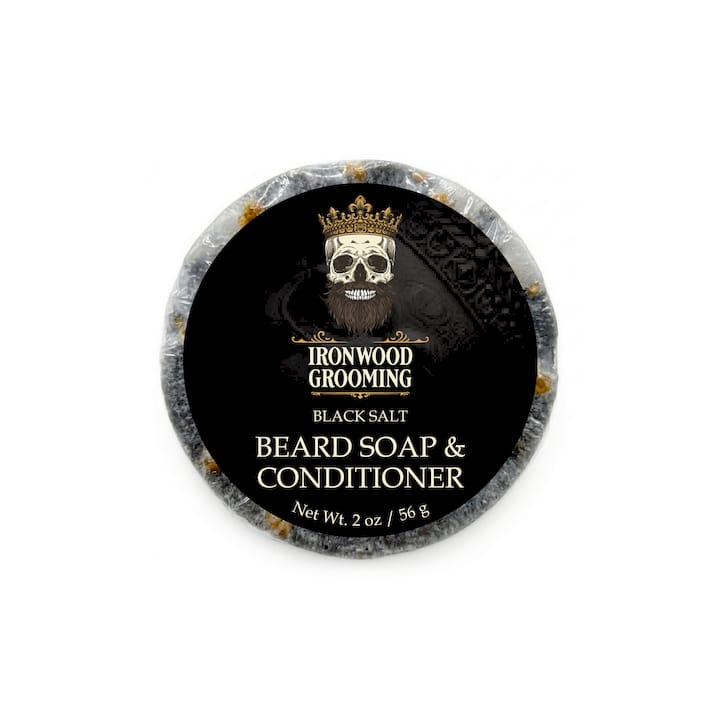
- Work in a beard conditioner while the hair is still saturated. This is where the Black Salt Beard Soap & Conditioner earns its keep, cleaning and softening in one pass without stripping natural oils.
- Pat dry, leaving the beard towel-damp, then work in a few drops of beard oil from skin to tip.
- Comb downward with a wide-tooth comb, training the hair to lay in one direction.
Beard Mountain Callout: A “beard mountain” isn’t a place. It’s a very large, dense, or coarse beard that resists styling, tangles easily, and often irritates the skin underneath. Barbers sometimes call the underlying discipline “hair training,” and it works the same way whether you’re managing a two-inch beard or a full chest-length one.
Pro Tip: Apply oil to towel-damp hair, not bone-dry hair. Damp cuticles are more receptive to conditioning agents, so the oil actually absorbs instead of sitting on top and looking greasy.
Key Takeaways
A repeatable routine of warm-water prep, targeted conditioning, damp-hair oiling, and daily comb training is what actually tames a beard mountain over time.
| Point | Details |
|---|---|
| Prep with warm water | Soften hair for several minutes before conditioning or trimming to reduce resistance. |
| Wash a few times weekly | Use a dedicated beard soap and conditioner rather than daily washing or bar soap. |
| Oil goes on damp hair | Apply immediately after a shower, while the cuticle is still receptive to absorption. |
| Train direction daily | Brush and comb every day for 8 to 12 weeks to see structural, lasting change. |
| Start with Black Salt Beard Soap & Conditioner | Ironwoodgrooming’s plant-based, small-batch formula is the recommended in-shower first step. |
Table of Contents
- What Is the Fastest Way to Tame a Beard Mountain?
- Quick Daily, Weekly, and Monthly Beard Routine
- Which Beard Products Actually Matter for Coarse Hair?
- What Ingredients Should Sensitive Skin and Eco-Conscious Guys Look For?
- What Tools and Techniques Train a Coarse Beard to Lay Flat?
- How Often Should You Wash a Thick, Coarse Beard?
- How Do You Trim a Big Beard Without Losing the Volume?
- How Do You Patch-Test New Beard Products Safely?
- How Long Does It Take to Soften a Coarse Beard?
- Why This Routine Works: The Science Behind Softening
- An Editorial Take on Why Simple Beats Complicated
- Get the Black Salt Beard Soap & Conditioner for Coarse Beards
- Frequently Asked Questions
- Sources
What Is the Fastest Way to Tame a Beard Mountain?
A beard mountain responds to heat, moisture, and repetition, not to buying five new products at once. The core mechanism is simple: coarse facial hair has a thicker cuticle layer that resists bending, and warm water plus the right conditioning agents temporarily soften that structure so oil and combing can actually do their job. One grooming study found warm exposure can cut resistance to cutting and shaping by a wide margin, which is why every barber-backed routine starts with heat before it starts with product.
Coarse beards also tend to have higher porosity, meaning they lose moisture fast and need more frequent, deliberate conditioning than a fine or wavy beard. That’s the gap most guys miss. They buy an oil, apply it to dry hair once a day, and wonder why the beard still feels like a wire brush by lunch.
Quick Daily, Weekly, and Monthly Beard Routine
Consistency beats intensity here. A structured routine of cleansing, conditioning, oiling, and brushing outperforms sporadic deep treatments or frequent trims, because coarse hair needs steady mechanical training to hold a new direction.
Daily (morning):
- Splash warm water on the beard or apply a warm towel for a few minutes.
- Apply a few drops of beard oil to towel-damp hair, working from skin outward.
- Comb from root to tip with a wide-tooth wooden comb to distribute oil and set direction.
Daily (evening):
- Light comb-through to remove daily debris and re-set direction before bed.
- Optional light balm on flyaway sections or split ends near the mustache line.
Weekly:
| Day Focus | Action | Why It Matters |
|---|---|---|
| Wash day | Cleanse with beard soap and conditioner | Removes buildup without stripping natural oils |
| Deep condition | leave-in treatment | Targets high-porosity strands that dry out fastest |
| Skin check | Light exfoliation under the beard | Prevents clogged follicles and beard dandruff |
Monthly:
- Scissor-snip stray bulk hairs that throw off the beard’s shape.
- Check the neckline and cheek line for drift.
- Run a clarifying wash if you’ve noticed product buildup or dullness.
Pro Tip: Wash day and deep-condition day should be the same day. Doing both back to back means you only expose the beard to water and heat once a week, which limits dryness compared to washing and conditioning on separate days.
For a longer-form version of this cadence built specifically around coarse hair, Ironwoodgrooming’s coarse beard grooming routine walks through seasonal adjustments in more depth.

Which Beard Products Actually Matter for Coarse Hair?
Five product types do almost all the real work. Everything else is optional polish.
- Beard soap or conditioner — your in-shower cleansing step, done 2 to 3 times a week.
- Leave-in conditioner or balm — applied post-wash for extra hold on drier days.
- Beard oil — your daily driver, applied to towel-damp skin and hair.
- Beard butter — a heavier, whipped alternative to oil for very dry or long beards.
- Mustache wax — for shaping and control right under the nose, where flyaways are worst.
Order matters more than most guys realize. Wash and condition in the shower, pat dry to towel-damp, apply oil first (it penetrates), then layer balm or butter on top if you need extra hold or it’s a dry-climate day. Wax goes on last, only where you need structural control.
| Product | Frequency | Dose | Best Applied To |
|---|---|---|---|
| Beard oil | Daily | 2 to 4 drops | Towel-damp skin and hair |
| Beard butter | 2 to 4x weekly | Pea-sized amount | Damp or dry beard, longer lengths |
| Mustache wax | As needed | Rice-grain amount | Dry mustache hair for shaping |
Pro Tip: If you can only buy one thing this month, buy the beard soap and conditioner. Oil helps a dirty, product-laden beard look shinier, but it can’t undo the roughness that buildup causes. Clean hair holds oil better than dirty hair, full stop.
Pro Tip: Layering oil under butter works. Layering butter under oil doesn’t. Heavier products always go last.
What Ingredients Should Sensitive Skin and Eco-Conscious Guys Look For?
Look for:
- Jojoba, argan, sweet almond, or grapeseed oil as the primary carrier oils, since they penetrate coarse hair rather than sitting on top of it.
- Glycerin or other humectants for moisture retention.
- Shea butter in moderate concentrations, not as the sole ingredient.
- Plant-based, cruelty-free formulas with a short, readable ingredient list.
Avoid:
- Mineral oil and other heavy occlusives that clog pores under a dense beard.
- Coconut or castor oil as the primary carrier, since both are heavy enough to look greasy on thick growth.
- Unnecessary synthetic fragrances layered on top of essential oils.
- Sulfates like SLS and SLES, which strip natural oils and worsen dryness.
Natural doesn’t automatically mean gentle. A plant-based label with three essential oils stacked on top of each other can irritate sensitive skin just as easily as a synthetic formula. Simpler ingredient lists tend to be safer, not because “natural” is magic, but because there’s less in the formula that could trigger a reaction.
Pro Tip: New oil or balm with an essential oil blend? Patch-test on your forearm for 24 hours before it touches your face. Sensitive skin under a beard doesn’t forgive mistakes the way skin elsewhere does.
Ironwoodgrooming’s guide on vegan beard care for sensitive skin breaks down specific formulations worth checking before you buy.
What Tools and Techniques Train a Coarse Beard to Lay Flat?
| Tool | Best For | When to Use | Effect on Volume |
|---|---|---|---|
| Wide-tooth wooden comb | Daily detangling | Morning and evening | Preserves volume, gentle |
| American steel comb | Heavy, matted sections | Post-shower or post-oil | Neutral, strong control |
| Boar-bristle brush | Direction training | Daily, after combing | Compresses slightly, trains lay |
| High-torque trimmer | Bulk reduction | Monthly maintenance | Reduces volume by design |
| Precision scissors | Detail and split ends | Monthly, targeted | Preserves shape, removes bulk |
The technique that actually changes a beard’s behavior over time isn’t a product. It’s repetition. Barbers who work with dense, curly, or wiry beards consistently point to daily brushing in one direction as the difference between a beard that looks intentional and one that looks like an accident. Combing alone detangles; brushing daily trains.
- Apply oil down to the skin, not just the visible hair.
- Comb from root to tip with a wide-tooth comb to distribute the oil evenly.
- Follow immediately with a boar-bristle brush, pushing hair downward and slightly outward.
- If shaping for an event, use a blow dryer on low heat with a comb, pulling hair in the direction you want it to fall.
A beard mountain isn’t unruly because it’s thick. It’s unruly because it’s never been told which direction to grow. Daily brushing, repeated for weeks, is what finally gets the message through.
Ironwoodgrooming’s comparison of comb materials covers which comb suits which beard density if you’re deciding between wood and steel.
How Often Should You Wash a Thick, Coarse Beard?
Two to three times a week with a proper beard soap is the sweet spot for most coarse beards. Daily washing strips the oils you’re trying to build up, while washing less than twice a week lets sebum and product residue accumulate at the skin, which is a common trigger for beard dandruff.
- Wash a few times weekly with a beard-specific soap or conditioner.
- Use lukewarm, not hot, water. Hot water over-strips natural oils and can worsen dryness in coarse hair.
- Apply leave-in conditioner or oil on the days you don’t wash, rather than skipping conditioning entirely.
- Save heavier butters for after a wash, when hair is clean and can actually absorb the treatment.
- Watch for hard water buildup (a dull, straw-like texture is the tell) and use a clarifying wash monthly if you notice it.
Higher-porosity beards, the kind that feel dry and frizzy within hours of washing, benefit from more frequent leave-in conditioning between wash days. Lower-porosity beards can go longer between deep treatments without losing softness.
- Shorter beards generally do fine with oil alone between washes.
- Medium beards (2 to 6 inches) usually need a leave-in conditioner or light balm on non-wash days.
- Long beards (6 inches plus) often require butter treatments to keep the ends from drying out and splitting.
Ironwoodgrooming’s conditioning routine examples break these lengths down further if you’re unsure where yours falls.
How Do You Trim a Big Beard Without Losing the Volume?
Trim dry, not wet. Wet hair stretches and shrinks back once dry, which throws off your length judgment and can leave you with a shorter beard than you intended.
- Section the beard into quadrants (chin, left cheek, right cheek, neck) before you start.
- Thin the interior bulk first using thinning shears or a low-guard clipper, working against the grain in short passes.
- Snip individual stray or split ends with precision scissors rather than running clippers over the whole surface.
- Define the cheek line by following your natural growth pattern, blending rather than carving a hard edge.
- Clean up the neckline last, roughly one to one and a half fingers above the Adam’s apple.
- Sharp, carved cheek lines look crisp for a day and require near-daily upkeep on dense hair. A blended, natural line holds its shape with far less maintenance.
- Always use a guard on clippers for bulk removal. Guardless passes on coarse hair remove far more than intended.
Pro Tip: Remove bulk from underneath the beard’s surface, not from the outer silhouette. This keeps the “mountain” shape while making the beard lighter and easier to manage.
How Do You Patch-Test New Beard Products Safely?
- Apply a small amount of the new product to the inside of your forearm or behind your ear.
- Leave it uncovered and undisturbed for 24 to 72 hours.
- Check for redness, itching, small bumps, or swelling at the site.
- If nothing appears after 72 hours, the product is generally safe to try on your beard in small amounts first.
- Introduce one new product at a time. Combining a new soap, oil, and balm in the same week makes it impossible to identify what caused a reaction.
- Mild redness or itching that fades within a day usually means switching to a gentler, fragrance-free formula.
- Spreading rash, pus, blistering, or significant swelling means stop immediately and see a dermatologist.
If a reaction is spreading rather than fading after 48 hours, that’s your signal to stop self-treating and get it looked at.
- Photograph the affected area as soon as you notice a reaction.
- Note the date, the product used, and how long after application symptoms appeared.
- Bring both to a dermatologist if the reaction doesn’t resolve within a few days.
This article offers general grooming guidance and isn’t a substitute for professional medical advice. See a dermatologist for persistent or severe skin reactions.
How Long Does It Take to Soften a Coarse Beard?
- Same day: Warm-water prep plus oil on damp hair produces noticeable, immediate softness, though it’s temporary until the next wash.
- 2 to 4 weeks: Regular conditioning and daily oiling start producing a real, lasting change in texture, not just a post-shower effect.
- 8 to 12 weeks: Daily brushing and consistent routine adherence deliver structural improvement, meaning the beard holds its trained direction even without fresh product.
Porosity, age, diet, and how much heat or chemical damage the beard has already taken all affect how fast you’ll see results. A beard that’s been trimmed with dull clippers for years will take longer to recover than one that’s simply never been conditioned.
Track progress by touch (does it feel less wiry at the end of the day?), by comb-through ease (does the comb catch less?), and by reduced breakage (fewer short, snapped hairs on your sink or towel).
Why This Routine Works: The Science Behind Softening
Coarse beard hair has a thicker keratin structure and a tighter cuticle than fine hair, which is exactly why it resists bending and feels wiry. Heat and moisture temporarily loosen that cuticle, making the hair shaft more pliable and receptive to conditioning agents. Apply oil to dry hair and most of it beads on the surface. Apply it to damp, warm hair right after a shower and the cuticle actually absorbs it.
Products don’t fix a beard mountain by themselves. They work because the hair is prepared to receive them, and that preparation is a habit, not a purchase.
- Small-batch manufacturing means tighter quality control per formula batch.
- Ingredient transparency lets you check exactly what’s touching sensitive skin.
- Barbers who train clients on comb and brush technique consistently report faster, more lasting results than product-only approaches.
| Factor | Effect on Coarse Beard | Practical Takeaway |
|---|---|---|
| Warm water | Loosens cuticle structure | Prep for several minutes before conditioning |
| Damp application | Increases absorption | Apply oil to towel-damp, not dry, hair |
| Daily brushing | Trains hair direction | Repeat for 8 to 12 weeks for lasting change |
Pro Tip: If you only remember one mechanism from this whole guide, remember this: damp hair absorbs, dry hair repels. Time your oil application accordingly.
An Editorial Take on Why Simple Beats Complicated
The grooming industry loves to sell complexity. Ten-step routines, six different oils layered for “synergy,” proprietary blends with ingredient lists longer than a prescription label. None of that solves the actual problem a beard mountain presents, which is mechanical, not chemical. Coarse hair needs hydration, a receptive moment to accept conditioning, and repeated direction training. That’s it.
What gets overlooked is how often irritation comes not from a bad ingredient but from too many ingredients stacked in the same week. A guy with sensitive skin switches products constantly, chasing a better result, and never gives any single formula long enough to actually work while also never isolating what’s causing his breakouts. The fix isn’t a better product. It’s fewer products, applied consistently, on skin that’s been given a chance to calm down.
A plant-based formula with a short ingredient list isn’t just an eco-conscious choice. It’s a practical one, because it reduces the number of variables you’re troubleshooting when something under your beard starts to itch. The goal was never shine. It was healthy skin underneath a beard that finally lies where you want it to.
Get the Black Salt Beard Soap & Conditioner for Coarse Beards
Most guys treat beard soap as an afterthought. For a beard mountain, it’s the step that determines whether everything after it actually works. The Black Salt Beard Soap & Conditioner is handcrafted in small batches with a plant-based formula built specifically for coarse, dense growth, cleaning without the sulfates that leave sensitive skin raw and tight.
Use it 2 to 3 times weekly in place of regular soap or body wash. Work a coin-sized amount into a wet beard, focus on the skin underneath, rinse thoroughly, then follow immediately with oil while the beard is still towel-damp. That pairing, clean hair plus damp-hair oil application, is what makes the rest of your routine actually stick.
Every batch is made with a transparent, plant-based ingredient list, so you know exactly what’s touching your skin. Shop the Black Salt Beard Soap & Conditioner and start your next wash day with the product built for exactly this job.
Frequently Asked Questions
What does “beard mountain” actually mean? It describes a very large, thick, or coarse beard that’s hard to style, tangles easily, and often irritates the skin underneath without a consistent routine.
How often should I oil a beard mountain? Daily, applied to towel-damp hair right after washing or a warm-water rinse, so the oil actually absorbs instead of sitting on the surface.
Can eco-conscious or vegan products handle a coarse beard mountain? Yes. Plant-based carrier oils like jojoba, argan, and grapeseed penetrate coarse hair effectively and avoid the heavy, synthetic fillers that can worsen sensitive skin.
Will trimming alone fix an unruly beard mountain? No. Trimming manages length and bulk, but softness and manageability come from conditioning, oiling, and daily brush training, not cutting alone.
How long until a coarse beard actually feels different? Expect same-day softness from warm prep and oil, noticeable texture change within 2 to 4 weeks, and real structural improvement by 8 to 12 weeks of consistent routine.
Sources
- How to Soften a Coarse Beard Before Shaving - The Grooming Guide
- How to Tame a Thick Unruly Beard: Clean, Soften, and Shape It
- Thick Beard Care: The Complete Guide for Dense,…

