


A backcountry grooming kit is a compact, dual‑purpose system that combines personal care essentials with the repair tools that keep your gear alive when you’re miles from civilization. You carry it when the trail is long, the weather is unpredictable, and the mountain demands your full attention. The best minimalist kits start around 180g and cover everything from skin protection at altitude to binding fixes mid‑run. Get this right and you stay clean, protected, and moving — no matter what the terrain throws at you.
What a Backcountry Grooming Kit Actually Is
A backcountry grooming kit sits at the intersection of hygiene and field repair. Most people treat these as separate categories. That mistake costs weight, space, and time — the three things you cannot waste in the backcountry.
The kit has two missions:
- Keep your skin, hair, and body functional when you’re days from a shower.
- Keep your gear operational when a screw backs out or a skin fails at 10,000 feet.
Neither mission works without the other. Physical comfort supports focus. Focus keeps you safe. Safety depends on gear that holds together. A good kit is not about carrying more — it’s about carrying what earns its place.
Why Skin Care Is Mission‑Critical at Altitude
Backcountry skin care isn’t vanity — it’s performance maintenance. Three environmental forces hit you harder at elevation than anywhere else:
1. UV radiation skyrockets. UV increases ~10% per 1,000 meters. At 3,000m, you’re taking ~30% more UV than at sea level — plus snow reflection, which bounces up to 80% of UV back onto your face. You get hit from above and below.
2. Cold air thickens sebum. When sebum thickens, it stops flowing along the hair shaft and stops protecting the skin. TEWL rises. The barrier dries out faster than it can repair itself.
3. Wind accelerates evaporation. Wind strips the humid air layer off your skin and replaces it with dry ambient air. Moisture loss spikes. For beards, the hair shaft wicks sebum away from the skin, adding a third depletion mechanism.
The result: cracked lips, wind‑burned cheeks, and tight, irritated skin under the beard. These aren’t small discomforts — they reduce focus, create micro‑injuries, and compound over multi‑day trips.
Essential Personal Care Items
Backcountry grooming follows one rule: every item must earn its place. Three to five products cover hygiene, protection, and grooming without redundancy.
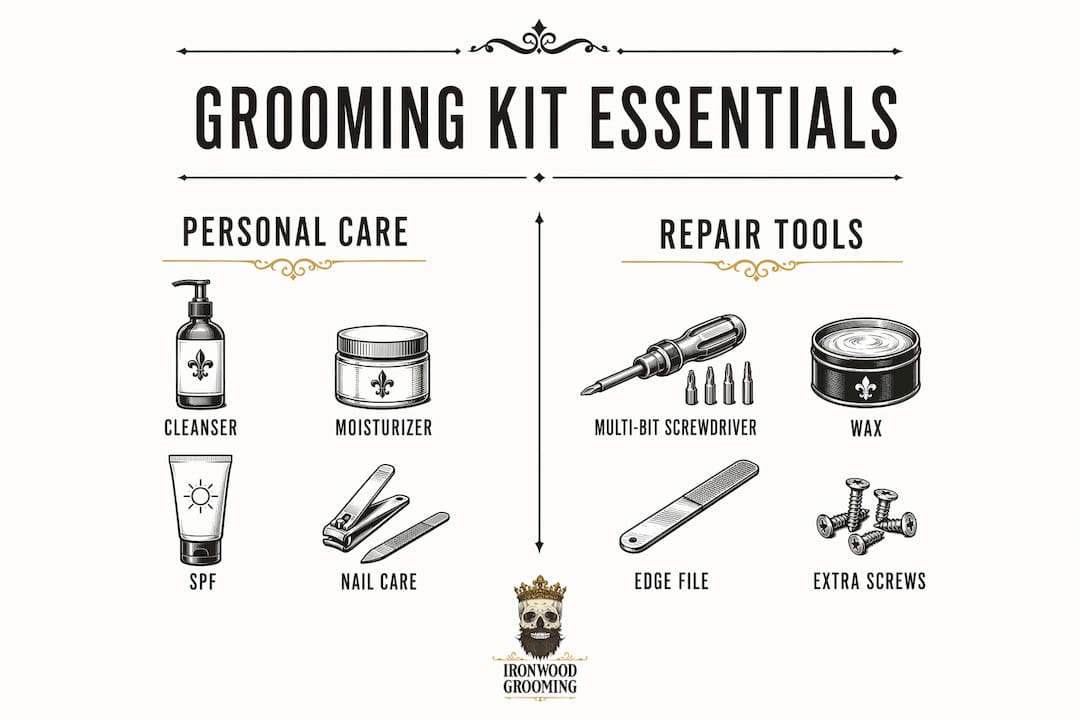
- Sulfate‑free face cleanser. Gentle cleansing matters when your barrier is already stressed. A 30ml bottle lasts a week.
- Moisturizer with SPF 30+. At altitude, SPF is non‑negotiable. Hydration + UV defense in one step saves weight and prevents burns.
- Lip balm with SPF. Lips burn faster than any other facial surface. Snow reflection makes it worse.
- Deodorant. Solid stick or mini roll‑on. Sprays fail in cold temps.
- Compact nail tool. Cracked nails snag gloves and create small wounds that become big problems in cold, dirty conditions.
- Stainless steel comb. Ironwood’s stainless moustache comb handles beard, mustache, and hair. Stainless survives cold, moisture, and drops.
- Beard oil. Cold + wind deplete the skin barrier under the beard faster than any other environment. Apply at camp, not mid‑trail.
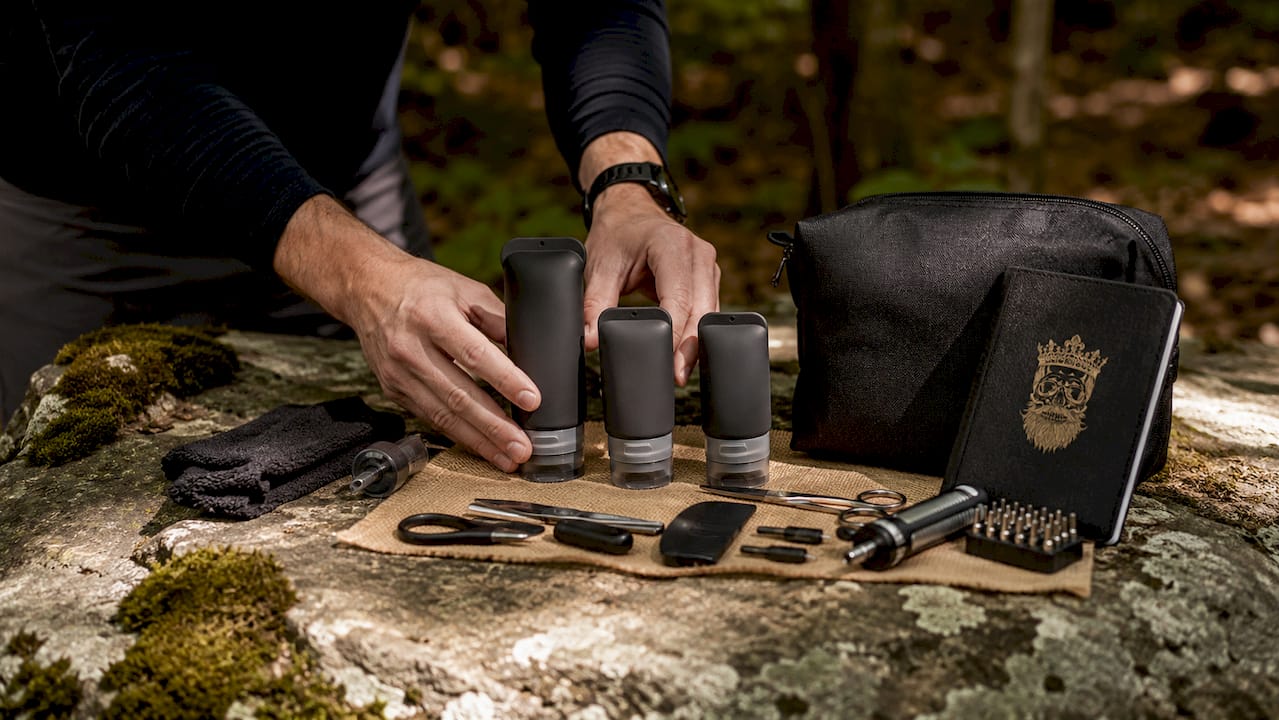
Pro tip: Use 30ml silicone travel bottles. They weigh nothing, survive compression, and pass TSA without issue.
Essential Gear Repair Tools
A minimalist repair kit starts around 180g and covers the failures most likely to happen in the field.
- Multi‑bit ratcheting screwdriver. Torx, Phillips, Pozidriv. One tool replaces four.
- Binding screws. They back out on rough terrain. Carry spares.
- Cloth duct tape (1 meter). Cloth-backed tape adheres in cold where plastic tape fails.
- Voile straps (25"). The most versatile field‑repair tool ever made.
- Skin repair patches. Essential for ski touring — adhesive fails in wet snow.
- Universal wax block. Rub on, scrape with a card, ski faster.
Every item solves multiple problems. Weight savings compound fast when every tool pulls double duty.
How to Customize and Organize Your Kit
A static kit is a liability. Build your system around two categories:
- Essential items. Always carry these: SPF moisturizer, cleanser, beard oil, screwdriver, tape, comb.
- Conditional items. Add based on trip length, terrain, and weather.
- Pre‑trip check. Confirm tape, bits, SPF expiration, and patch count.
- Choose the right case. EVA foam for tools; small dry bag for grooming items.
- Weigh your kit. Cut conditional items first — never essentials.
Pro tip: Keep grooming items in a dry bag and repair tools in a rigid case. You’ll find what you need instantly without unpacking your whole pack.
How to Use Your Kit Effectively
Knowing what to carry is half the job. Knowing how to use it with cold hands is the other half.
Gear repairs:- Tighten binding screws immediately — never ski on a loose binding.
- Dry surfaces before applying skin patches.
- Wrap cloth tape tightly with overlapping layers.
- Apply SPF before leaving the trailhead; reapply midday.
- Use beard oil at camp to prevent overnight barrier loss.
- Clip nails before they crack inside gloves.
Attach grooming to an existing camp habit — dinner, changing layers, or boiling water. A morning grooming routine adapted for altitude takes under five minutes.
Key Takeaways
| Point | Details |
|---|---|
| Dual‑purpose design | Hygiene + repair in one system — not two separate kits. |
| Altitude multiplies UV | UV increases ~10% per 1,000m; snow reflects up to 80%. |
| Cold + wind destroy the skin barrier | Reduced sebum flow + elevated TEWL make beard oil functional gear. |
| Essential vs. conditional | Controls weight without sacrificing coverage. |
| One tool, multiple problems | Ratcheting screwdriver, cloth tape, Voile straps replace entire tool sets. |
What I Learned from Years of Getting This Wrong
My first multi‑day ski traverse was a disaster. I packed everything I feared being without. My repair kit weighed over a kilogram. My grooming bag had full‑size products. By day two, I was ditching weight in the snow.
The problem wasn’t the items — it was the lack of a system. I packed reactively, not intentionally. Every item was fear‑based, not purpose‑based.
The essential vs. conditional framework changed everything. Once I committed to a short, non‑negotiable essential list, the rest became easy. Confidence replaced second‑guessing.
The other mistake was the case. I used a zip‑lock bag for years. Tools rattled, moisture got in, and I could never find anything fast. Switching to a rigid EVA case felt minor — it turned out to be one of the most impactful upgrades I’ve ever made.
My advice: after every trip, spend ten minutes reviewing what you used and what you didn’t. Adjust before the next one. A kit that never evolves slowly stops serving you.
— Roberto, Ironwood Grooming
Keep Reading
- The Travel Grooming Kit: How to Pack Your Beard Care Without the Bulk
- How to Build a Beard Care Kit from Scratch: The Ironwood Method
- Coarse Beard Grooming Routine Explained
Part of the Ironwood Regimen Series
New to beard care? Start here.
The Beginner Beard Regimen is the complete start-here guide — cleanse, hydrate, seal — for guys building their first real routine.
See the Beginner Regimen →
