


Argan oil is extracted from the kernels of the Argania spinosa tree, native to Morocco, and it is one of the most effective natural conditioners available for beard care. But most men use it wrong. They work it through the hair, see surface shine, and conclude it is doing its job. The itch continues. The coarseness continues. They blame the oil.
The problem is not the oil. It is the target. Argan oil works when you treat the skin beneath the beard as the primary target — not the hair. The hair is the visible result. The skin is the engine. Get that right and the results show up within a week.
What Argan Oil Actually Does
Argan oil delivers vitamin E, oleic acid, linoleic acid, and polyphenols to both the beard hair and the skin underneath. Each component does a specific job:
- Oleic acid penetrates the hair cortex and smooths the cuticle, reducing friction between strands and making coarse beards more manageable
- Linoleic acid moisturizes the skin beneath the beard, addressing the root cause of dryness and flaking
- Vitamin E (tocopherols) forms a protective antioxidant layer around each hair strand, shielding it from UV exposure, pollution, and daily wear that causes split ends
- Polyphenols provide anti-inflammatory protection to the skin, keeping follicles clear and reducing redness around the beard line
The benefits that follow from consistent daily use: softer hair within the first week, reduced itch and flaking within 5–7 days, less tangling, and a beard that holds shape better because the cuticle is smooth rather than rough and raised.
Pro tip: Apply argan oil after a warm shower when your pores are open. The heat primes your skin to absorb the oil faster and more deeply.

How Argan Oil Compares to Other Carrier Oils
Not all carrier oils perform the same way on facial hair. Understanding where argan oil stands helps you choose the right tool for your beard type and skin condition.
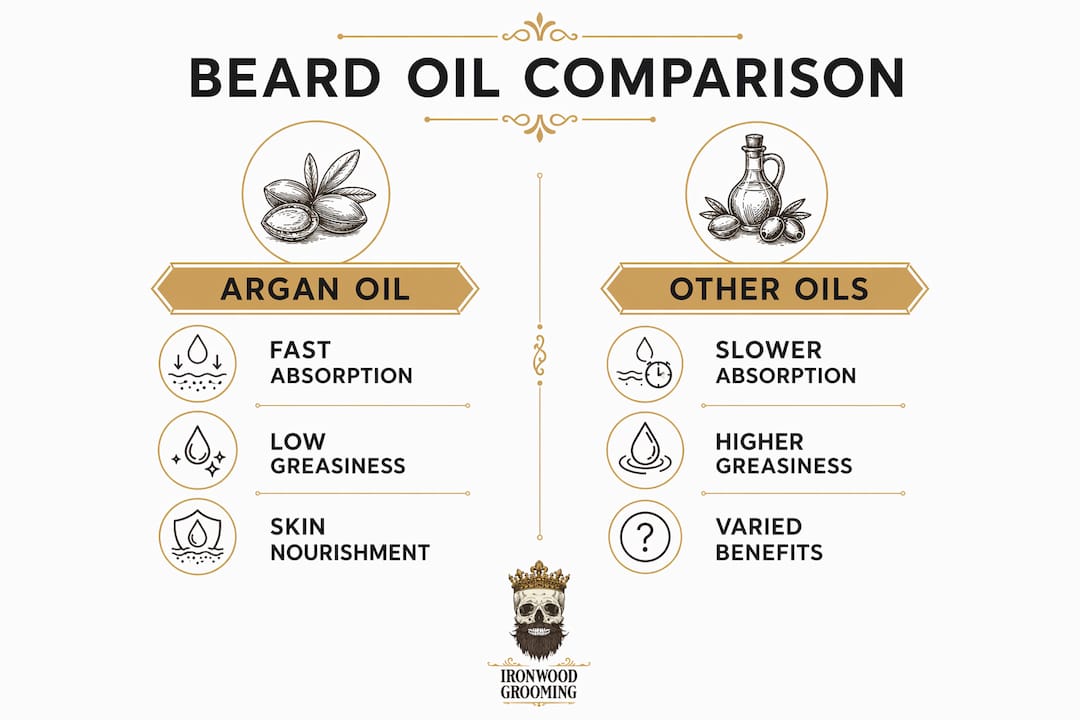
| Oil | Absorption Rate | Greasiness | Best For | Unique Strength |
|---|---|---|---|---|
| Argan oil | Fast | Very low | All beard types | Antioxidant protection, cuticle smoothing |
| Jojoba oil | Fast | Low | Oily or acne-prone skin | Mimics sebum, balances oil production |
| Castor oil | Slow | High | Thin or patchy beards | Thickens appearance, strong coating |
| Coconut oil | Medium | Medium to high | Dry, brittle beards | Deep moisture, protein retention |
| Sweet almond oil | Medium | Low | Sensitive skin | Gentle, mild scent |
Argan absorbs quickly and avoids the heavy, greasy feel common with castor or coconut oil. Its antioxidant and anti-inflammatory properties are genuinely distinct — jojoba mimics your skin’s natural sebum, which is excellent for balance, but argan adds a layer of oxidative protection that jojoba does not. For men with sensitive facial skin, argan oil tends to be the safer starting point because it rarely triggers sensitivity reactions. For a full head-to-head breakdown of jojoba vs. argan, read Jojoba Oil vs. Argan Oil for Beards: Which One Does Your Skin Actually Need?
The Skin-First Application Method
Technique matters as much as the oil itself. Using argan oil incorrectly produces greasy, patchy results. Using it correctly transforms your beard within a week. The key is the moisture sandwich method — applying oil to slightly damp hair so the water and oil form an emulsion that drives deeper penetration into both the hair shaft and the skin.
- Wash your beard first. Clean hair and skin absorb oil more effectively. Use a beard-specific wash to remove buildup without stripping natural oils.
- Pat dry, leave slightly damp. Do not towel dry completely. The moisture in the hair is what makes the method work.
- Dispense 2–3 drops into your palm. Start with less than you think you need. Overdosing is the primary cause of greasiness.
- Rub your palms together to warm the oil. Warm oil spreads more evenly and absorbs faster.
- Massage into the skin beneath the beard first. This is the step most men skip. Use a circular motion to work the oil into the follicles and reduce inflammation at the source. Itch and dandruff originate at the skin level — not in the hair.
- Work upward through the beard hair. Coat the strands from root to tip, smoothing the cuticle as you go.
- Comb or brush through. A beard brush distributes the oil evenly and trains the hair to lie flat. Ironwood’s stainless steel combs work through coarse hair without static or snagging.
Apply daily after washing, or every other day if your skin runs oily. Morning application works best — it sets your beard for the day and provides all-day environmental protection from the vitamin E layer.
Pro tip: If your beard feels greasy after applying argan oil, you used too much. Cut your dose in half and apply on slightly damp hair. The damp hair acts as a dilution buffer and prevents oil from sitting on the surface.
What Argan Oil Cannot Do
This is the most common misconception in beard care: argan oil does not stimulate new follicle growth. No topical oil does. Your follicle count is determined by genetics and testosterone levels, not by what you apply to your face.
What argan oil does is create the optimal environment for your existing beard to perform at its best:
- Prevents breakage. Brittle, dry beard hair snaps off before it reaches its potential length. Argan oil strengthens the hair shaft, preserving length you have already grown.
- Keeps follicles clear. Clogged follicles slow growth and cause ingrown hairs. The anti-inflammatory properties of argan oil reduce follicle congestion.
- Reduces chronic inflammation. Skin inflammation around follicles disrupts the growth cycle. Argan oil’s polyphenols calm that inflammation, keeping the growth cycle on track.
Think of it this way: you cannot plant new seeds in concrete. Argan oil softens the ground so the seeds already there can grow stronger. If your beard growth feels stalled, the problem is often breakage and follicle health, not a lack of new growth. Addressing those two factors with consistent argan oil use produces visible improvement in density and length over 4–8 weeks.
Key Takeaways
| Point | Details |
|---|---|
| Skin-first application | Massage oil into the skin beneath the beard before coating the strands to treat itch at its source. |
| Fast itch relief | Consistent daily use reduces beard itch and flaking within 5–7 days of starting. |
| Lightweight daily use | Argan oil absorbs quickly and leaves no grease when applied correctly to slightly damp hair. |
| Growth support, not growth creation | Argan oil maximizes existing beard potential by preventing breakage and clearing follicles, not by creating new ones. |
| Comparison advantage | Argan oil outperforms castor and coconut oil for daily use due to its fast absorption and antioxidant protection. |
Why Most Men Are Using Beard Oil Wrong
I have watched men buy quality beard oils, use them for two weeks, and quit because they saw no results. Almost every time, the problem is not the oil. It is the technique.
The single biggest mistake is applying oil to a completely dry beard and rubbing it through the hair only. You end up with surface coating and zero skin penetration. The itch continues. The flaking continues. The man concludes that beard oil does not work.
Argan oil works when you treat the skin as the primary target, not the hair. When I shifted my own routine to the moisture sandwich method and started massaging oil into the skin first, the difference in itch reduction was noticeable within three days.
The second mistake is inconsistency. Argan oil is not a one-time treatment. It is a daily maintenance habit — the same way you would not expect one gym session to build strength. Commit to 7 days of consistent morning application before you evaluate whether it is working.
Choosing quality matters too. Pure, cold-pressed argan oil retains its full vitamin E and polyphenol content. Refined or blended versions lose potency in processing. Read the ingredient label. If argan oil is not listed first or second, you are not getting a meaningful dose. Ironwood’s beard oils use argan as a core ingredient, not a trace additive.
— Robert, Ironwood Grooming
FAQ
Does argan oil actually help with beard itch?
Yes. Massaging argan oil into the skin beneath the beard treats the root cause of itch, which is dry, inflamed skin. Most men see a reduction in itch and flaking within 5–7 days of consistent daily use.
How many drops of argan oil should I use on my beard?
Start with 2–3 drops per application. Apply to slightly damp hair using the moisture sandwich method to prevent greasiness and maximize absorption.
Will argan oil make my beard grow faster?
No. Argan oil does not create new follicles or accelerate the growth rate. It strengthens the hair shaft, prevents breakage, and keeps follicles clear — which helps you retain more length and improve density over time.
Is argan oil good for all beard types?
Yes. Argan oil’s lightweight profile and fast absorption rate make it suitable for coarse, fine, thick, and thin beards. Men with sensitive facial skin benefit from its anti-inflammatory polyphenol content.
Can I use argan oil every day?
Daily use is recommended for best results. Apply after washing your beard, while the hair is still slightly damp, to maximize penetration and keep the skin beneath consistently nourished.
Keep Reading
- Jojoba Oil vs. Argan Oil for Beards: Which One Does Your Skin Actually Need?
- Sebum and Beard Health: What Every Man Should Know
- Beard Itch: Why It Happens and How to Stop It for Good
Part of the Ironwood Regimen Series
This post is part of the Beard Itch + Beardruff Regimen
Get the full routine for stopping itch and beardruff at the source — clean, hydrate, seal.
See the Itch Killer Regimen →
