


Rain does three things to your beard fast: it adds weight that flattens your shape, lifts the hair cuticle to create frizz, and traps moisture against your skin where bacteria and fungus can thrive if you leave it wet. The good news? None of this is permanent, and a simple aftercare routine handles all of it.
TL;DR — Do these three things after getting soaked:
- Pat dry immediately, then run a wide-tooth comb through to detangle
- Apply a light beard oil once the hair is mostly dry to restore moisture and seal the cuticle
- Wash with a dedicated beard cleanser if you were caught in heavy urban rain with road grime or pollution
Professional barbers consistently flag one mistake above all others: men skip their grooming routine after rain, assuming it’s pointless. It isn’t. Ironwoodgrooming’s formulations are built specifically for this kind of weather stress, and a barber or dermatologist is your call if symptoms persist beyond a day or two.
Table of Contents
- How does rain change the way your beard looks and feels?
- How rain affects the skin under your beard and your hygiene
- What to do the moment your beard gets soaked
- Which products actually hold up in rainy weather?
- How to protect your beard before and during rain
- Does rain actually affect beard growth or long-term health?
- When should you see a barber or a dermatologist?
- Expert tips from professional barbers and Ironwoodgrooming
- Key Takeaways
- The honest truth about beards and bad weather
- Ironwoodgrooming has the products your rainy-day routine needs
- Sources and further reading
How does rain change the way your beard looks and feels?
Water is heavy. When rain saturates your beard, each strand absorbs moisture and the collective weight pulls hair downward, collapsing the volume you spent time building. Coarse or textured beards feel this most dramatically because the individual strands are thicker and hold more water per follicle.
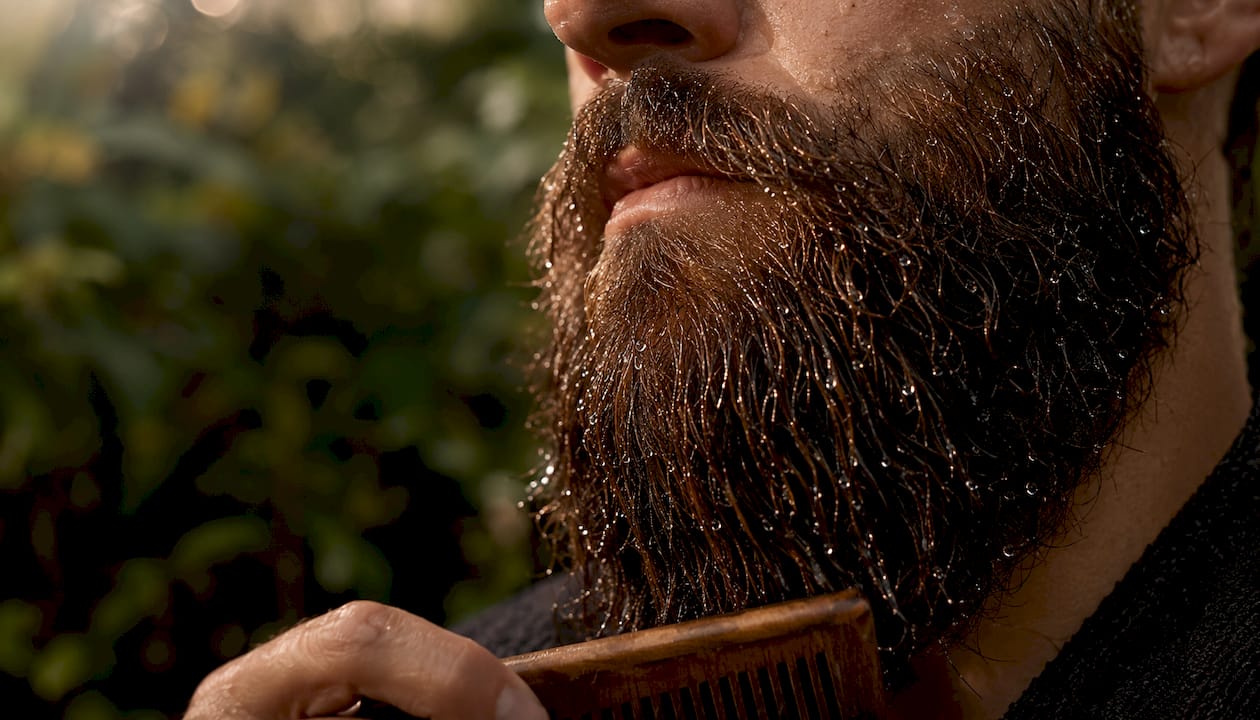
The frizz problem is a separate mechanism. As humidity rises, the outer cuticle layer of each hair shaft swells and lifts slightly. That rough, raised surface catches on neighboring strands and creates the chaotic texture you see after stepping out of a downpour. Wind compounds it: the combination of rain and wind creates limp, frizzy, or brittle beards and strips whatever hold product you applied that morning.
A few things happen simultaneously when you get soaked:
- Shape collapses as water weight pulls hair flat and causes clumping
- Cuticle lifts, making strands rough and prone to tangling
- Styling hold disappears because most balms and waxes are water-soluble
- Tangles form quickly, especially in longer or coarser beards exposed to wind
None of this signals damage on its own. It’s a temporary physical response to moisture. The real risk starts when you leave the beard wet for too long.
How rain affects the skin under your beard and your hygiene
Your skin sits under a canopy of wet hair after a rainstorm, and airflow drops to near zero. That warm, damp microenvironment is exactly where bacteria and fungus prefer to grow. Rainy and humid conditions increase the risk of fungal growth and odor when hair stays damp and unwashed, and the problem compounds when rainwater carries urban pollution, exhaust particles, and road grime into the mix.
The skin consequences range from mild to genuinely uncomfortable:
- Beardruff (flaking skin) triggered by moisture imbalance and fungal activity
- Persistent itch from irritated follicles or early-stage dermatitis
- Odor from bacterial activity in trapped moisture, especially in thicker beards
- Redness or small spots where follicles become inflamed
Pro Tip: Watch for three early warning signs: a smell that doesn’t clear after drying, an itch that returns daily, and small red spots at the follicle base. Catching these early means a wash and oil routine usually resolves them. Ignore them for a week and you’re looking at a dermatologist visit.
Rainwater mixed with city pollution is the worst-case scenario. If you commuted through heavy urban rain, treat it like contamination and wash the beard that evening, not the next morning.

What to do the moment your beard gets soaked
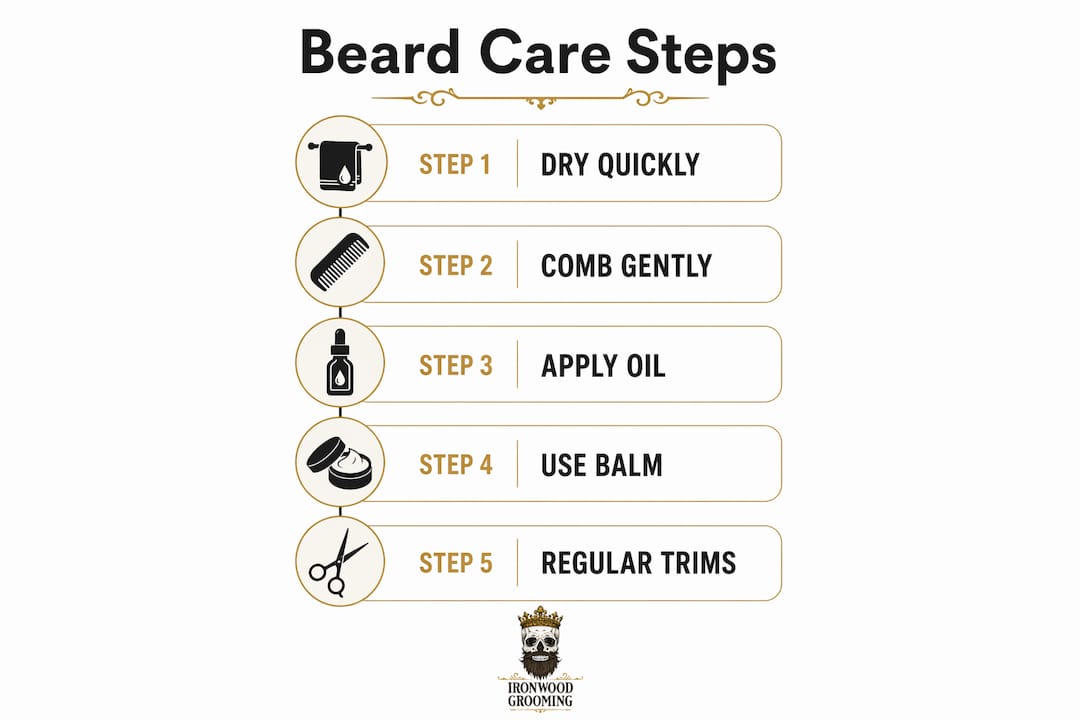
Speed matters here. The longer wet hair sits uncombed and undried, the more tangling, cuticle damage, and bacterial risk you accumulate. Follow this sequence:
- Pat dry, don’t rub. Use a clean towel and press it against the beard in sections. Rubbing roughens the cuticle and creates the exact frizz you’re trying to avoid.
- Comb while damp. A wide-tooth comb detangles without snapping wet strands. Start at the ends and work toward the skin.
- Decide: wash now or later. If you walked through clean rain in a park, air-dry and oil. If you were in traffic or heavy urban rain, wash with a dedicated beard cleanser that evening.
- Air-dry when possible. Let the beard reach about 80% dry before applying product. Applying oil to soaking-wet hair dilutes it and reduces effectiveness.
- Apply beard oil once mostly dry. Work it through from root to tip to restore moisture and smooth the cuticle back down.
- Restyle with a comb. Train the hair back into your preferred shape while it still has slight dampness to hold the direction.
Pro Tip: If you use a blow dryer, keep it on the cool or low-heat setting and hold it at least six inches from the beard. High heat on a wet, already-stressed cuticle causes the kind of brittleness that leads to split ends over weeks of repeated exposure.
Washing frequency guidance from grooming research lands at 2–4 times per week for most men, adjusted upward when contamination from pollution or sweat is a factor. Rain alone doesn’t automatically mean a wash every time.
Which products actually hold up in rainy weather?
The product you reach for depends on what the beard needs at that moment. Beard oil, balm, and wax each serve a different function, and rainy conditions shift which one earns priority.
Beard oil is your primary hydration tool. It replaces the natural sebum that water strips away and smooths the cuticle to reduce frizz. Daily oiling in damp conditions maintains softness, soothes itch, and reduces breakage risk when you comb wet hair. Light oils absorb without leaving a greasy residue that traps more moisture.
Beard balm adds a layer of hold and light water resistance on top of hydration. Pre-treating with balm before heading out gives your beard a modest barrier against rain, and it keeps shape better than oil alone in damp air. For weather-resistant balm types, look for formulas with beeswax or shea butter as primary ingredients.
Beard wax is for styling hold, not hydration. It offers the most water resistance of the three but can cake or flake if rain is heavy. Use it for shorter beards or mustache shaping rather than as a full-beard rain shield.
Wash frequency and product choice:
- Use a dedicated beard wash, not regular shampoo. Regular shampoo strips beard oils and leaves hair dry and more prone to frizz in humid air.
- Wash 2–4 times per week under normal conditions; bump to daily only if you’re dealing with heavy contamination.
- Follow every wash with a conditioner or oil to replace what cleansing removes.
For post-rain hydration, Ironwoodgrooming’s Reign Beard Oil is built for exactly this scenario: a light, daily-use formula that absorbs fast and tames frizz without weighing the beard down. When you need to wash after polluted rain exposure, the Ultra Soft Beard Wash cleans thoroughly without stripping the natural oils your skin needs. For thicker beards or overnight recovery after prolonged wet exposure, Crown Beard Oil provides the richer conditioning that coarser hair demands.
How to protect your beard before and during rain
The best defense is preparation, not reaction. A few simple moves before you walk out the door cut your aftercare time significantly.
- Apply a light balm or wax before heading out. It won’t make your beard waterproof, but it creates a surface that sheds light rain better than bare, dry hair.
- Use a hood or hat. Direct rain on the beard is the main problem. A hood redirects most of it. A wide-brim hat works even better for longer beards.
- Carry a small comb. On-the-go detangling prevents the tight knots that form when wet hair dries tangled.
- Choose your route. Covered walkways and building overhangs aren’t just for avoiding puddles. Minimizing total exposure time reduces how saturated the beard gets.
Pro Tip: Avoid heavy wax in rain if your beard is long. Wax can trap water droplets against the hair shaft and create a damp layer that’s slow to dry. A light balm with beeswax gives you hold and some resistance without that problem.
For coarse or textured beards, sweat-proof hold techniques translate directly to rainy conditions. The same principles that keep shape in humidity keep it in light rain.
Does rain actually affect beard growth or long-term health?
One rainstorm, or even a whole rainy season, won’t change your growth rate. Hair follicles respond to hormones, nutrition, and blood flow, not surface weather. Occasional rain exposure with proper aftercare leaves no lasting mark on follicle health.
The risk is cumulative neglect. When repeated wet exposure combines with skipped drying, infrequent washing, and no oil routine, the consequences stack up: chronic skin irritation, weakened hair shafts from repeated swelling and drying cycles, and breakage that makes the beard look thinner over time. That’s not rain damaging your beard. That’s poor aftercare creating conditions where the beard can’t recover between exposures.
Long-term beard health connects directly to two things outside of weather: hydration from the inside (water intake, diet) and consistent topical care. A complete beard care routine that includes daily oiling and regular gentle cleansing makes your beard resilient enough that rain becomes a minor inconvenience rather than a recurring problem.
When should you see a barber or a dermatologist?
Some problems are grooming issues. Others are medical. Knowing the difference saves you time and discomfort.
See a barber when:
- Your beard clumps unevenly after drying and won’t train back into shape
- Split ends are spreading and making the beard look ragged
- You want guidance on styling for your specific texture in humid or rainy climates
- You need a trim to remove damaged ends accumulated over a wet season
See a dermatologist when:
- Itching and flaking persist for more than two weeks despite regular washing and oiling
- You see pustules, crusting, or non-healing spots at the follicle base
- Redness spreads beyond the beard line onto the cheek or neck
- You suspect a fungal infection (ring-shaped patches, intense itch, odor that doesn’t clear)
Before your appointment, note how long the symptoms have been present, which products you’ve been using, and whether the problem started or worsened after a specific weather event. That information cuts the diagnosis time significantly.
“Persistent folliculitis or seborrheic dermatitis in the beard area often goes untreated because men assume it’s just dry skin. Early intervention with the right topical treatment resolves most cases quickly. Don’t wait until it’s severe.” — Dermatology clinical guidance via PMC research on facial dermatoses
Expert tips from professional barbers and Ironwoodgrooming
Professional barbers are consistent on one point: stopping your grooming routine because of rain is the most common mistake men make in wet climates. Consistent cleansing and oiling preserves the hair cuticle and reduces long-term damage, even when conditions are fluctuating daily. The beard doesn’t get a day off just because the weather is bad.
“Rain doesn’t ruin your beard. Neglecting it after rain does. Keep the routine tight, keep the oil consistent, and the beard handles wet weather better than most men expect.” — Professional barber consensus, Pall Mall Barbers and Nanda Barber
Ironwoodgrooming’s approach to rainy-climate care is built on the same principle. Their extreme humidity beard guide covers layering methods for coarse beards and weather-resistant balm routines developed through small-batch testing with real ingredients, not filler formulas. The difference between a beard that survives a wet Pacific Northwest winter and one that doesn’t usually comes down to whether the man behind it is consistent with quality products.
Pro Tip: Barbers recommend increasing trim frequency during persistently wet seasons. Removing split and weakened ends every 3–4 weeks prevents tangling from spreading up the shaft and keeps the beard looking intentional, not weathered.
Key Takeaways
Rain temporarily flattens, frizzes, and exposes your beard to hygiene risks, but consistent aftercare with the right products prevents any lasting damage.
| Point | Details |
|---|---|
| Dry and comb immediately | Pat dry with a towel and use a wide-tooth comb before hair sets in tangles. |
| Wash only when needed | Aim for 2–4 times per week; wash same-day only after heavy urban or polluted rain. |
| Oil is your daily defense | Apply a light beard oil once mostly dry to seal the cuticle and prevent frizz. |
| Watch for warning signs | Persistent itch, odor, or spots after two weeks means a barber or dermatologist visit. |
| Ironwoodgrooming products | Reign Beard Oil, Ultra Soft Beard Wash, and Crown Beard Oil cover every stage of rainy-weather aftercare. |
The honest truth about beards and bad weather
Most beard advice treats rain like a catastrophe. It isn’t. What it is, is a stress test for your routine. If your aftercare is solid, a soaking barely registers. If it isn’t, rain exposes every gap: the dry skin you’ve been ignoring, the oil you’ve been skipping, the wash you’ve been putting off.
The men I see with genuinely healthy beards in wet climates aren’t doing anything complicated. They pat dry, they oil, they wash when it matters. What they’re not doing is reaching for heavy, greasy products that trap moisture or skipping the comb because they’re in a hurry. Small-batch formulas matter here because the ingredient quality shows up in exactly these conditions. A filler-heavy oil sits on top of the hair. A clean formula absorbs and actually does the work. That’s the trade-off worth paying attention to.
Ironwoodgrooming has the products your rainy-day routine needs
When your beard takes a hit from the weather, you want products that work fast and don’t require a shelf full of bottles. Ironwoodgrooming’s small-batch lineup covers the full aftercare sequence: reach for the Ultra Soft Beard Wash after heavy urban rain exposure to clean without stripping, follow with Reign Beard Oil for daily frizz control and hydration, and use Crown Beard Oil for overnight recovery when your beard needs deeper conditioning after prolonged wet exposure. Every formula is handcrafted with clean ingredients and no fillers. Browse the full lineup at Ironwoodgrooming and find the right fit for your beard type and climate.
Sources and further reading
- Why your hair, skin and beard look different during the monsoon — Newspointapp
- Tips to Groom a Beard This Monsoon — Nanda Barber
- How weather can affect your beard — Big Beard
- Beard care tips for London’s ever-changing weather — Pall Mall Barbers
- Beat the humidity: the ultimate monsoon beard care guide — Toman
- Beard care tips for monsoon season — Captain’s Lady Store
- The science of beard washing: how often should you wash — Badass Beard Care
- Beard care in extreme humidity — Ironwoodgrooming
- Facial dermatoses research — PMC / NIH
- Beard conditioning routines for every man — Ironwoodgrooming
- Weather-resistant beard balm types — Ironwoodgrooming
Recommended
- Why Your Beard Loses Moisture Daily and How to Fix It – Ironwood Grooming
- Why Your Beard Needs Daily Brushing: A Coarse Beard Guide – Ironwood Grooming
- Beard Hydration Science: What Your Beard Actually Needs – Ironwood Grooming
- How to Moisturize a Coarse Beard: The Layering Method | Ironwood Grooming

