


The most effective fix for sensitive skin shaving is simple: warm water and a gentle cleanse first, then a low-pressure or single-blade razor with a fragrance-free lubricant, shaved with the grain in light, short strokes. Finish with a cold rinse and an alcohol-free balm. Keep the blade sharp and limit yourself to only a few passes. That combination alone solves most of the burning, bumps, and redness men fight with every morning.
TL;DR:
- Using a single-blade safety razor or low-pressure cartridge razor with lubrication strips reduces friction and follicle tug, minimizing skin irritation during shaving.
- Proper prep, including warm water, gentle cleansing, and layered pre-shave oil, is crucial to soften hair and open pores before shaving sensitive skin.
- Cold rinses and alcohol-free balms within two minutes after shaving help close pores, reduce redness, and support skin barrier recovery.
- Shaving with the grain, using light pressure and short strokes, combined with dull blade replacement, ensures minimal irritation and micro-tears.
- Men with reactive skin should limit shaving frequency and avoid multiple passes against the grain, especially on sensitive or inflamed areas.
Table of Contents
- What Tools and Products Work Best for Sensitive Skin Shaving
- How Do You Shave Step by Step Without Irritating Sensitive Skin
- Post-Shave Care That Actually Calms Skin
- Common Mistakes Causing Your Razor Irritation
- How Often Should You Shave With Sensitive Skin
- Why Ironwood Grooming’s Approach Fits a Sensitive Skin Routine
- Robert’s Checklist for a No-Irritation Shave
- Where to Find the Ironwood Products for Your Routine
- Sources Worth Bookmarking
What Tools and Products Work Best for Sensitive Skin Shaving
Not every razor treats your skin the same way, and the differences come down to how much friction and follicle tug each design creates. A single-blade safety razor cuts hair cleanly without the lift-and-cut motion that multi-blade cartridges rely on. That lift-and-cut action pulls hair up before slicing it, which is efficient for closeness but rough on reactive skin, since it drags the follicle and often triggers the inflammation behind razor bumps.
A low-pressure cartridge razor with a pivoting head is the middle ground. Look for models with lubrication strips built into the head, since testing shows these features reduce friction during the shave itself. Foil electric shavers work well if your skin reacts to any blade contact, though they trade closeness for comfort.
Your lubricant matters as much as your razor. Skip anything with fragrance or alcohol, and hunt for shave creams or gels built around humectants like glycerin, which hold moisture in the skin as you shave rather than stripping it out.
For blade care, rinse after every few strokes and replace the blade the moment you feel tugging instead of gliding. That tug is buildup and dulling working against you, and it is the single biggest hidden cause of irritation men blame on their skin instead of their razor.
Where products fit in your kit:
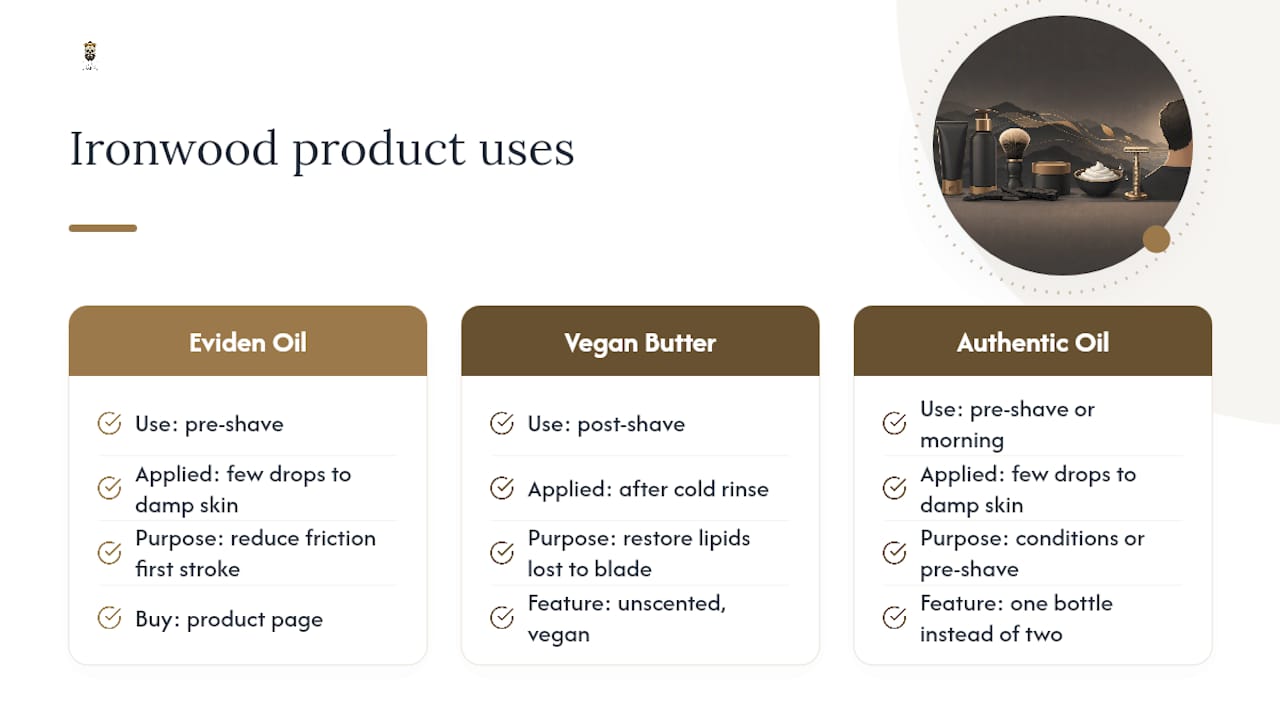
- Eviden Essential Beard Oil works as a pre-shave layer, softening coarse hair and easing blade glide before the lather goes on.
- Unscented Vegan Beard Butter delivers fragrance-free moisture for post-shave recovery, ideal for skin already flared up.
- Authentic Essential Beard Oil doubles as a daily conditioning oil and a pre-shave option for men who want one bottle covering both jobs.
For deeper technique on blade selection and layering, the complete wet shaving guide breaks down how to match razor type to your skin’s reaction pattern.
How Do You Shave Step by Step Without Irritating Sensitive Skin
Technique beats product swapping almost every time. Adjusting your pressure, stroke length, and blade angle fixes irritation faster than buying a new cream, because the mechanical habits are what tear skin, not the formula sitting on top of it.
- Prep for 60 to 90 seconds. Stand under warm water or hold a hot towel to your face, then wash with a gentle, fragrance-free cleanser. This softens hair and opens pores before the blade ever touches skin.
- Exfoliate on a schedule, not on shave day. Once or twice weekly, a mild lactic or mandelic acid wash clears dead skin without disrupting your barrier the way daily scrubbing does. Never exfoliate immediately before shaving.
- Layer a thin coat of pre-shave oil, then apply your lather on top. This combination increases glide and cuts down on micro-tears far more than lather alone.
- Shave with the grain first, using light pressure and short one to two inch strokes. Rinse the blade every two to three strokes to clear buildup that raises friction and heat.
- Reassess before a second pass. Re-lather if needed and wait 30 to 60 seconds. Avoid going against the grain more than once, if at all.
- Finish cold. Rinse with cold water, pat dry (don’t rub), and apply an alcohol-free balm within two minutes while skin is still slightly damp.
Pro Tip: If your neck reacts worse than your cheeks, shave that area first while the lather is freshest and skip the second pass there entirely. It’s usually the most reactive zone and the least forgiving of repeated strokes.
Post-Shave Care That Actually Calms Skin
What you do in the two minutes after your last stroke determines whether you wake up smooth or inflamed. Cold water closes pores and slows blood flow to the surface, cutting down on redness before it starts. Follow immediately with an alcohol-free balm, then layer a moisturizer built around glycerin, ceramides, or niacinamide, ingredients that rebuild the lipid barrier shaving strips away.
- Rinse cold, pat dry, and apply balm within two minutes.
- Choose moisturizers with ceramides or niacinamide over anything with added scent.
- Give irritated skin 48 to 72 hours before shaving that area again.
- Manage ingrown hairs with gentle, once-weekly exfoliation, never harsh daily scrubbing.
- If a bump won’t resolve in a week, stop shaving that spot until it fully calms.
Shaving is mechanical exfoliation. It strips lipids and shifts your skin’s pH every single time, which is why recovery windows matter more than most men assume. For a deeper look at how barrier repair actually works, Ironwood’s guide to skin-barrier science is worth the ten-minute read.
Common Mistakes Causing Your Razor Irritation
Most irritation traces back to a handful of repeat offenses:
- Shaving dry or on unwashed skin, skipping the warm-water step entirely.
- Using a dull blade that drags instead of cuts, forcing extra passes.
- Pressing hard to “get it closer,” which increases follicle tug and micro-tears.
- Reaching for alcohol-based or fragranced aftershaves that sting an already stressed barrier.
- Exfoliating right before shaving instead of on a separate day.
Razor burn shows up as diffuse redness and a stinging feel right after shaving, usually from pressure or a dull blade. Razor bumps are small, firm, inflamed spots that develop hours later, often from multiple passes against the grain. Ingrown hairs curl back into the skin and show as isolated red or dark bumps days after shaving, usually from close-cutting multi-blade cartridges.
Fix the obvious offender first: swap to a single blade, cut your passes to one, or switch to a fragrance-free product. If you see spreading redness, pus, or fever, see a dermatologist. That’s infection territory, not routine irritation.
How Often Should You Shave With Sensitive Skin
Give irritated skin a sufficient recovery period before shaving that area again. Many men with reactive skin shave a few times a week rather than daily. Daily shaving is possible, but only with an ultra-gentle single pass, a low-pressure razor, and strict aftercare every single time.
Watch for signals to back off: slower healing, repeated redness in the same spot, or bumps that reappear in the same follicle. If you must shave daily for work, keep it minimal: a 60-second warm prep, one light with-the-grain pass, and immediate balm. Skip the second pass entirely on daily-shave days.
Why Ironwood Grooming’s Approach Fits a Sensitive Skin Routine
Robert built Ironwood Grooming around a straightforward premise: coarse beards and reactive skin need formulas without fillers or shortcuts, not another bottle of synthetic fragrance dressed up as “sensitive skin friendly.” That background shapes every product in the line.
Ironwood makes its oils and butters in small batches with plant-based, vegan-friendly ingredients, which matters directly for shaving routines since fewer additives mean fewer triggers for reactive skin.
- Eviden Essential Beard Oil softens hair before the blade, easing the pre-shave layering step.
- Unscented Vegan Beard Butter gives fragrance-free recovery for skin already fighting inflammation.
- Authentic Essential Beard Oil covers daily conditioning and doubles as a pre-shave option.
Some customers mention a difference in comfort and hold when switching from mass-market formulas to small-batch grooming products, with similar patterns noted in mustache wax and soap reviews.
Robert’s Checklist for a No-Irritation Shave
The single biggest change I’d make if I only had one: swap your multi-blade cartridge for a low-pressure or single-blade razor before you touch any product at all. Technique fixes irritation faster than a new cream ever will.
- Warm water prep, 60 to 90 seconds.
- Check your blade for tug before you start.
- Thin pre-shave oil, then lather.
- One pass with the grain, light pressure.
- Rinse blade every few strokes.
- Cold rinse, alcohol-free balm within two minutes.
Pro Tip: Test blade sharpness on the back of your hand before your face. If it drags there, it will drag worse on your jaw.
— Robert
Where to Find the Ironwood Products for Your Routine
Once you’ve got the technique down, the right products make the difference between a good shave and a genuinely comfortable one. Eviden Essential Beard Oil is your pre-shave layer: a few drops worked into damp skin before lather cuts friction from the first stroke. Unscented Vegan Beard Butter goes on after the cold rinse, feeding moisture back into skin that just lost its lipid layer to the blade. Authentic Essential Beard Oil works either way, morning conditioning or pre-shave prep, if you want one bottle instead of two.
Ironwood makes these in small batches with clean, plant-based ingredients, built for skin that reacts to shortcuts other brands take. If your shave routine has been trial and error for years, start with the oil and butter together and see the difference inside a week. Order either one directly from the product pages above and build the rest of your routine around them.
Sources Worth Bookmarking
The prevalence research on sensitive skin confirms just how common this problem is, over half of men report it. Gillette’s shaving guide and Byrdie’s razor testing coverage back the technique and tool advice throughout this piece. For broader skincare context, this body care guide for sensitive skin rounds out the barrier-recovery side of things.

