


A mountain man beard is a long, full, rugged-looking beard built through patient growth and a hydration-first grooming routine. The fastest path to getting one: stop shaving, apply beard oil daily from day one, and choose a gentle conditioning soap that cleans without stripping your skin dry. That’s the whole foundation.
Three actions to start today:
- Grow without interference for at least a few months to push past early patchiness and itch
- Hydrate daily with a plant-based beard oil to condition coarse hair and protect the skin underneath
- Wash with a dedicated beard soap two to three times per week to keep the beard clean without over-drying it
Worth noting: the fully bearded mountain man of legend is partly a myth. Historical accounts show many 19th-century mountain men were actually clean-shaven for hygiene and trade reasons. The modern mountain man beard is a style choice, not a historical obligation. Own it deliberately.
Key Takeaways
A mountain man beard requires patient growth, daily hydration with plant-based beard oil, and a gentle conditioning soap to stay rugged without becoming brittle or unmanageable.
| Point | Details |
|---|---|
| Commit to the 3-month rule | Push past early itch and patchiness before making any trim decisions. |
| Oil daily from day one | Plant-based beard oil conditions coarse hair and protects skin; it does not accelerate growth but prevents itch and dandruff. |
| Use butter on wash days | A vegan beard butter after washing locks in moisture and provides light hold for a shaped, rugged look. |
| Avoid mineral oil and parabens | These fillers coat rather than condition; choose products with full, transparent ingredient lists. |
| Ironwoodgrooming starter kit | Black Salt Beard Soap, Maline or Westerly Vegan Beard Butter, and a beard oil cover every phase of mountain man beard care. |
Table of Contents
- What products does a mountain man beard actually need?
- How to grow and maintain a long, rugged beard month by month
- Which natural ingredients actually work for coarse beard hair?
- How do you choose the right beard product for your hair type?
- Why small-batch, plant-based formulas perform better on rugged beards
- How do you fix the most common long beard problems?
- What men with rugged beards say about Ironwoodgrooming products
- What the mountain man beard style really demands
- The Ironwoodgrooming starter kit for a mountain man beard
- Sources
What products does a mountain man beard actually need?
Ironwoodgrooming builds its product line specifically for coarse, rugged beards. Three products belong in every starter kit.
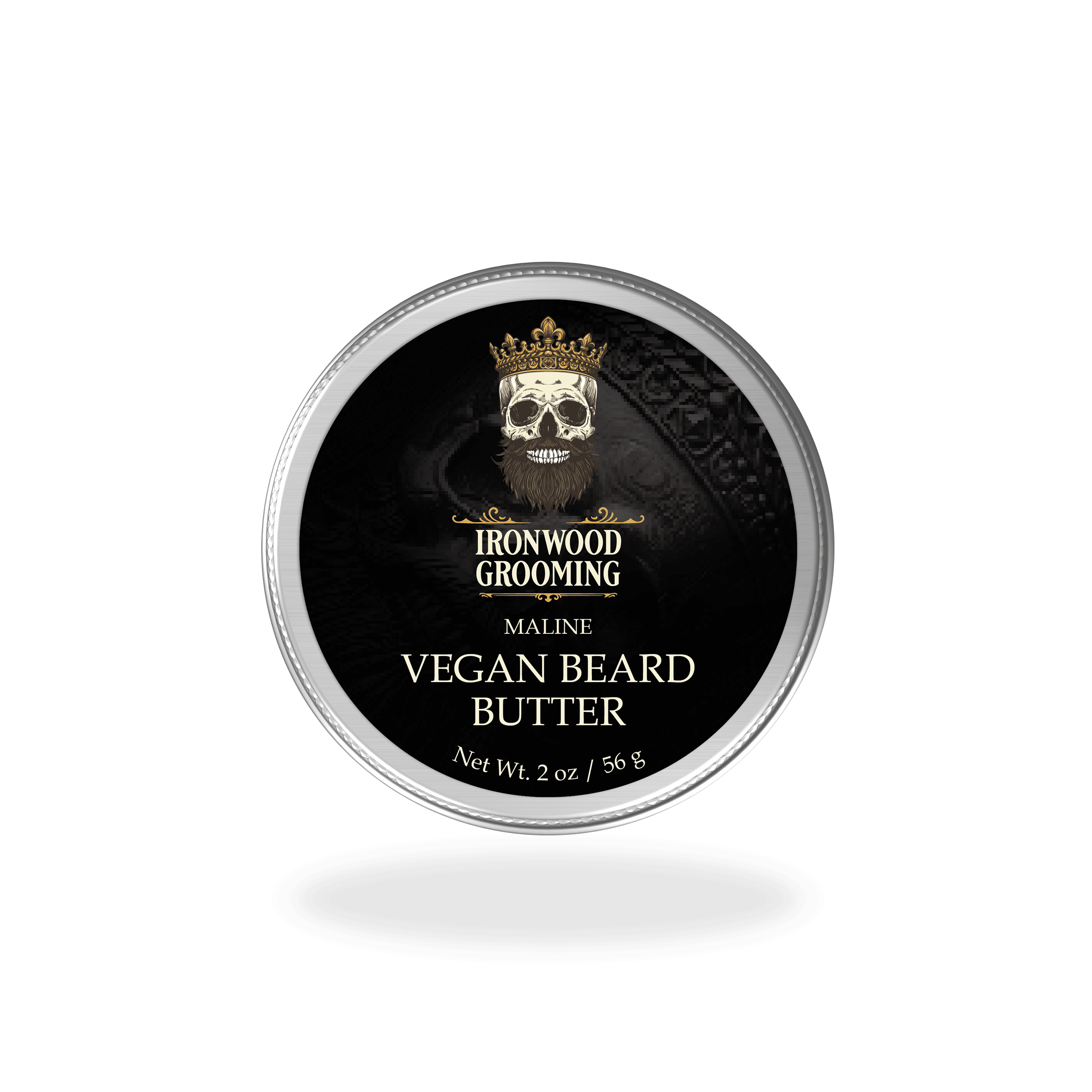
Maline Vegan Beard Butter
The Maline Vegan Beard Butter is a rich, plant-based conditioning butter designed for thick, coarse beards that need heavy moisture and light hold. It tames flyaways, softens wiry strands, and keeps the beard looking shaped without stiffness. Apply a pea-sized amount to a dry or slightly damp beard after washing, working it through from root to tip.
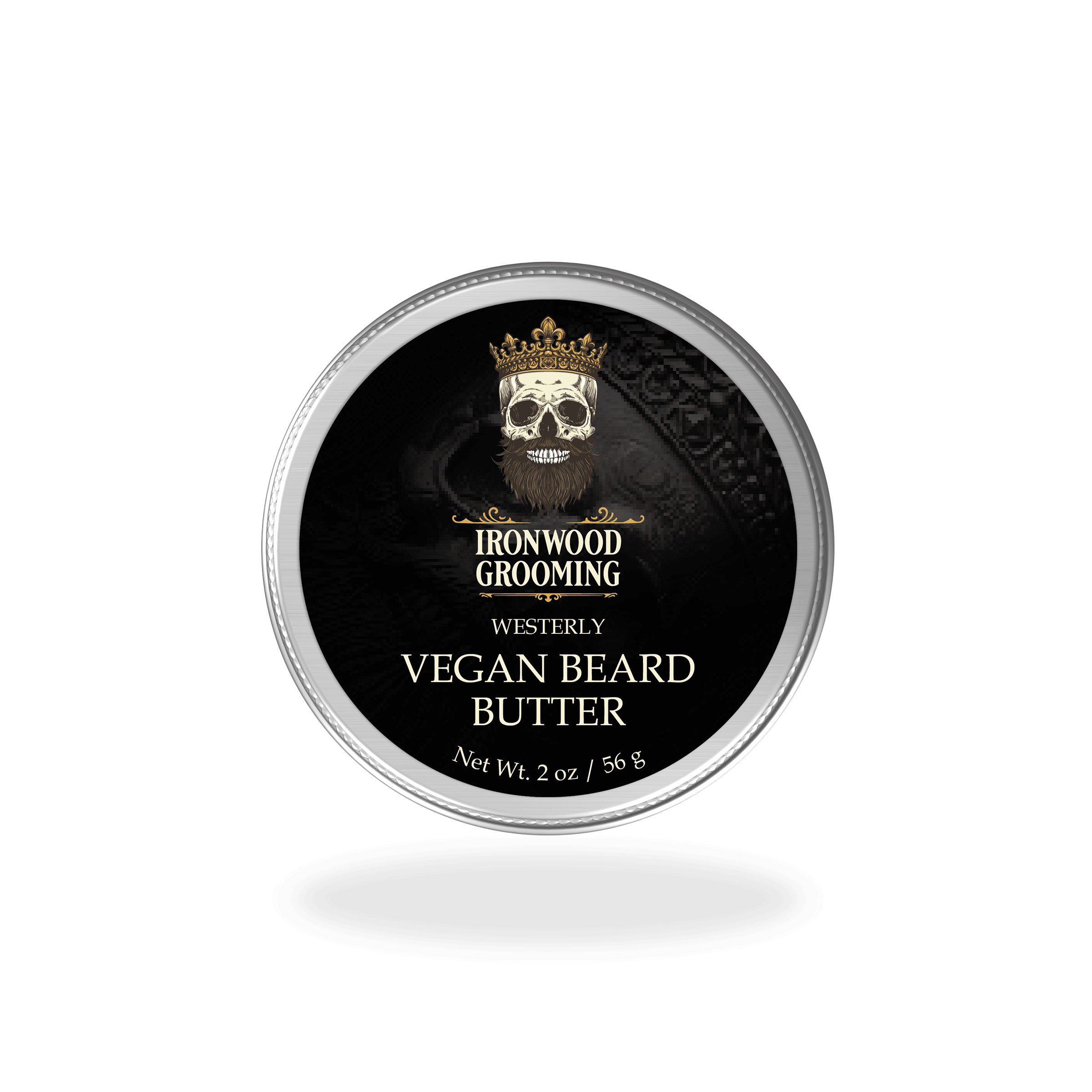
Westerly Vegan Beard Butter
The Westerly Vegan Beard Butter delivers the same conditioning performance as the Maline in a different scent profile, making it the go-to for men who prefer a woodsy, fresh character over the Maline’s warmer notes. Same application method, same coarse-beard focus. If you’re building a kit and want to sample both scent directions, Westerly is the natural second pick.
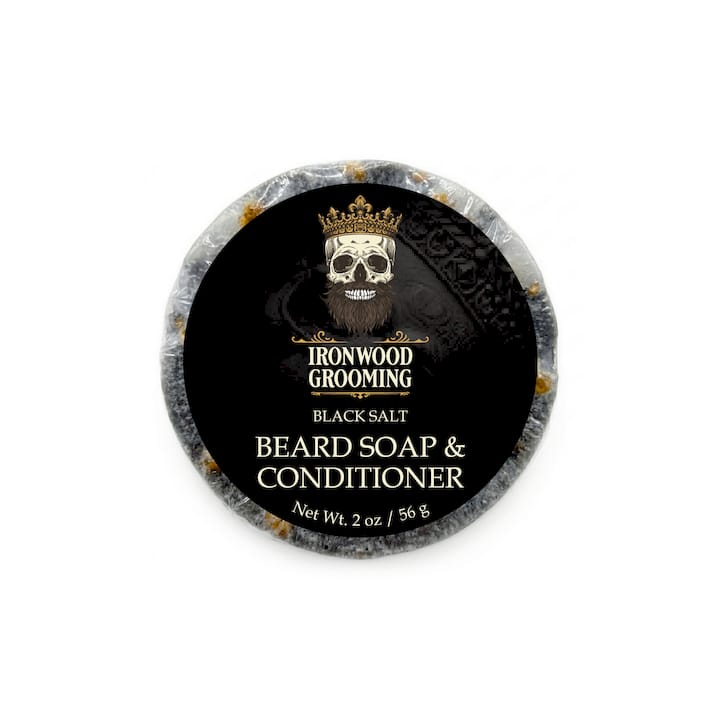
Black Salt Beard Soap & Conditioner
The Black Salt Beard Soap & Conditioner is a two-in-one cleanse-and-condition formula that removes buildup without stripping natural oils. Most commercial soaps over-dry coarse facial hair, which is exactly what causes the flaking and brittleness that plagues long beards. Black Salt solves that in a single step.
| Product | Primary Use | Best For | Key Natural Ingredients |
|---|---|---|---|
| Black Salt Beard Soap & Conditioner | Cleanse + condition | Daily or every-other-day washing without dryness | Black salt, botanical conditioners |
All three are handcrafted in small batches, free from parabens and mineral oil, and made in the USA. For a complete beard care kit, pair the Black Salt soap with either butter and a beard oil of your choice.
How to grow and maintain a long, rugged beard month by month
Building a true mountain man beard takes time. Here’s what to expect and what to do at each stage.
-
Months 0–3: The foundation phase. Put the razor down and commit. Itch peaks around weeks 2–4 as hair curls back toward the skin. Apply beard oil daily in small amounts for short growth, worked in with your fingertips, to condition the skin and reduce irritation. Wash two to three times per week with a gentle beard soap. Resist the urge to trim. Patchiness at this stage is normal and usually fills in.
-
Months 3–6: The shaping phase. The beard has enough length to show its natural growth pattern. Start light trimming to define the neckline and cheek line. Use a few drops of beard oil daily. Introduce beard butter two to three times per week after washing to lock in moisture and add light hold. A boar-bristle brush helps train growth direction and distributes product evenly.
-
Months 6+: The maintenance phase. You have a real mountain man beard now. Daily oil in moderate amounts is important at this length. Butter or balm every wash day keeps the beard soft and manageable. Trim split ends every four to six weeks with sharp scissors rather than a trimmer for precision. Comb through with a wide-tooth comb before styling.
Weekly checklist:
- Wash with beard soap 2–3x per week
- Apply beard oil every morning
- Apply beard butter on wash days
- Brush daily to train growth and distribute oils
- Trim neckline and cheek line every 1–2 weeks
Pro Tip: Shape your neckline early, even in month one. A clean neckline signals intentional grooming and keeps the rugged look from crossing into unkempt. Use a trimmer set to your skin and follow the natural curve just above the Adam’s apple.
For a deeper look at the coarse beard grooming routine, Ironwoodgrooming’s blog covers texture-specific techniques in detail.
Which natural ingredients actually work for coarse beard hair?
Plant-based formulas outperform synthetic ones for coarse beards because they absorb rather than coat. Petroleum-derived sealants and heavy silicones sit on the hair shaft, creating buildup that makes thick beards stiff and dull. Carrier oils and botanicals penetrate the strand and nourish the skin underneath.
Carrier oils and botanicals like hemp seed oil, castor oil, argan oil, nettle, horsetail, sage, and rosemary hydrate hair, strengthen strands, and nourish the skin beneath a full beard.
| Ingredient | Benefit for Beard Hair | Benefit for Skin |
|---|---|---|
| Argan oil | Softens coarse strands, adds shine | Moisturizes without clogging pores |
| Jojoba oil | Mimics natural sebum, conditions deeply | Balances oil production |
| Castor oil | Thickens appearance, coats and protects | Soothes irritation |
| Hemp seed oil | Lightweight hydration, reduces brittleness | Anti-inflammatory properties |
| Shea butter | Seals in moisture, tames flyaways | Softens and protects skin barrier |
| Beeswax | Provides light hold and structure | Forms a protective layer |
| Rosemary | Stimulates circulation, adds strength | Reduces flake and inflammation |
| Tea tree | Antimicrobial, fights beard dandruff | Calms irritation under dense hair |
Balms with shea butter, beeswax, argan oil, and jojoba provide light hold and moisture, while tea tree and rosemary offer antiseptic and stimulating properties that reduce flake and inflammation.
Ingredients to avoid:
- Mineral oil and petroleum jelly: coat the hair shaft without absorbing, leading to buildup and dullness
- Heavy silicones (dimethicone, cyclomethicone): create a slick feel initially but block moisture over time
- Parabens: synthetic preservatives with no benefit to hair or skin
- Vague “fragrance” listings: a catch-all term that can hide dozens of undisclosed chemicals; choose products with named essential oils instead
Scent guidance: For a mountain man profile, pine, cedar, and juniper are the classic choices. They read as rugged and outdoorsy without being overwhelming. If you have sensitive skin or react to fragrance, go unscented and let the carrier oils do the work.
How do you choose the right beard product for your hair type?
Not every beard butter or oil works the same way on every beard. Matching product texture to your hair type and lifestyle makes the difference between a beard that looks great and one that just feels greasy.
Selection checklist:
- Coarseness: Thick, wiry beards need heavier butters and higher-viscosity oils (castor, argan). Fine beards do better with lighter oils (jojoba, hemp seed).
- Skin sensitivity: If you react to fragrance or have dry, flaky skin under your beard, choose unscented formulas with soothing botanicals like chamomile or aloe.
- Climate: Cold, dry climates (think mountain winters) demand richer conditioning. A butter or balm used daily, not just on wash days, prevents the brittleness that comes with low humidity.
- Hold needs: For a styled mountain man look with some shape, choose a butter with beeswax. For a purely natural, loose look, a lightweight oil is enough.
- Ingredient transparency: Every product you buy should list every ingredient. If a label says “proprietary blend” or “fragrance” with nothing else, put it back.
Red flags on any product page:
- Mineral oil listed in the top three ingredients
- Parabens (methylparaben, propylparaben) anywhere on the label
- “Fragrance” or “parfum” with no further breakdown
- No ingredient list at all
For men new to building a kit, Ironwoodgrooming’s beginner grooming guide walks through exactly what to buy first and why.
Why small-batch, plant-based formulas perform better on rugged beards
Mass-market beard products are formulated for volume, not performance. Fillers like mineral oil and silicone make a product feel rich in the bottle but deliver little to the hair. Small-batch, plant-based formulas skip those fillers entirely, which means a higher concentration of active carrier oils and botanicals in every drop.
GQ’s grooming editors confirm that beard oil conditions coarse hair and moisturizes the skin underneath, reducing itch and beard dandruff. It is not a proven accelerator of new hair growth, but for managing an existing beard, it is one of the two most important tools in the kit.
A hydration-first routine built around carrier oils and occasional balm keeps coarse facial hair manageable without the stiffness that comes from mass-market styling products. That insight comes directly from artisan makers who shifted to plant-based formulas after seeing how chemical-heavy products stiffen thick beards over time.
Pro Tip: When you first open a new beard butter or oil, apply it to clean, slightly damp hair. Damp hair absorbs product more efficiently than dry hair, so you use less and get better coverage throughout a thick beard.
How do you fix the most common long beard problems?
Long beards come with specific challenges. Here’s how to handle the ones that show up most often.
Itchiness peaks in the first four weeks of growth as new hairs curl back toward the skin. Daily beard oil application addresses this directly by moisturizing the skin and softening the hair shaft. Ironwoodgrooming’s anti-itch protocol offers a structured seven-day plan if the itch becomes persistent.
Beard dandruff (beardruff) is dry skin flaking under the beard, not a scalp condition. It responds well to regular washing with a gentle beard soap, daily oiling, and occasional exfoliation with a boar-bristle brush. Rosemary and tea tree in your balm or soap help calm the inflammation that drives flaking.
Split ends are the price of length if you skip conditioning. Trim them every four to six weeks with sharp barber scissors. A trimmer pulls and frays the hair shaft; scissors cut cleanly. Consistent butter use between trims slows the rate at which splits develop.
Patchiness in the first three months is almost always temporary. Resist trimming patches down to match sparse areas. Continued growth, daily oiling, and brushing to train hair over thin spots usually resolves the issue by month four or five. Community experience on beard forums consistently backs this approach: patience plus targeted oiling beats trimming every time.
What men with rugged beards say about Ironwoodgrooming products
Men who use Ironwoodgrooming products on thick, coarse beards consistently highlight two things: the soap doesn’t strip their beard dry the way commercial products did, and the butters absorb without leaving a greasy film. For a beard that spends time outdoors in wind, cold, and dry air, those two qualities matter more than any marketing claim.
Customers who switched from mass-market beard care to Ironwoodgrooming’s small-batch formulas report softer, more manageable beards within the first two weeks of consistent use. The mustache wax draws particular praise for hold that lasts through a full day without stiffening. The Black Salt soap gets called out repeatedly for leaving the beard clean without that tight, over-dried feeling that follows most commercial washes.
These aren’t isolated reactions. They reflect what happens when you replace fillers with active botanicals and give coarse hair the hydration it actually needs.
What the mountain man beard style really demands
The mountain man beard is often romanticized as pure, untamed growth. But the historical reality of men who lived and worked in the wilderness tells a more nuanced story. Many of them groomed deliberately, shaped by practicality rather than aesthetics.
The modern version of this style demands the same practicality. A beard that grows long without care becomes brittle, itchy, and unmanageable. The rugged look you’re after isn’t the result of neglect. It’s the result of consistent, intentional hydration with the right plant-based products.
What most guides get wrong is the emphasis on styling over conditioning. You can’t style a dry, coarse beard into anything that looks good. Hydration comes first, always. Shape follows. The men who wear this style best aren’t the ones with the most products. They’re the ones who use the right ones, consistently.
The Ironwoodgrooming starter kit for a mountain man beard
The sharpest way to start is with three products that cover every phase of the routine: the Black Salt Beard Soap & Conditioner for clean, conditioned washes; the Maline Vegan Beard Butter for daily moisture and light hold; and a beard oil for your morning application. That combination handles growth-phase itch, long-beard dryness, and styling in one kit.
Every product is handcrafted in small batches, made in the USA, and free from parabens and mineral oil. No fillers, no shortcuts. If you want to explore the second scent direction, swap in the Westerly Vegan Beard Butter alongside or instead of the Maline.
Order directly at Ironwoodgrooming.com. Products ship across the United States, and reordering is straightforward through your account once you find the combination that works for your beard.
Sources
- 15 Best Beard Oil of 2026 for Softer, Smoother Scruff | GQ
- Herbal Beard Oil - Natural Serum for Healthy Beards – Rooted Earth Farm + Apothecary
- Myth of the Beard
- Beaver Dick Leigh — Mountain Man (Jackson Hole Historical Society / WyoHistory)

