


Coarse beard hair is not just thicker — it behaves differently at every stage of a grooming routine. The hair shaft is wider, the cuticle rougher, and the skin underneath works harder to stay hydrated because sebum has further to travel before it reaches the tips. Products that work fine on a medium beard often fall short on a coarse one. The fix is not more product. It is the right sequence, applied at the right time, in the right order. That is the layering method.
Why Coarse Beards Lose Moisture Faster
The wick effect is the core problem. Beard hair draws sebum — your skin’s natural oil — away from the skin surface and distributes it along the hair shaft. On a short beard, that distribution is manageable. On a thick, long beard, the same volume of sebum has to cover significantly more surface area, leaving the skin underneath dry even when the beard tips feel oily. Coarse hair compounds this because the wider shaft has more surface area per strand to begin with.
The result: persistent itch, flaking, and a rough texture that does not respond to oil the way you expect — not because the oil is wrong, but because it is being applied incorrectly or at the wrong time. For the full science behind sebum and why this matters, read Sebum and Beard Health: What Every Man Should Know.
The Three-Phase Layering Method
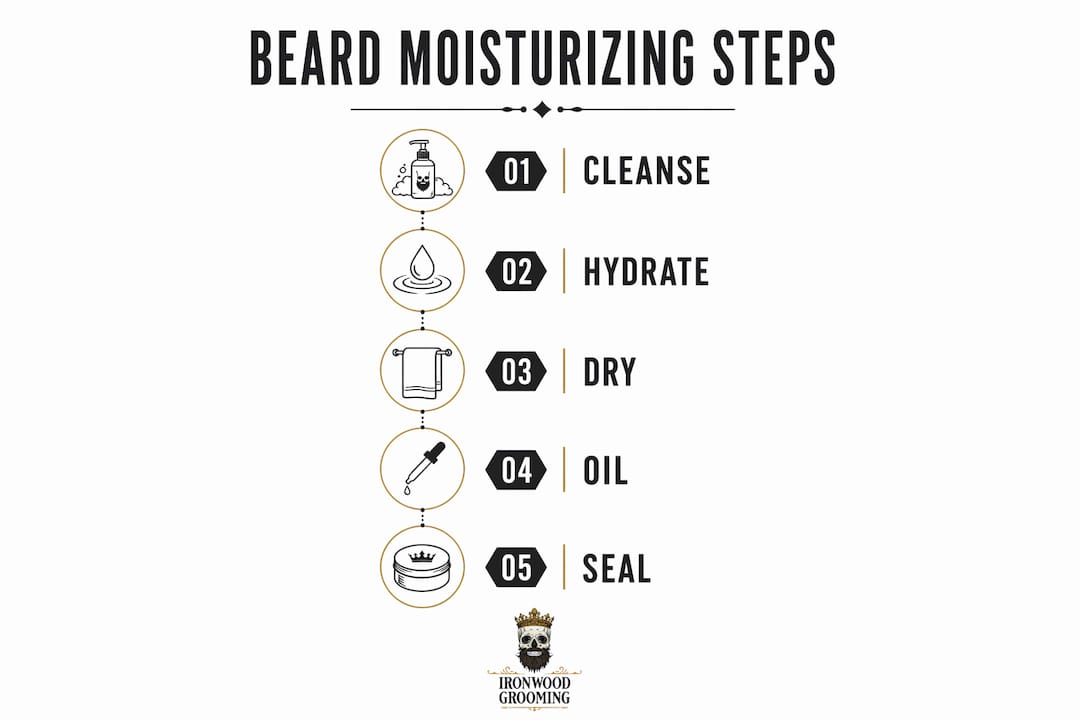
Every effective coarse beard moisturizing routine has three phases: cleanse, hydrate, and seal. Each phase uses a different product, and each product serves a specific function. Skip one phase and the others underperform. Apply them in the wrong order and you get the same result.
Phase 1: Cleanse (2–3 times per week)
Use a dedicated beard wash — not body wash, not regular shampoo. Standard shampoo is formulated for scalp skin, which is thicker and more resilient than facial skin. It strips the natural oils your follicles produce, and for coarse hair, that loss shows up fast as itch and brittleness. A beard-specific wash is pH-balanced for facial skin and cleans without disrupting the acid mantle.
Wash two to three times per week. On off days, rinse with lukewarm water only — not hot. Hot water opens the cuticle too aggressively and accelerates moisture loss after rinsing. On wash days, work the product into the skin beneath the beard with your fingertips using circular motions. The skin is where the problem starts. Reach it.
Pro tip: Apply beard wash to a dry beard first, then wet it. This distributes the product more evenly through dense, thick hair before water dilutes it.

Phase 2: Hydrate (daily, on damp hair)
This is the most important phase and the one most men get wrong. Apply beard oil immediately after patting dry — while the beard is still slightly damp. The hair cuticle is open from the warmth and moisture, which allows the oil to penetrate the shaft rather than sitting on the surface. Oil applied to a fully dry beard delivers surface shine but not deep hydration. There is no moisture to seal in.
For coarse beards, use Ironwood’s beard oils built on jojoba and argan bases. Jojoba mimics human sebum at the molecular level and absorbs into the skin without clogging pores. Argan penetrates the hair shaft and adds the conditioning weight that coarse hair needs. Neither sits on the surface. Both do real work.
Amount: 3–5 drops for beards under one inch, 6–10 drops for longer or denser growth. Work it into the skin first with your fingertips, then distribute through the hair from root to tip. The skin under a coarse beard is often the driest and most neglected part of the routine.
Phase 3: Seal (daily, after oil)
Balm or butter applied after oil seals the moisture in and adds shape. For beards over one inch, this step is not optional — oil alone does not provide enough hold or protection for coarse hair through a full day. Balm provides light-to-medium hold and a protective layer. Butter provides deeper conditioning with less hold — better for very dry or long beards that need more softening than shaping.
Warm a small amount between your thumbs and index fingers before applying. This softens the wax content and prevents clumping in thick, dense hair. Apply after the oil has had 2–3 minutes to absorb. Applying balm too soon traps the oil on the surface instead of letting it penetrate first.
| Product | Primary Function | Best For | Apply When |
|---|---|---|---|
| Beard wash | Cleanses without stripping | All beard lengths | 2–3x per week, on damp or dry beard |
| Beard oil | Hydrates skin and hair shaft | All beard lengths | Daily, on damp beard |
| Beard balm | Seals moisture, adds hold | Beards over 1 inch | After oil, 2–3 min wait |
| Beard butter | Deep conditioning, softness | Long, coarse, very dry beards | After oil, as needed or overnight |
Drying Technique: The Step Most Men Skip
How you dry your beard after washing determines how well the rest of the routine works. Rubbing a coarse beard with a standard cotton towel lifts the cuticle layer, causes frizz, and creates mechanical breakage that no amount of oil will fully fix. The damage happens before you apply a single product.
Pat dry instead of rubbing. Press the towel against the beard, hold for a few seconds, then move to the next section. A microfiber towel absorbs water faster and with significantly less friction than cotton. For very thick or long beards, work in sections. This blotting method removes water without the tug-and-drag that causes breakage at the root.
Air drying is the gentlest option. If you use a blow dryer, set it to low heat and keep it moving. Holding heat in one spot dries out the cuticle and the skin underneath. Apply oil while the beard is still slightly damp from air or towel drying — that is the window.
Pro tip: Keep a dedicated microfiber towel just for your beard. Using the same towel for your body introduces bacteria and product residue that irritate the skin under thick beards.
Weekly Treatments for Coarse Beard Maintenance
Daily oiling handles maintenance. Weekly treatments handle repair. Coarse hair develops a rough, sandpaper texture over time as split ends travel up the shaft and the cuticle accumulates damage. Weekly deep conditioning and regular trimming address both.
- Weekly deep conditioning: Apply a small amount of beard butter to a dry beard. Leave it on for 20–30 minutes, then wash out with your beard wash. This softens the cuticle and reduces brittleness more effectively than daily oil alone. Ironwood’s vegan beard butter is wax-free and built on shea, mango, and kokum butter — a richer conditioning base without the weight that can make thick hair feel heavy.
- Trimming every 2–4 weeks: Split ends do not just look bad. They make the entire beard feel rough no matter how much oil you use. Trimming is not about losing length — it is about protecting the length you have.
- Weekly skin exfoliation: Exfoliating the skin under your beard once a week removes dead skin cells and product buildup, which improves moisture uptake and reduces flaking. Use a soft-bristle brush or a gentle exfoliating wash on the skin beneath the beard.
Troubleshooting Common Coarse Beard Problems
Coarse beards send clear signals when the routine is off. Here is what each signal means and how to fix it:
- Persistent itch and flaking: You are not reaching the skin with your oil, or you are washing too frequently. Increase the amount of oil you apply to the skin layer and reduce washing to two times per week. Add weekly exfoliation to clear dead skin buildup.
- Greasy feel after oiling: You are applying too much product or applying balm before the oil has absorbed. Cut back to 4–5 drops and wait 2–3 minutes after oiling before adding balm.
- Rough texture that does not improve: You are applying oil to a dry beard. Switch to damp application and give it two weeks. The difference is significant.
- Product buildup: Clarify with a gentle beard wash once a week. Buildup blocks moisture from reaching the skin and hair shaft and makes the beard feel heavy and dull.
- Persistent irritation: Switch to products free of synthetic fragrance and alcohol — both are common irritants for sensitive skin under thick beards. Read Switch to Hypoallergenic Beard Products for Coarse Skin for a full audit framework.
The Right Tools for Coarse Hair
Plastic combs generate static and snag coarse strands. A stainless steel or wide-tooth comb glides through without pulling and distributes oil evenly from root to tip. A boar bristle brush lifts flakes, pushes product from root to tip, and smooths the surface of the beard after oiling and balming. For coarse beards, both tools earn their place in the daily routine — comb first to detangle and distribute, brush after to finish and smooth.
For a full breakdown of comb materials and which one fits your beard type, read Best Beard Comb for Men: Stainless Steel vs. Plastic vs. Wood.
What I Have Learned After Years of Coarse Beard Care
Most men treat their beard moisturizing routine like a shortcut problem. They buy a good oil, use it twice, and wonder why nothing changed. Coarse hair takes time to respond. The cuticle is dense and resistant. You are not going to soften it in a week. Consistency over 30 days is where the real shift happens.
The single biggest change I made was switching to damp application. It feels like it should not matter. The oil looks like it absorbs either way. But applying to dry hair means there is no moisture to seal in — the oil sits on the surface and the beard feels coated rather than conditioned. Once I committed to that one change, every other product in my routine performed noticeably better.
Trimming is the other thing men underestimate. Split ends make the entire beard feel rough no matter how much oil you use. Trimming every two to three weeks is not about losing length. It is about protecting the length you have and keeping the texture manageable. Pair that with the layering method above and you will feel the difference before you see it.
— Robert, Ironwood Grooming
FAQ
How often should I moisturize a coarse beard?
Apply beard oil daily, on a damp beard, every morning. Wash with a dedicated beard wash two to three times per week. Deep condition with beard butter once a week for coarse or very dry beards.
What is the best beard oil for thick, coarse hair?
Beard oils built on jojoba and argan bases work best for coarse beards. Jojoba mimics human sebum and absorbs into the skin without clogging pores. Argan penetrates the hair shaft and adds conditioning weight. Ironwood’s beard oils use both as the base formula.
Should I use beard oil or beard balm for a coarse beard?
Both, in order. Apply beard oil first to hydrate the skin and hair shaft, then apply balm after 2–3 minutes to seal moisture and add shape. Balm alone without oil underneath leads to a stiff, greasy result with no real conditioning underneath.
Why does my coarse beard still feel dry after oiling?
You are likely applying oil to a fully dry beard. Oil applied without moisture to trap delivers surface shine but not deep hydration. Pat your beard to damp before applying oil — that is the mechanism, not a preference.
How do I stop itch in a thick beard?
Beard itch in thick hair is almost always caused by dry skin underneath, not the hair itself. Reach the skin with your oil during application, exfoliate weekly to remove dead skin cells, and wash no more than three times per week to avoid stripping natural oils. For persistent itch, read Beard Itch: Why It Happens and How to Stop It for Good.
Keep Reading
- Sebum and Beard Health: What Every Man Should Know
- Beard Itch: Why It Happens and How to Stop It for Good
- Beard Butter vs. Beard Balm: What’s the Difference and Which One Wins?
Part of the Ironwood Regimen Series
This post is part of the Beard Itch + Beardruff Regimen
Get the full routine for stopping itch and beardruff at the source — clean, hydrate, seal.
See the Itch Killer Regimen →
