


You can get a curly beard straight using four dependable methods: moisture plus tension, a blow-dryer with a boar-bristle brush, a heated beard brush or mini flat iron, and mechanical banding or wrapping. None of these permanently change your follicle shape, but all of them deliver real, same-day results when done right. The goal here is manageability and a cleaner daily look, not a permanent follicle overhaul.
Here is the safety hierarchy, from lowest to highest risk:
- Moisture + tension (safest): dampen, apply oil or leave-in conditioner, comb downward, let dry under tension
- Blow-dryer + boar-bristle brush (low risk): medium heat, constant motion, heat protectant applied first
- Heated beard brush or mini flat iron (moderate risk): limit to a few times per week, always use a heat protectant, stay at moderate heat levels
- Keratin treatments (moderate, professional): last for several weeks, best done by a barber
- Chemical relaxers on facial skin (high risk, avoid): facial skin reacts far more severely than scalp skin
Ironwoodgrooming’s plant-based beard oils and balms fit naturally into the safest end of this spectrum. They condition and add weight to curly hair, making every method above more effective.
Table of Contents
- Why does your beard curl in the first place?
- How to straighten a curly beard: the daily routine
- Which tools and products actually work for curly beards?
- How to use heat tools without wrecking your beard
- Heat-free ways to reduce curl in your beard
- What you should never do to a curly beard
- How long does beard straightening last, and when do you touch up?
- The Ironwoodgrooming expert routine you can follow today
- Key Takeaways
- Why manageability beats permanent straightening every time
- Ironwoodgrooming products built for this exact routine
- Useful sources and further reading
Why does your beard curl in the first place?
Curl pattern is determined by follicle shape, and that shape is genetic. A round follicle produces straight hair. An oval or asymmetrical follicle bends the hair shaft as it grows, creating curl. No topical product, heat tool, or styling technique changes that underlying geometry. What you can change is how the hair behaves on any given day.
Hair condition plays a bigger role than most men realize. Dry, damaged beard hair curls more tightly because the cuticle is raised and the shaft lacks flexibility. When you hydrate consistently with conditioning and beard oil, the hair becomes more malleable and holds a straighter shape longer after styling.
Beard length also shifts the equation. Longer hair carries more weight, which pulls curl patterns downward and makes the beard appear straighter even before any styling. Short beards tend to snap back to their natural curl pattern faster and are harder to keep straight throughout the day.
Here is what to expect from each approach:
- Daily tension and heat styling: results last the same day, reset overnight
- Silicone-based creams and balms: day-long smoothing, need reapplication the next morning
- Chemical relaxers: a couple of weeks, but carry significant skin risk
- Keratin treatments: several weeks, professional application recommended
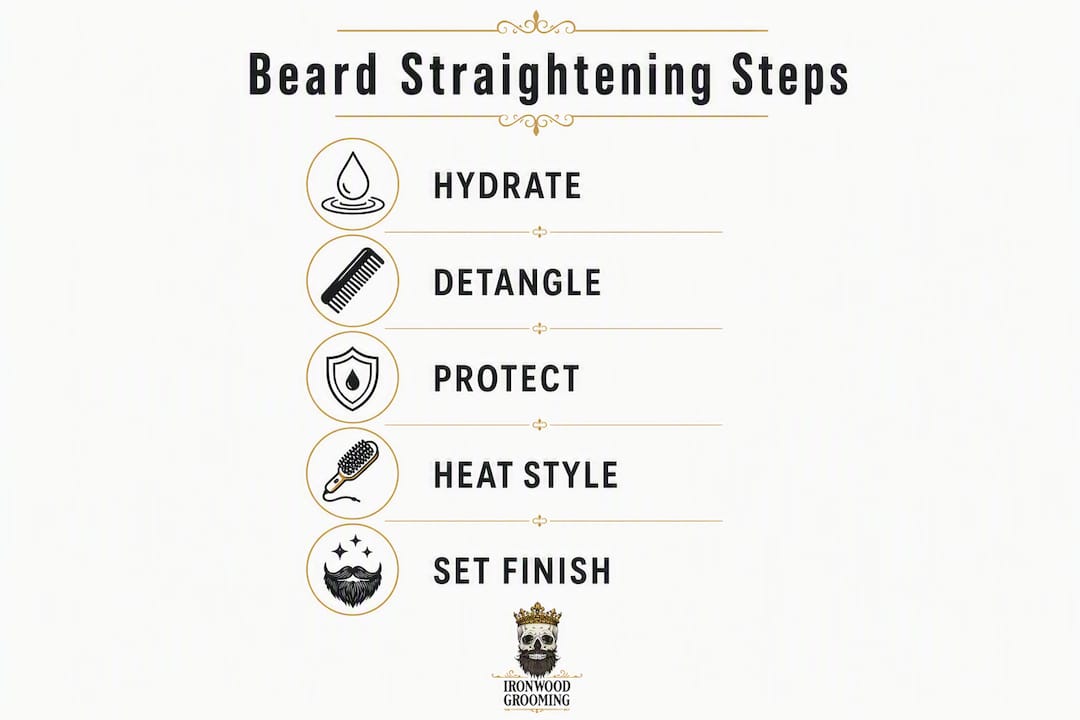
How to straighten a curly beard: the daily routine
This routine works for most beard lengths and takes roughly 10–15 minutes total. The pre-event version adds one extra heat pass and about five minutes.
Daily styling routine
-
Wash and condition (5–10 minutes). Use a gentle beard shampoo no more than once a week. Over-washing strips natural oils and increases curl. Conditioner, however, can go on daily or every other day. Rinse thoroughly, then towel-dry to damp, not soaking wet.
-
Layer your products (2–3 minutes). Apply beard oil first while the hair is still slightly damp. Follow with a leave-in conditioner or a silicone-based smoothing cream. Use a wide-tooth comb to detangle from tip to root, working out knots without pulling. This layering approach, covered in detail in Ironwoodgrooming’s moisturizing layering method, is the foundation that makes every styling step easier.
-
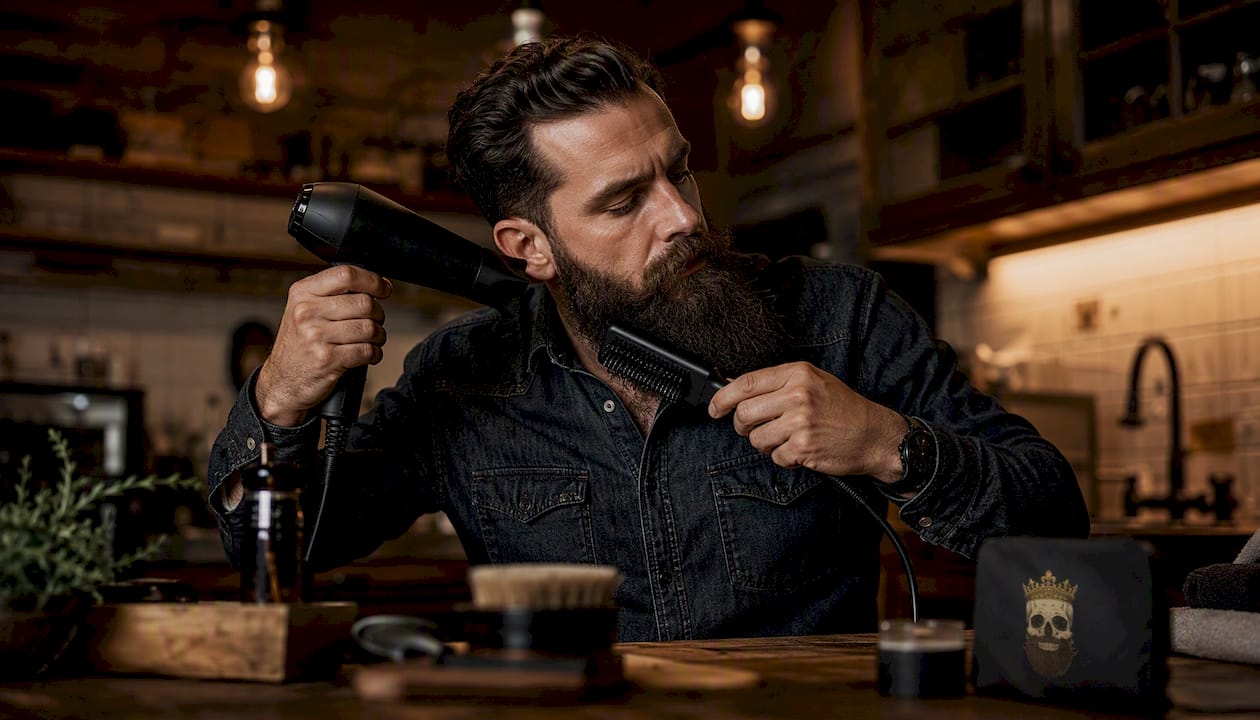
Blow-dry with a brush (3–5 minutes). Set your dryer to medium heat. Using a round boar-bristle brush, pull sections of the beard downward while directing airflow along the same path. Work in small sections from the cheeks down to the chin. This method typically takes 3–5 minutes and produces a noticeably straighter finish that holds all day for most men.
-
Optional heated brush pass (2–3 minutes). For stubborn kinks or a sharper finish, run a heated brush or mini straightener through sections at 350–380°F. One smooth pass per section is enough.
-
Finish with medium-hold balm or wax (1 minute). Work a small amount through the beard to lock direction and add a light barrier against humidity. Comb through once more to distribute evenly.
Pre-event checklist (add to the daily routine):
- Repeat the heated brush pass on problem areas
- Apply a slightly heavier balm layer at the chin and under-jaw
- Carry a compact comb for touch-ups throughout the day
Daily maintenance checklist:
- Skip the heated brush pass on non-event days
- Reapply a small amount of oil mid-day if the beard feels dry
- Comb downward once in the afternoon to reset direction
Pro Tip: If you are short on time, skip the heated brush and rely on the blow-dryer pass alone. A well-conditioned beard responds well to medium heat and a firm brush stroke, and the result is clean enough for most situations.
Which tools and products actually work for curly beards?
Tools worth owning
- Boar-bristle brush: distributes oil, smooths the cuticle, and works with a blow-dryer to pull curl downward. The best all-around daily tool.
- Nylon brush: stiffer than boar bristle, better for thick or coarse beards that need more tension.
- Wide-tooth comb: detangles damp hair without breakage. Use before any heat.
- Fine-tooth comb: for finishing and precision shaping after styling.
- Heated beard brush: faster and more effective than blow-drying alone, but requires a heat protectant and should stay at moderate heat levels.
- Mini flat iron: the highest heat option for stubborn curl. Use section clips and single, quick 2–3 second passes to avoid overexposure.
Ironwoodgrooming’s American steel combs are built for this kind of daily work. The Zombie Beard Comb suits fine-to-medium beards and slides through conditioned hair cleanly. For thick, coarse beards that need real tension during styling, the Viking Beard Comb is the stronger choice. The Deer Beard Comb is compact enough to carry for midday touch-ups. Read Ironwoodgrooming’s guide to beard comb types to match the right comb to your beard density.
Products that earn their place
- Beard oil: the first layer, applied to damp hair. Adds weight, reduces frizz, and makes the hair shaft more flexible.
- Leave-in conditioner or silicone-based smoothing cream: sets during blow-drying and provides day-long smoothing. Reapply the next morning.
- Heat protectant spray: non-negotiable before any heated tool. Coat the beard fully before picking up a brush or iron.
- Medium-hold balm or wax: locks direction after styling without stiffening the beard. Plant-based balms, like those Ironwoodgrooming formulates for coarse beards, hold without buildup. See why they work in this breakdown of vegan balm benefits.
Quick pros and cons:
- Boar brush: great for daily use, less effective on very thick beards
- Heated brush: fast results, requires heat protectant and frequency limits
- Mini flat iron: strongest result, highest skill requirement, highest damage risk if misused
- Silicone cream: excellent smoothing, can build up if not washed out weekly
How to use heat tools without wrecking your beard
Temperature and technique matter more than the tool itself. Here is the safe sequence for any heat styling pass:
- Prep: towel-dry to damp, never style completely wet hair with a flat iron.
- Apply heat protectant: spray or work a protectant oil through the full beard before picking up any heated tool.
- Section the beard: use clips to separate into manageable sections, starting at the sides and working toward the chin.
- Single pass, smooth motion: glide the tool downward in one continuous stroke. Quick 2–3 second passes reduce overexposure and deliver more even results than slow, grinding contact.
- Cool-down: let each section cool before touching it. Shaping warm hair breaks the set.
Temperature rule: aim for moderate heat for heated brushes and mini straighteners. Excessively high heat risks burning the hair shaft and drying it out to the point where curl becomes worse over time, not better. If your tool has no temperature control, do not use it on your beard.
Frequency: limit direct high-heat styling to a few times per week. Daily low-heat blow-drying with a protectant is safer and still produces a noticeably straighter result. If you notice brittleness, split ends, or a wiry texture that was not there before, pull back on heat immediately and spend a week on conditioning-only care.
Signs of heat damage to watch for: hair that snaps rather than bends, a dull, straw-like texture, or curl that looks tighter and frizzier than before you started styling. If any of these appear, test your next heat session on a small section at the jaw before committing to a full pass.
Heat-free ways to reduce curl in your beard
Not every day calls for a blow-dryer. These methods work without any heat and are worth rotating into your week to give the hair a break.
- Banding and wrapping: section the beard, wrap each section loosely with a soft elastic band, and leave it in place for several hours or overnight. Banding works best on medium-length beards and stretches the hair under gentle, sustained tension. Use soft fabric elastics, never tight rubber bands that cut into the shaft.
- Tension combing with leave-in conditioner: apply a leave-in conditioner to damp hair, then comb downward repeatedly as the beard air-dries. The tension set during drying holds longer than you might expect, especially on beards over two inches.
- Hot towel treatment: soak a clean towel in warm water, wring it out, and wrap it around the beard for two to three minutes. The warmth opens the cuticle slightly, making the hair more receptive to combing and balm. Follow immediately with a downward comb pass and a light balm application.
- Balm-set technique: work a medium-hold balm through a damp beard, comb into shape, and let it air-dry. No heat, no tools beyond a comb. Results are softer than heat styling but still noticeably cleaner than doing nothing.
Best candidates for heat-free methods:
- Beards under one inch (banding is less practical, but tension combing works well)
- Men with sensitive skin who react to heat near the face
- Medium-length beards (two to four inches) respond best to banding
- Anyone doing a heat-recovery week after noticing brittleness
Pro Tip: Rotate banding or tension combing on two or three days per week and reserve heat styling for the other days. Your beard gets the straightening benefit without the cumulative thermal load.
What you should never do to a curly beard
Some shortcuts cause damage that takes weeks to reverse. Avoid these.
- Chemical relaxers on facial skin: facial skin is significantly more sensitive than scalp skin, and scalp-formulated relaxers carry a real risk of contact dermatitis, chemical burns, and long-term breakage when applied to the face. If you want a longer-lasting straightening effect, consult a barber about a professional keratin treatment instead.
- Flat-ironing wet hair: water and high heat create steam inside the hair shaft, which causes it to burst from the inside out. Always towel-dry to damp before any heated tool touches the beard.
- Skipping heat protectant: thermal damage dries the shaft and, over time, makes curl patterns tighter and frizzier. Failing to use a heat protectant is the single most overlooked mistake in heat styling.
- Daily high-heat styling: using a flat iron or heated brush every day without rest periods leads to breakage and a wiry texture that no amount of oil will fix.
- Over-washing: daily shampooing strips the natural oils that keep beard hair flexible. Dry hair curls harder. Limit beard shampoo to once a week and condition far more often.
- Excessively high temperatures: anything above 400°F on facial hair is too aggressive. The hair shaft cannot recover from repeated high-heat exposure the way scalp hair can.
Safer corrections:
- Replace chemical relaxers with keratin treatments (barber-applied, patch-tested first)
- Replace daily flat-ironing with a blow-dryer and brush routine on most days
- Replace skipped protectant with a light heat protectant oil applied before every heat session
How long does beard straightening last, and when do you touch up?
Results vary by method, and knowing the timeline helps you plan your routine without over-styling.
- Daily tension and heat styling: lasts the same day. Humidity, sweat, and sleep reset the curl overnight.
- Silicone-based creams and balms: day-long hold when set with a blow-dryer; reapply the next morning.
- Chemical relaxers: a couple of weeks, but the skin risk makes this a last resort.
- Keratin treatments: six to twelve weeks of noticeably reduced curl, applied professionally.
Weekly maintenance checklist:
- Shampoo sparingly and condition regularly
- Full heat-style session two to three times per week
- Tension comb on non-heat days
- Reapply beard oil daily, balm as needed
- Check for brittleness or split ends every Sunday; if present, add a deep conditioning mask before the next heat session
Touch-up options during the day:
- A quick pass with the Deer Beard Comb plus a small amount of balm resets direction in under a minute
- A mini straightener on a single stubborn section takes about 30 seconds with protectant pre-applied
- A full restyle is only necessary when the beard has been slept on, rained on, or gone through a workout
Monitor your hair health monthly. If the beard feels progressively drier or the curl looks tighter than your natural pattern, reduce heat frequency for two weeks and focus on deep conditioning.
The Ironwoodgrooming expert routine you can follow today
This is the routine Robert uses and recommends for men with coarse, curly beards who want a clean, manageable look without daily heat damage. Adapt the timing to your beard density and skin sensitivity.
-
Shower with conditioner (5 minutes). Skip the shampoo on most days. Rinse the beard with warm water and work in a rinsed conditioner from root to tip. Let it sit for two minutes, then rinse.
-
Apply Ironwoodgrooming beard oil (1 minute). Towel-dry to damp, then press three to five drops of beard oil into the hair while it is still slightly wet. This is the hydration base that makes every step after it more effective.
-
Detangle with a wide-tooth comb (1 minute). Work from tip to root to remove knots without stressing the shaft. The Zombie Beard Comb handles this well for fine-to-medium beards; reach for the Viking Beard Comb if your beard is thick and dense.
-
Blow-dry with a boar-bristle brush on medium heat (3–5 minutes). Pull sections downward with the brush while directing airflow along the same path. Keep the dryer moving. This single step produces a noticeably straighter result for most beard types.
-
One pass with a heated brush if needed (2 minutes). Set to 350–380°F. Work in small sections, one smooth downward stroke per section. Do this step no more than three to four times per week.
-
Finish with a medium-hold balm (1 minute). A pea-sized amount worked through the beard locks direction and adds a light humidity barrier. Comb through once with a fine-tooth comb to distribute.
Troubleshooting common problem spots:
- Under-chin kink: apply a small extra amount of oil here before blow-drying, and use the brush to pull this section last when the dryer is hottest.
- Mustache curls: a fine-tooth comb and a tiny amount of wax set direction better than a brush here. Work from the center outward.
For a deeper look at conditioning schedules that support this routine, Ironwoodgrooming’s beard conditioning guide covers frequency and product layering for every beard type.
Key Takeaways
Straightening a curly beard is a daily practice built on hydration, tension, and controlled heat, not a permanent fix.
| Point | Details |
|---|---|
| Hydration comes first | Apply beard oil to damp hair before any styling step to increase malleability and hold. |
| Heat limits protect your beard | Keep heated tools at 350–380°F and limit high-heat sessions to 3–4 times per week. |
| Non-heat methods reduce damage | Banding, tension combing, and balm-setting on rest days preserve hair health over time. |
| Chemical relaxers are high risk | Facial skin reacts more severely than scalp skin; use keratin treatments as the safer long-term option. |
| Ironwoodgrooming combs fit the routine | The Zombie, Viking, and Deer Beard Combs cover fine, thick, and travel needs across every step. |
Why manageability beats permanent straightening every time
Here is the honest take most grooming guides skip: the obsession with permanently straight beard hair is working against you. Your follicle shape is fixed. Every new hair that grows from it will curl. So even if a chemical treatment relaxes what is already there, you are back to managing regrowth in a matter of weeks. The math never changes.
What does change, and what actually improves your appearance over months, is the health of the hair you have. A well-conditioned, hydrated beard that you style with controlled heat three times a week looks dramatically better than a chemically processed beard that is dry, brittle, and fighting regrowth at the root line. The former gets better over time. The latter gets worse.
The men who get the most out of their curly beards are not the ones chasing a permanently straight look. They are the ones who build a consistent routine, use quality tools, and treat manageability as the actual goal. Two weeks of the Ironwoodgrooming routine described above will show you the difference. Adjust the heat frequency based on how your hair responds, and you will find a rhythm that keeps your beard looking sharp without sacrificing its long-term strength.
Ironwoodgrooming products built for this exact routine
Coarse, curly beards need products that add real weight and hold without clogging pores or leaving a greasy film. Ironwoodgrooming’s small-batch, plant-based formulas are made specifically for that. The beard oils condition and add flexibility to the hair shaft, making tension and heat styling more effective from the first use. The medium-hold balms lock direction after styling and hold through humidity without stiffening the beard.
For tools, the Zombie, Viking, and Deer Beard Combs cover every stage of the routine: detangling, tension styling, and on-the-go touch-ups. All three are handcrafted from American steel, which means no snags, no static, and no teeth that flex under pressure.
A practical starting point: pair one of the Ironwoodgrooming combs with a beard oil and a medium-hold balm, and run the expert routine above for one week. Most men notice a measurable improvement in manageability within the first few days. Browse the full range at ironwoodgrooming.com and build the kit that fits your beard density and daily schedule.
Useful sources and further reading
The research and technique guidance in this article draws from the following sources. For chemical or keratin treatments, consult a licensed barber before proceeding.
- How to Straighten a Curly Beard: 5 Methods That Actually Work — Ready Sleek: the most thorough practical breakdown of temporary methods, timelines, and safety hierarchy
- 3 Ways to Straighten a Beard — wikiHow: step-by-step washing, conditioning, and silicone cream guidance
- Beard Straightening Tips to Keep Your Beard Straight — Major Beard: flat iron technique, sectioning, and heat pass guidance
- Ironwoodgrooming: The Rugged Journal — foundational grooming guidance for coarse and curly beards
- For peer-reviewed research on hair follicle structure and curl mechanics, the National Library of Medicine publishes accessible studies on hair shaft morphology

